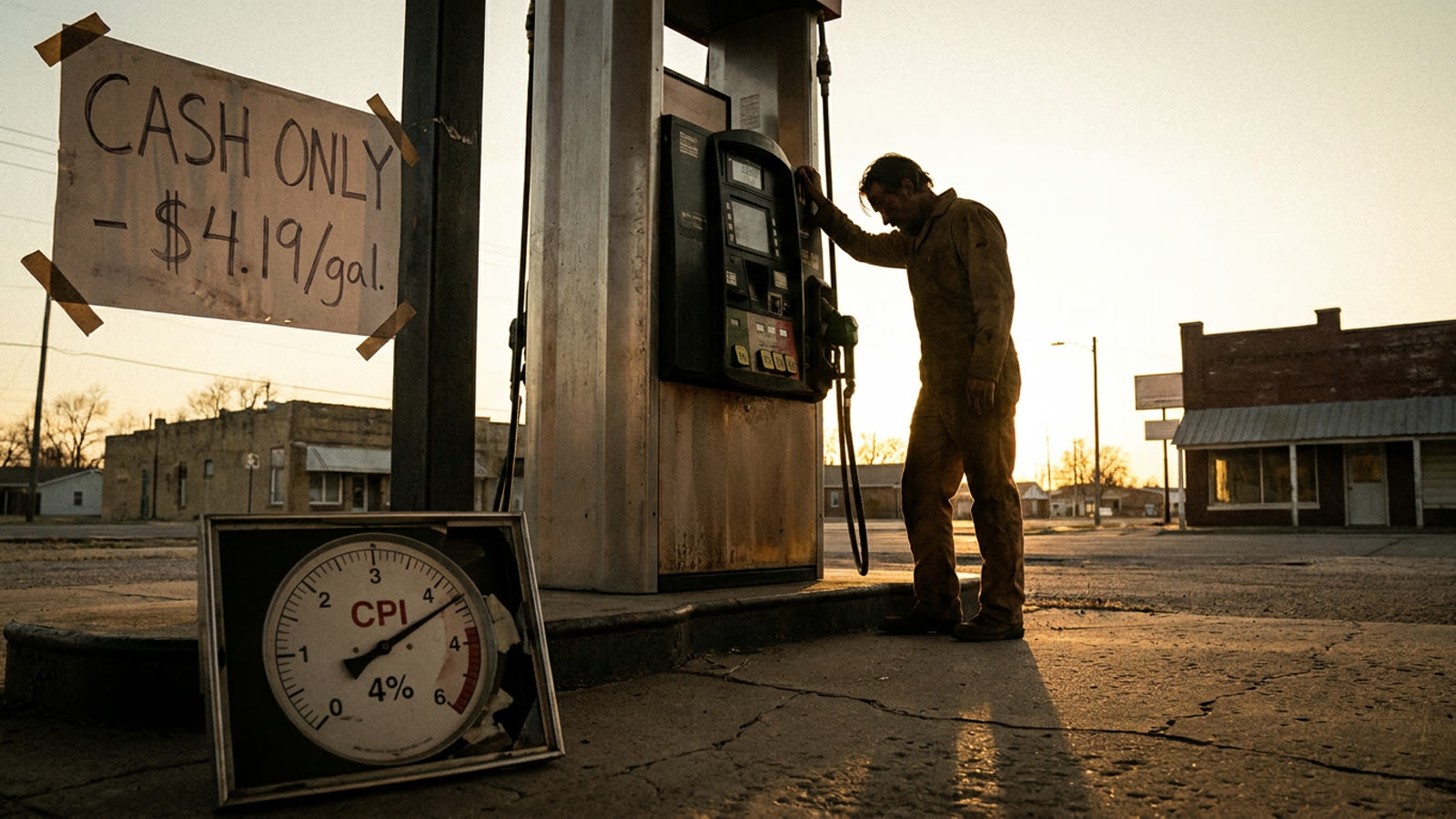
The headline number is dramatic enough: consumer prices rose at an annualized pace above four percent in May, the fastest clip in over two years, driven by an energy shock that has sent gasoline prices soaring as the conflict with Iran disrupts global oil flows. But fixating on the petroleum spike misses the more uncomfortable story buried in the data—core inflation, which strips out volatile food and energy, remains stubbornly elevated, suggesting the Federal Reserve's inflation problem predates the first cruise missile.
The Bureau of Labor Statistics report released today showed the Consumer Price Index climbing 0.5 percent month-over-month, with energy costs accounting for roughly half that increase. West Texas Intermediate has traded above $95 per barrel for three consecutive weeks as tanker traffic through the Strait of Hormuz slows to a trickle. American drivers are now paying north of $4.50 per gallon on average, a psychological threshold that tends to concentrate political minds.
The core problem beneath the crude
Strip away gasoline and the picture remains uncomfortable. Shelter costs—the largest single component of CPI—continue rising at a pace inconsistent with the Fed's two-percent target. Services inflation broadly has proven resistant to eighteen months of restrictive monetary policy, a pattern economists attribute to a labor market that refuses to cool meaningfully. Unemployment remains below four percent, wage growth continues outpacing productivity gains, and the transmission mechanism from higher rates to lower demand appears partially broken.
This presents Chair Jerome Powell with an impossible communications challenge. Acknowledge the energy-driven spike and markets will assume rate cuts remain on the table once oil normalizes. Emphasize core persistence and risk tightening into what could become a genuine supply shock recession.
The political overlay
The White House response has been characteristically unconventional. Rather than expressing concern about household budgets, the administration has framed rising prices as evidence of economic strength—a messaging strategy that may play differently in swing-state supermarkets than in cable news greenrooms. The political calculation appears to be that voters will blame Iran rather than incumbents, a bet that history suggests is risky when pump prices remain elevated through summer driving season.
Meanwhile, Treasury yields have resumed their climb, with the ten-year note pushing toward 4.8 percent as traders price out the rate cuts that seemed plausible just weeks ago. The dollar has strengthened against most major currencies, providing modest relief on import costs but squeezing American exporters and emerging-market debtors alike.
Our take
The Iran conflict provides convenient cover for an inflation problem that never fully resolved. Energy shocks are transitory by definition—wars end, supply routes reopen, prices eventually normalize. But the underlying services inflation predates the first strike and will outlast the last ceasefire. The Fed spent 2025 hoping for a soft landing; 2026 is forcing it to choose between fighting inflation and cushioning growth. That choice was always coming. The missiles just accelerated the timeline.