For decades, commencement speeches have followed a reliable formula: invoke hardship, celebrate resilience, encourage graduates to change the world. This May, something shifted. Across auditoriums from Stanford to small liberal arts colleges, speakers are doing something unusual—they're admitting they don't know what comes next, and that artificial intelligence is the reason why.
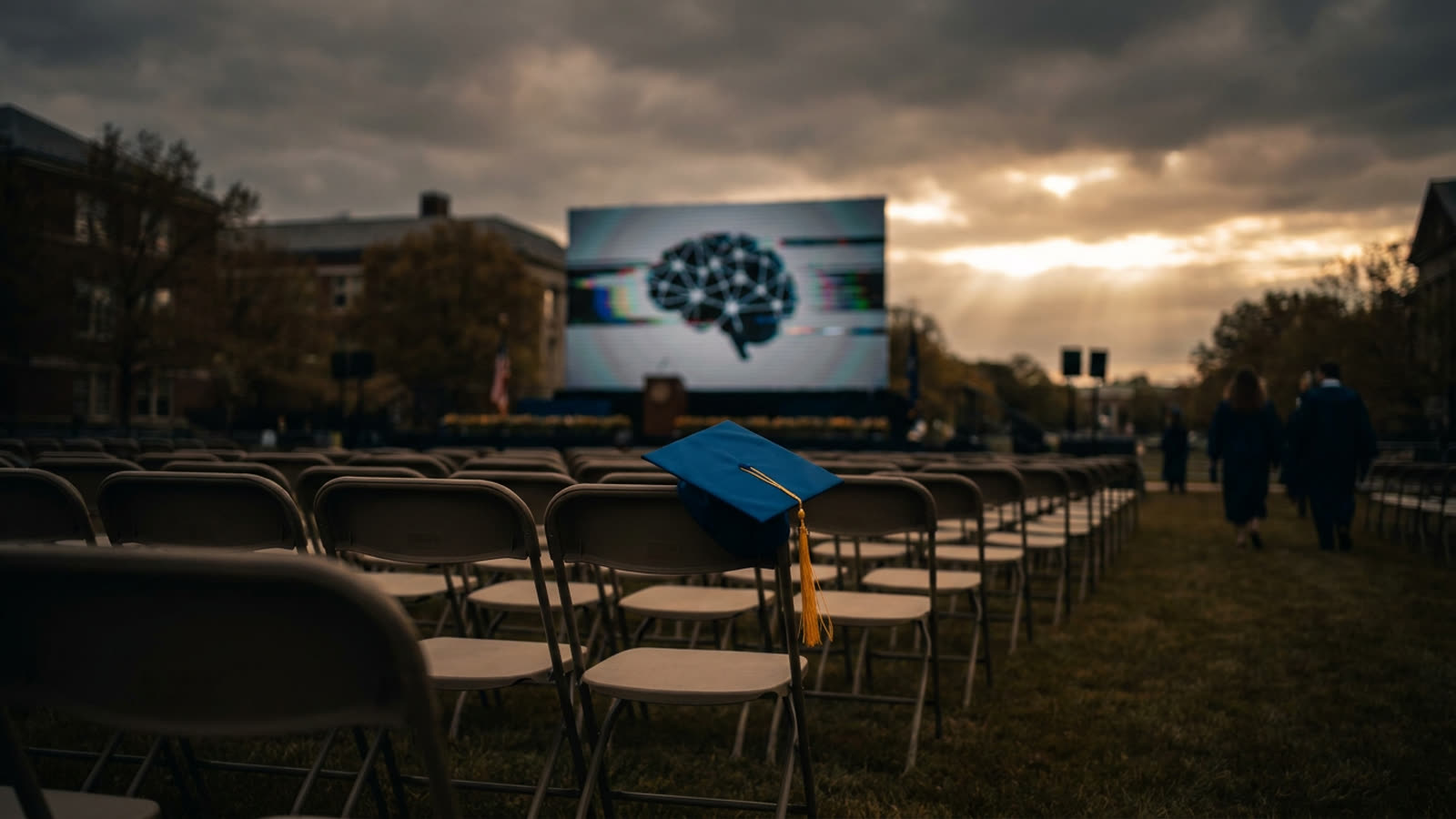
The shift became impossible to ignore when students at multiple ceremonies interrupted proceedings not to protest war or inequality, but to demand their institutions address AI's threat to their nascent careers. At one Midwestern university, graduates unfurled a banner reading "We trained for jobs that won't exist." The speakers, for once, seemed to agree with the protesters.
The end of empty optimism
What distinguishes this year's addresses is their tonal break from institutional cheerleading. Where previous generations of speakers might have mentioned technological disruption as an opportunity for "adaptation" and "innovation," 2026's crop is notably less sanguine. A prominent tech executive told graduates at a California ceremony that she genuinely didn't know whether the skills they'd spent four years acquiring would matter in five. A former cabinet secretary admitted that policy frameworks for AI governance remain "embarrassingly inadequate."
This honesty, however uncomfortable, represents a generational acknowledgment. The adults in the room—the ones who built or invested in or regulated the systems now causing anxiety—are confessing that the future they're handing over is genuinely uncertain in ways previous handoffs weren't.
Why students aren't surprised
The irony is that graduating seniors have been living with this anxiety far longer than their elders seem to realize. They watched ChatGPT emerge during their sophomore year and spent the remainder of college wondering whether their essays, their coding projects, their creative work was teaching them skills or merely rehearsing tasks machines would soon perform better. The interruptions at commencements aren't born of sudden panic but accumulated frustration—frustration that institutions charged tuition for credentials whose value is now openly questioned by the very leaders those institutions invite to speak.
Surveys of the Class of 2026 show remarkable pessimism about traditional career paths. Law school applications are down. So are MBA programs. Meanwhile, trades and healthcare—fields requiring physical presence and human judgment—are seeing renewed interest. The graduates aren't rejecting ambition; they're recalibrating it around what they perceive as AI-resistant work.
The institutional reckoning ahead
Universities now face an uncomfortable question: what exactly are they selling? If a four-year degree no longer guarantees differentiation from a well-prompted language model, the value proposition of higher education requires fundamental rethinking. Some institutions are responding with AI-focused curricula; others are doubling down on "distinctly human" skills like ethical reasoning and interpersonal leadership. Whether either approach will prove sufficient remains genuinely unclear.
The commencement disruptions may fade from headlines, but the underlying tension won't. A generation is entering the workforce believing—with some justification—that the rules are being rewritten mid-game, and that the people who wrote the original rules have no special insight into the new ones.
Our take
There's something almost refreshing about commencement speakers abandoning the pretense of wisdom. The honesty is overdue. But honesty without action is just eloquent hand-wringing. What graduates actually need isn't more acknowledgment that AI changes everything—they've internalized that message. They need institutions, employers, and policymakers to stop treating disruption as an abstract future concern and start building frameworks for a labor market that's already transforming. The Class of 2026 didn't interrupt ceremonies because they wanted sympathy. They interrupted because they wanted answers. So far, the adults have only offered better questions.