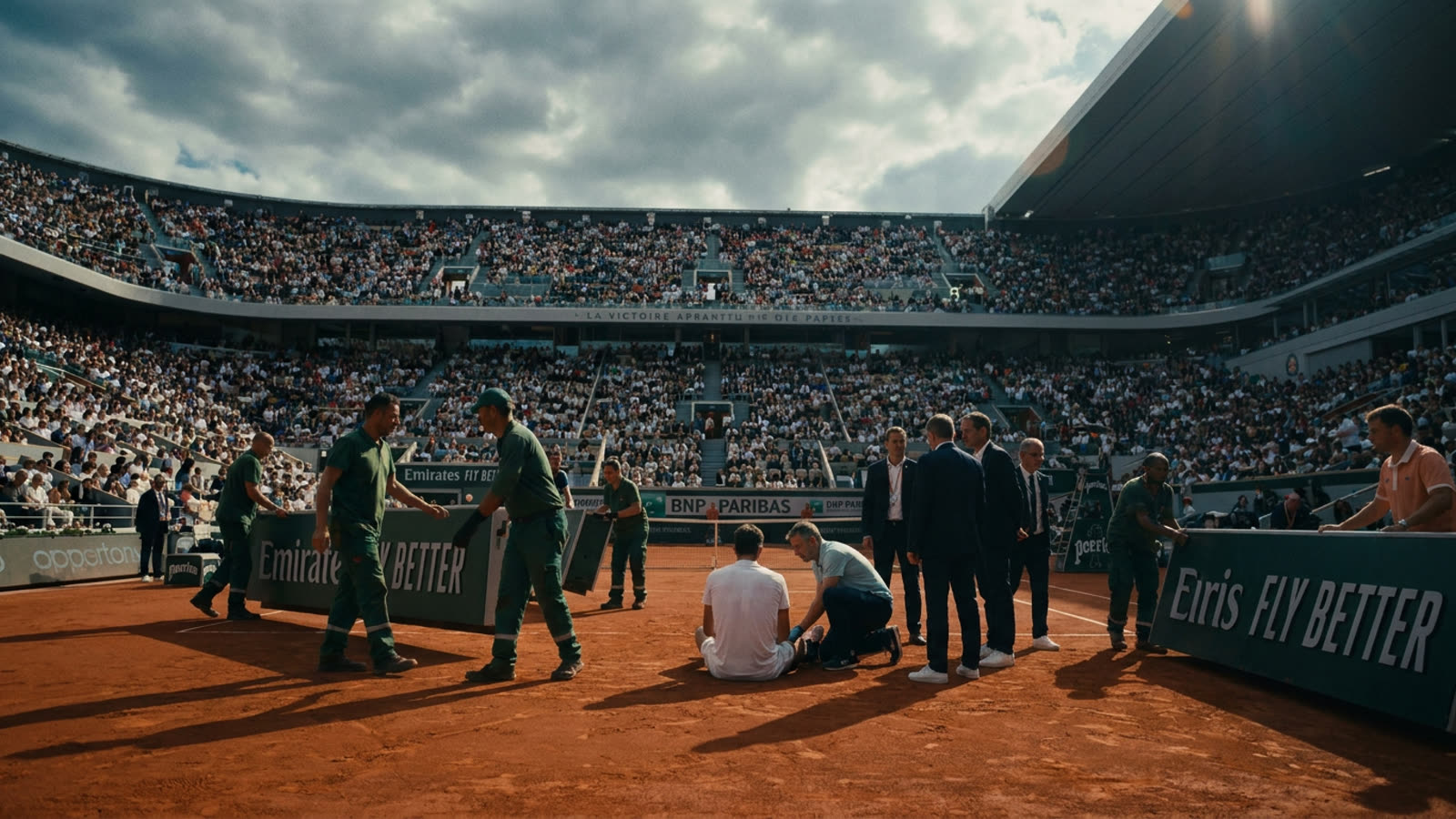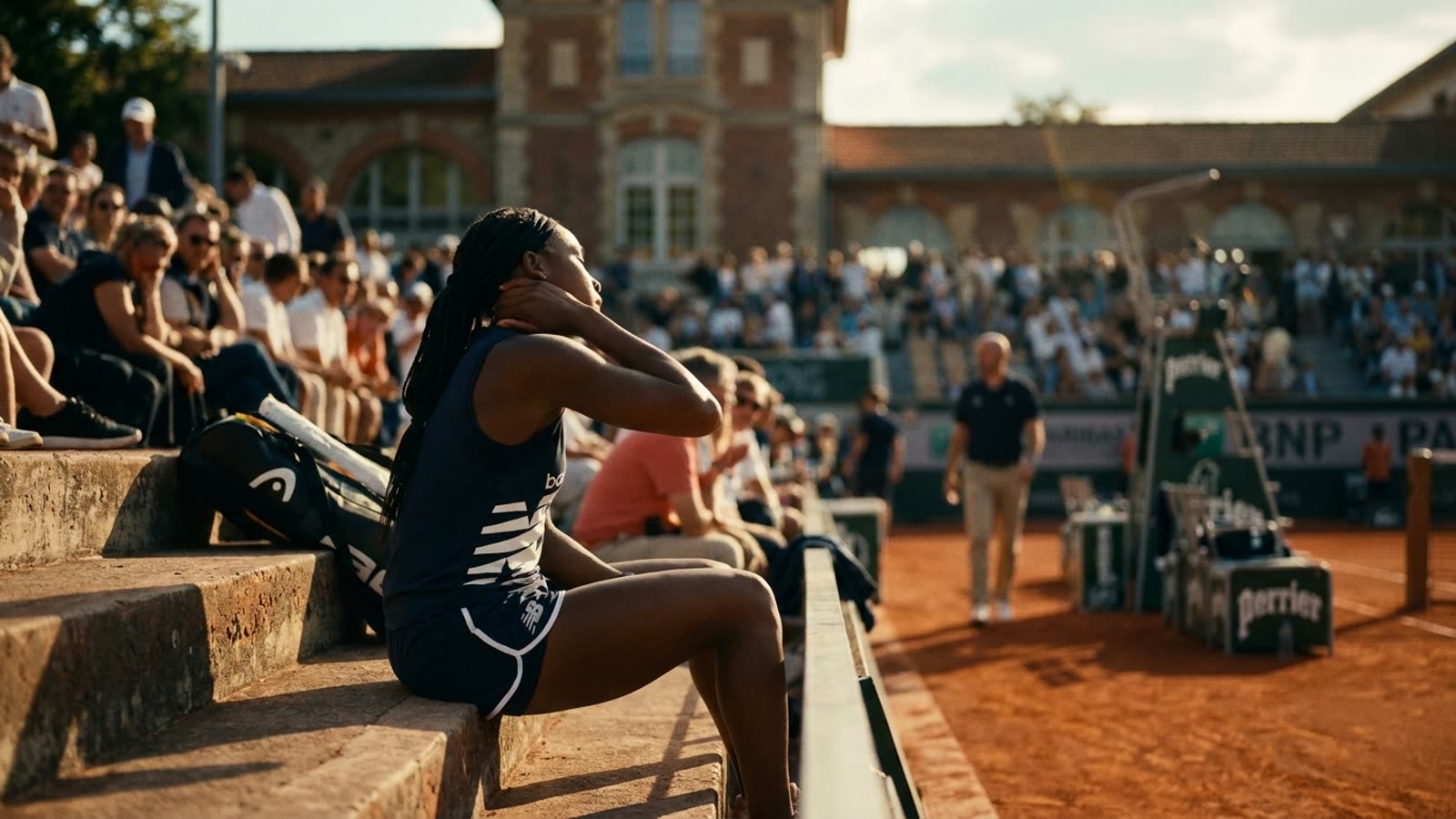
Coco Gauff arrived in Paris as the defending champion, the world's most marketable young tennis star, and the presumptive favorite to hoist the Coupe Suzanne Lenglen again. She leaves having failed to reach the second week, bounced in a defeat that felt less like an upset and more like a reckoning.
The loss strips away a comforting narrative that American tennis has been telling itself: that Gauff, at 22, has solved the riddle of clay and established herself as the sport's next dominant force. The evidence suggests otherwise. Her 2025 Roland-Garros triumph increasingly looks like a tournament where the draw opened up and the stars aligned, rather than the beginning of a dynasty.
The tactical problem
Gauff's game was built for hard courts—the serve, the flat groundstrokes, the willingness to take time away from opponents. On clay, where the ball sits up and pace is absorbed rather than rewarded, she has always been more vulnerable than her ranking suggests. Opponents have finally internalized the blueprint: move her side to side, extend rallies, wait for the errors that inevitably come when she tries to accelerate through the heavy conditions.
Her movement, while improved, still lacks the intuitive court coverage of players raised on the red dirt. She slides late, recovers a half-step slow, and finds herself hitting from defensive positions that her hard-court footwork would never permit. These are not insurmountable problems, but they require the kind of patient technical work that a packed calendar rarely allows.
What it means for the tour
Gauff's exit blows open a draw that suddenly lacks a clear favorite. The women's game remains gloriously unpredictable—a polite way of saying that no one has established the kind of separation that Serena Williams once commanded or that Iga Swiatek briefly threatened to achieve before her own inconsistencies emerged.
For the WTA, this is both blessing and curse. Parity makes for dramatic tennis and fresh storylines, but it complicates the marketing machinery that depends on recognizable stars advancing deep into tournaments. Gauff was supposed to be the solution to that problem. Today she is part of it.
Our take
Gauff remains an exceptional talent with a career's worth of Grand Slams ahead of her. But the mythology of inevitability—that she would simply collect major titles by showing up—needed puncturing. Clay demands a specific set of skills, and Gauff has not yet fully acquired them. The best response to this loss would be a quiet off-season spent in Barcelona or Monte Carlo, grinding out the footwork patterns and rally tolerance that separate clay-court champions from clay-court tourists. Whether her team and sponsors will permit that kind of patient development is another question entirely.