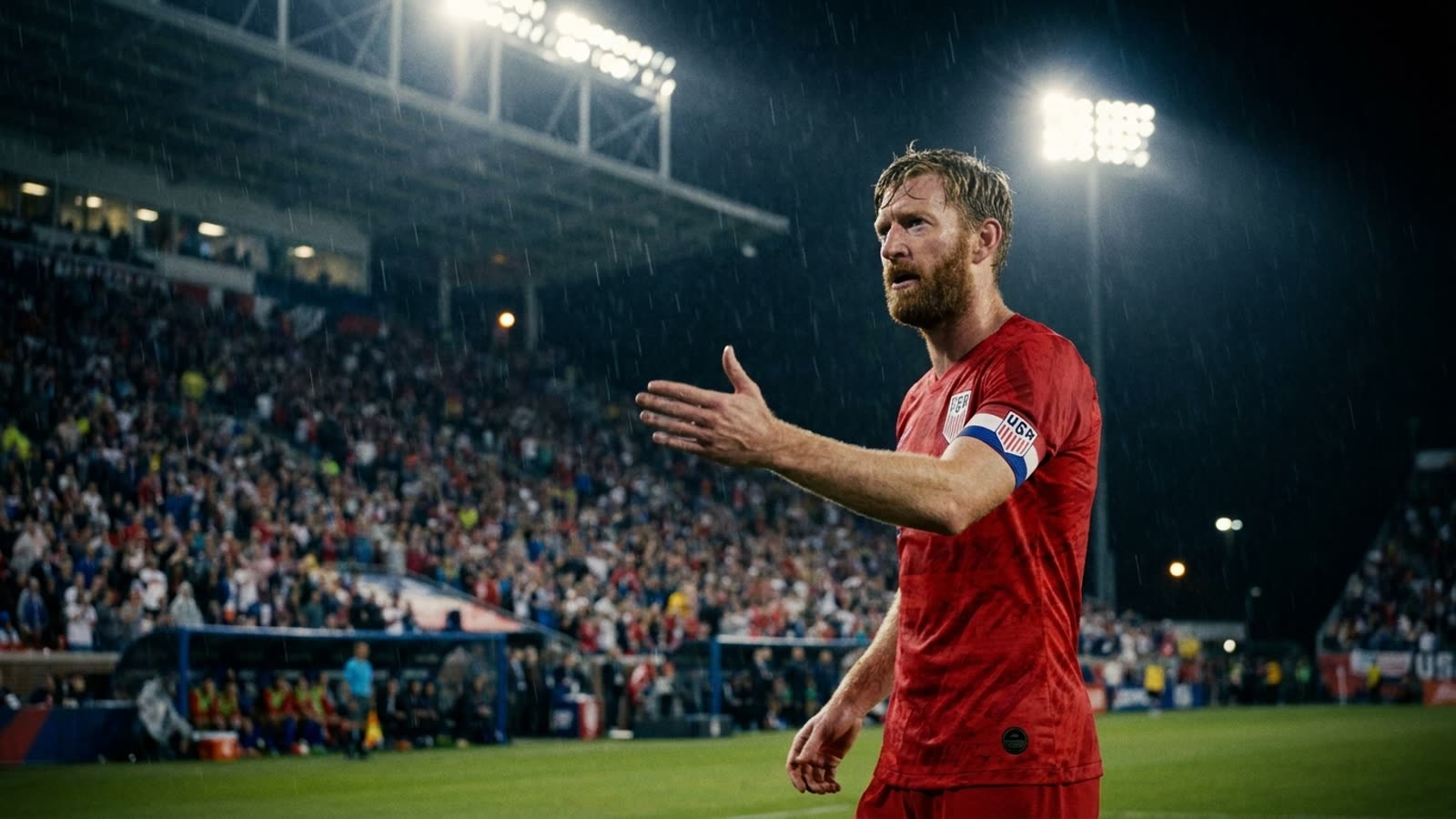
Mauricio Pochettino has made his call, and it is as revealing as it is reassuring: Tim Ream will captain the United States men's national team at the 2026 World Cup on home soil. The decision announces that this American side, for all its gilded young talent scattered across Europe's top leagues, will be anchored by a 38-year-old center-back who spent the prime of his career in England's second tier and never commanded a transfer fee that would make headlines.
The armband going to Ream is not a sentimental gesture. It is an acknowledgment that the USMNT's roster, stacked with players who have won trophies at Chelsea, Juventus, and AC Milan, lacks a natural dressing-room unifier among its stars. Christian Pulisic carries the commercial weight; Weston McKennie brings the engine; Gio Reyna possesses the sublime touch. None of them, apparently, projects the steady authority Pochettino wants when the tournament pressure arrives in June.
The case for experience over celebrity
Ream's résumé reads like a rebuke to the glossy version of American soccer development. Undrafted out of Saint Louis University, he ground through the New York Red Bulls, then decamped for Bolton Wanderers in 2012 when the Championship was considered a finishing school for players who would never quite reach the Premier League. He eventually did reach it—with Fulham, at age 34, after helping the club earn promotion. He has now made more than 50 caps for the national team across three World Cup cycles, a quiet accumulation that speaks to durability rather than brilliance.
Pochettino, who managed Tottenham and Chelsea at the highest level, has seen plenty of captains. He knows the difference between a player who demands attention and one who commands respect. Ream is the latter: a defender whose positioning compensates for diminishing pace, whose communication organizes back lines, and whose demeanor does not waver when a stadium turns hostile.
What it says about the squad
The appointment also signals something about the American core. Pulisic, 27, remains the face of the program but has never been a vocal leader; his influence is expressed through dribbles, not speeches. McKennie's intensity can tip into volatility. Tyler Adams, once the presumptive future captain, has battled injuries that have limited his availability and rhythm. By choosing Ream, Pochettino sidesteps any internal politics and places the armband on the player least likely to be distracted by it.
There is risk in this calculus. Ream's legs are not what they were, and a home World Cup will demand performances across multiple time zones and climates over a compressed window. If his body fails him, the Americans will need to find leadership on the fly. But Pochettino is betting that Ream's presence—even in a reduced role—provides more value than handing the captaincy to a younger player who might buckle under its symbolic weight.
Our take
American soccer has spent two decades chasing validation through European transfers and social-media metrics. Naming Tim Ream captain is a quiet corrective: a reminder that tournament football rewards composure, preparation, and the kind of authority that cannot be bought. The USMNT will not win the World Cup because of Ream's armband, but it might avoid losing its way because of it. Sometimes the best choice is the least glamorous one.