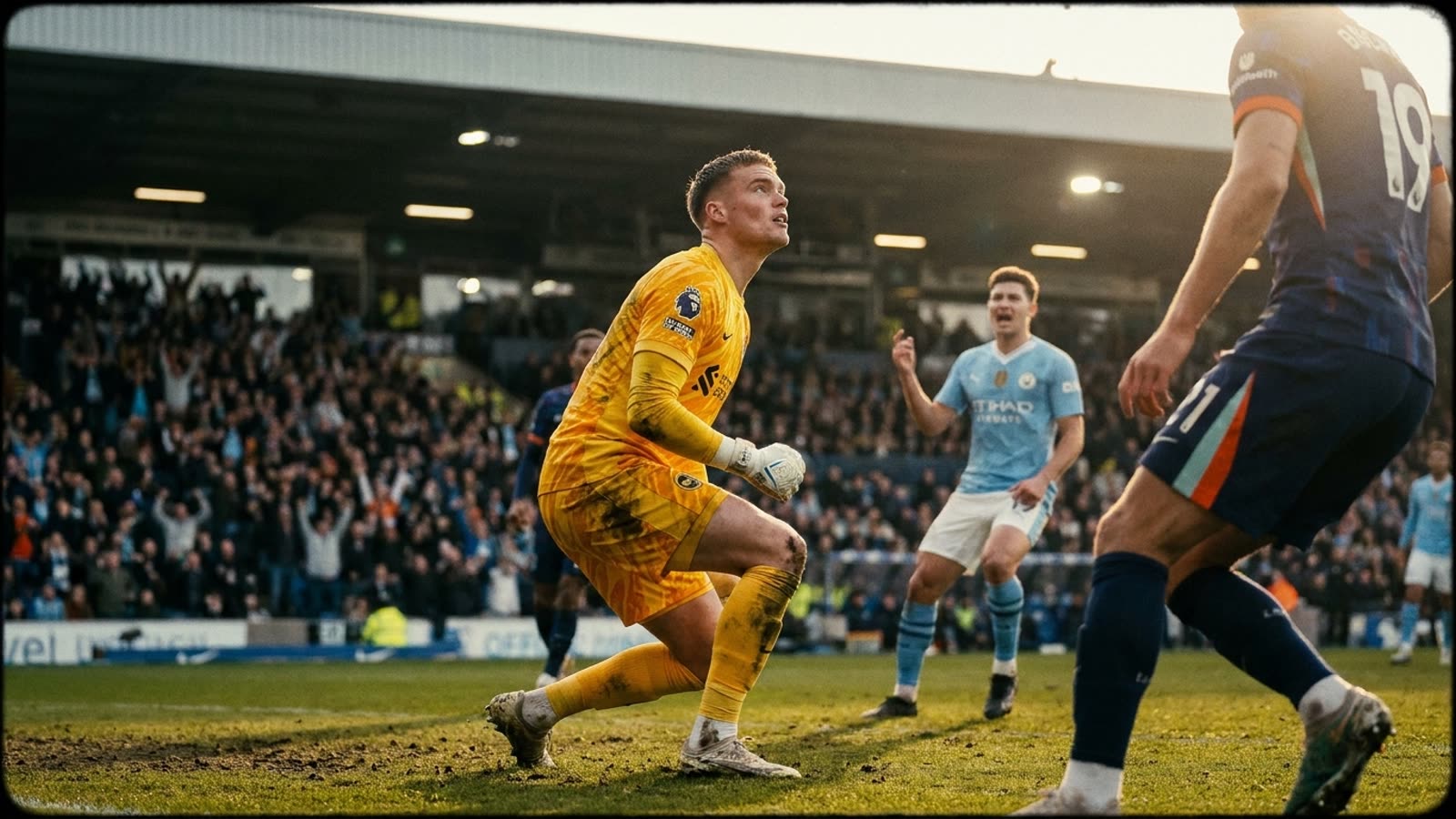
There is a particular cruelty in watching a club convince itself that things cannot possibly get worse, only to discover that the floor has a basement. Manchester United's 2-0 defeat to Chelsea on Saturday was not merely another bad result in a season full of them—it was the moment when the polite fiction of a "difficult patch" gave way to something uglier and more urgent.
Lisandro Martinez's red card, United's profligacy in front of goal, and Chelsea's ruthless finishing combined to produce a scoreline that flatters the visitors. The underlying performance was worse. United created chances they could not convert, conceded goals from situations they should have controlled, and finished the match looking exactly like what the table says they are: a team in serious danger of relegation.
The numbers do not lie
United sit fifteenth in the Premier League, separated from the drop zone by goal difference and the charitable form of clubs below them. This is not a blip caused by fixture congestion or injury crisis—this is structural failure across every department. The defensive fragility that has plagued the club for years has metastasized into something terminal. The midfield creates nothing. The attack, despite individual moments of quality, cannot sustain pressure or manufacture goals when they matter most.
The last time Manchester United were relegated from the top flight was 1974. The notion that it could happen again seemed absurd even six months ago. It no longer does. The mathematics of the Premier League are unforgiving: twenty matches remain, and United have shown nothing to suggest they can reliably collect points against anyone.
The managerial question answers itself
Whoever occupies the technical area—and the identity of United's next permanent manager remains unclear—will inherit a squad that has lost belief in itself. The players who should be leading, the expensive signings who were meant to restore the club's competitive edge, have instead become symbols of institutional dysfunction. There is no quick fix because the problems are not tactical. They are cultural, financial, and psychological.
The Glazer ownership, years of poor recruitment, and a revolving door of managers have created a club that no longer knows what it is. United's identity used to be defined by attacking football and an expectation of success. Now it is defined by chaos and the desperate hope that someone—anyone—will make it stop.
Our take
Manchester United's decline has been the slowest car crash in football history, and yet somehow the crash itself still feels shocking. Relegation remains unlikely in the statistical sense, but it is no longer unthinkable. The club has the resources to survive, but resources have never been the problem. The problem is that United have become a cautionary tale about what happens when a great institution is hollowed out from within. Saturday's defeat was not the beginning of the end—that happened years ago. This is simply the end refusing to announce itself politely.