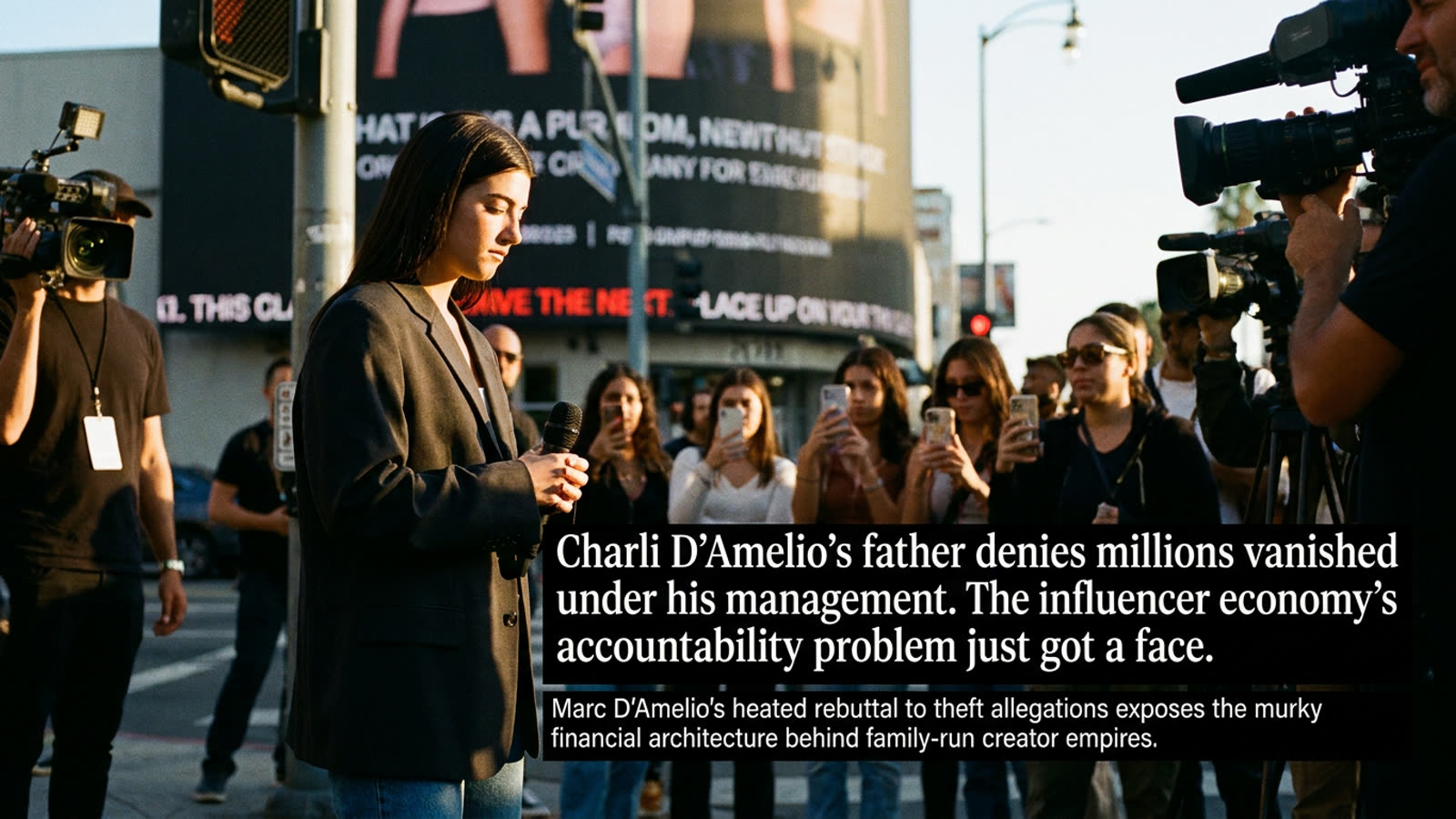
The D'Amelio family built a TikTok dynasty worth tens of millions, but the infrastructure holding it together now faces uncomfortable questions about where, exactly, all that money went.
Marc D'Amelio, father and longtime manager of Charli D'Amelio—the platform's first breakout megastar—has publicly pushed back against reports alleging that millions of dollars were stolen from his daughter while under his financial oversight. His denial was emphatic, but the underlying accusation illuminates a structural vulnerability that extends far beyond one Connecticut family: when parents double as managers, agents, and fiduciaries for minor children generating eight-figure incomes, the potential for opacity is baked into the arrangement.
The Coogan problem, TikTok edition
California's Coogan Law, born from the exploitation of child actor Jackie Coogan in the 1930s, requires that 15 percent of a minor performer's earnings be set aside in a blocked trust. But enforcement is inconsistent, and the law's reach into the influencer economy—where contracts are often informal, brand deals paid in installments, and "management" handled by relatives with no fiduciary licensing—remains legally untested at scale. Charli D'Amelio turned 18 in 2022, meaning any alleged financial mismanagement during her minor years would fall into a regulatory grey zone that legislators have been slow to address.
Marc D'Amelio's forceful response—reportedly calling the theft narrative a fabrication—does not resolve the broader question of whether family-managed creator businesses are subject to adequate oversight. The D'Amelios have been unusually visible about their business operations, launching a Hulu reality series and multiple brand ventures. That visibility now cuts both ways.
Why this story resonates
The influencer economy minted its first generation of child millionaires less than a decade ago. Those children are now adults, and the industry is entering its first real reckoning with how their earnings were handled. The D'Amelio situation—regardless of its ultimate resolution—serves as a test case for whether the creator economy will develop the same protective infrastructure that Hollywood eventually built for young talent, or whether it will remain a financial Wild West where family loyalty substitutes for fiduciary duty.
Our take
Marc D'Amelio may be entirely innocent of any wrongdoing; the allegations could prove baseless. But the fact that such claims can circulate without clear regulatory mechanisms to adjudicate them is itself the story. The influencer economy has minted billionaires and reshaped consumer culture, yet it still operates with the financial transparency of a lemonade stand. Until that changes, every family-managed creator empire will carry an asterisk.