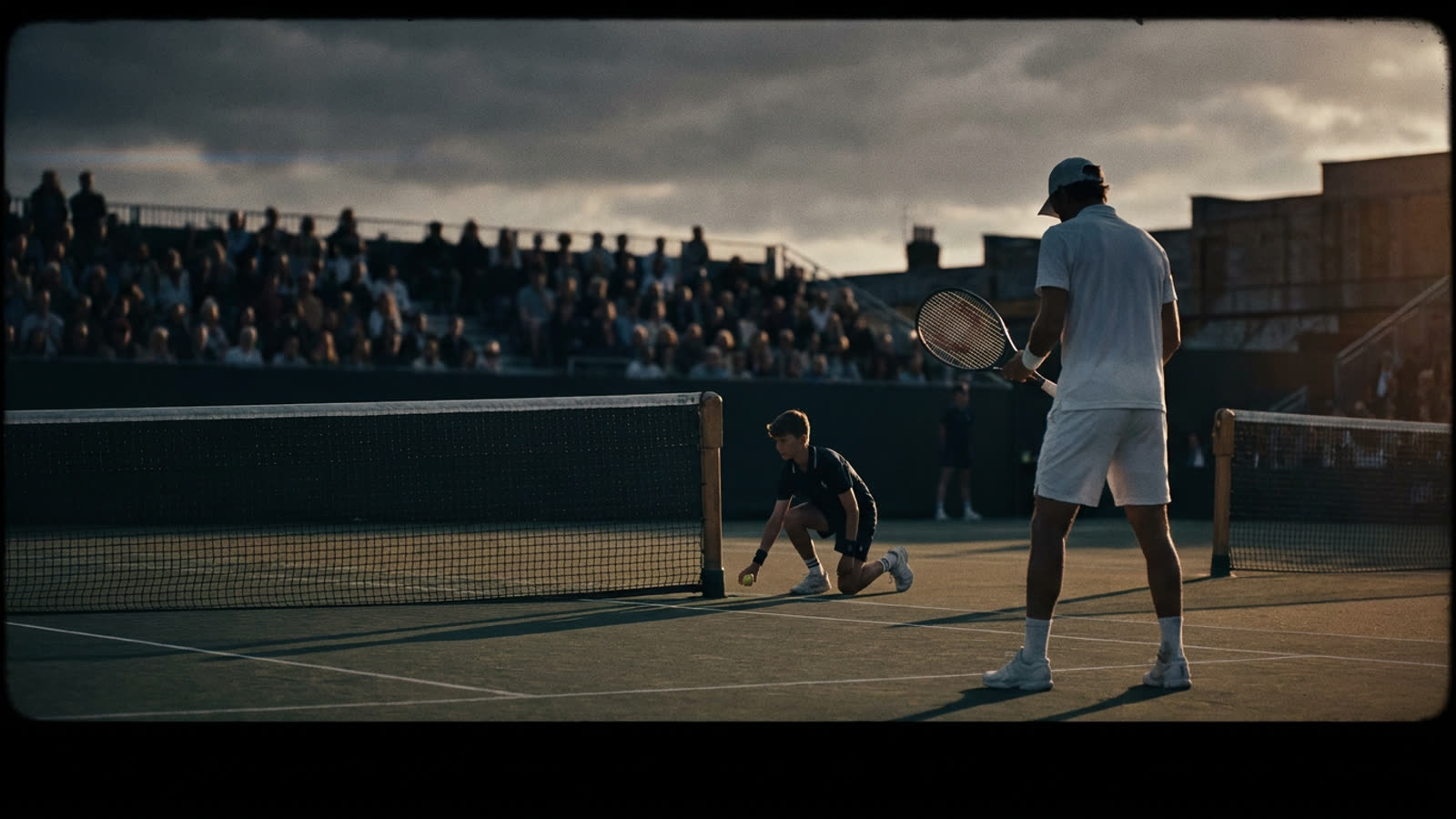
Professional tennis has long marketed itself as the gentleman's game, a sport where white clothing requirements and polite applause paper over the reality that ball kids—often unpaid teenagers—exist to serve at the pleasure of millionaire athletes having very public bad days.
A viral video this week threatened to tear that veneer clean off. Footage circulating across social platforms appeared to show a male tennis player making physical contact with a ball girl during a match, sparking immediate outrage and calls for sanctions. The player in question has now issued a forceful denial, insisting the video misrepresents what occurred and that no shove took place.
The Anatomy of a Viral Moment
The incident follows a familiar pattern in the age of smartphone ubiquity: a few seconds of decontextualized footage, a rush to judgment, and a player forced into damage-control mode before any official review. What makes this case notable is not the specifics—which remain disputed—but the velocity with which the tennis world divided into camps. Some demanded immediate suspension; others urged patience pending investigation.
The asymmetry at the heart of the controversy is undeniable. Ball kids occupy a peculiar position in professional tennis: they are essential to the smooth operation of matches, yet they possess no power, no voice, and no recourse when things go wrong. They cannot speak to media. They cannot defend themselves publicly. When a player loses composure, they are simply expected to absorb it.
Tennis's Uncomfortable History
This is hardly the first time the sport has confronted questions about how its stars treat support staff. The most infamous incident remains Serena Williams's 2009 US Open tirade at a lineswoman, but the archives contain dozens of smaller moments—rackets thrown near ball kids, verbal abuse directed at chair umpires, equipment flung in frustration. The sport has historically treated these as isolated behavioral issues rather than systemic problems.
What has changed is the surveillance environment. Every court now operates under the assumption that any moment might become content. Players who once enjoyed the benefit of selective camera coverage must now reckon with angles from every corner of the stadium. The ball girl in this week's video did not need to speak; the footage spoke for her, accurately or not.
Our take
Whether this particular player shoved anyone matters less than what the reaction revealed: professional tennis still has not figured out how to protect the young people who make its product possible. The sport's governing bodies have rules about racket abuse and audible obscenity, but the treatment of ball kids remains largely a matter of individual conscience. That a viral video can trigger more accountability than any institutional mechanism is an indictment of the institutions themselves. The gentleman's game could use some actual gentlemen—and some enforceable standards.