The Council of Fashion Designers of America gathered its faithful at the American Museum of Natural History on Monday night, and the dinosaur skeletons looming overhead felt uncomfortably on-the-nose. American fashion is not extinct, but it is unmistakably fossilizing into something different from the scrappy, commercial, celebrity-adjacent industry that once defined it.
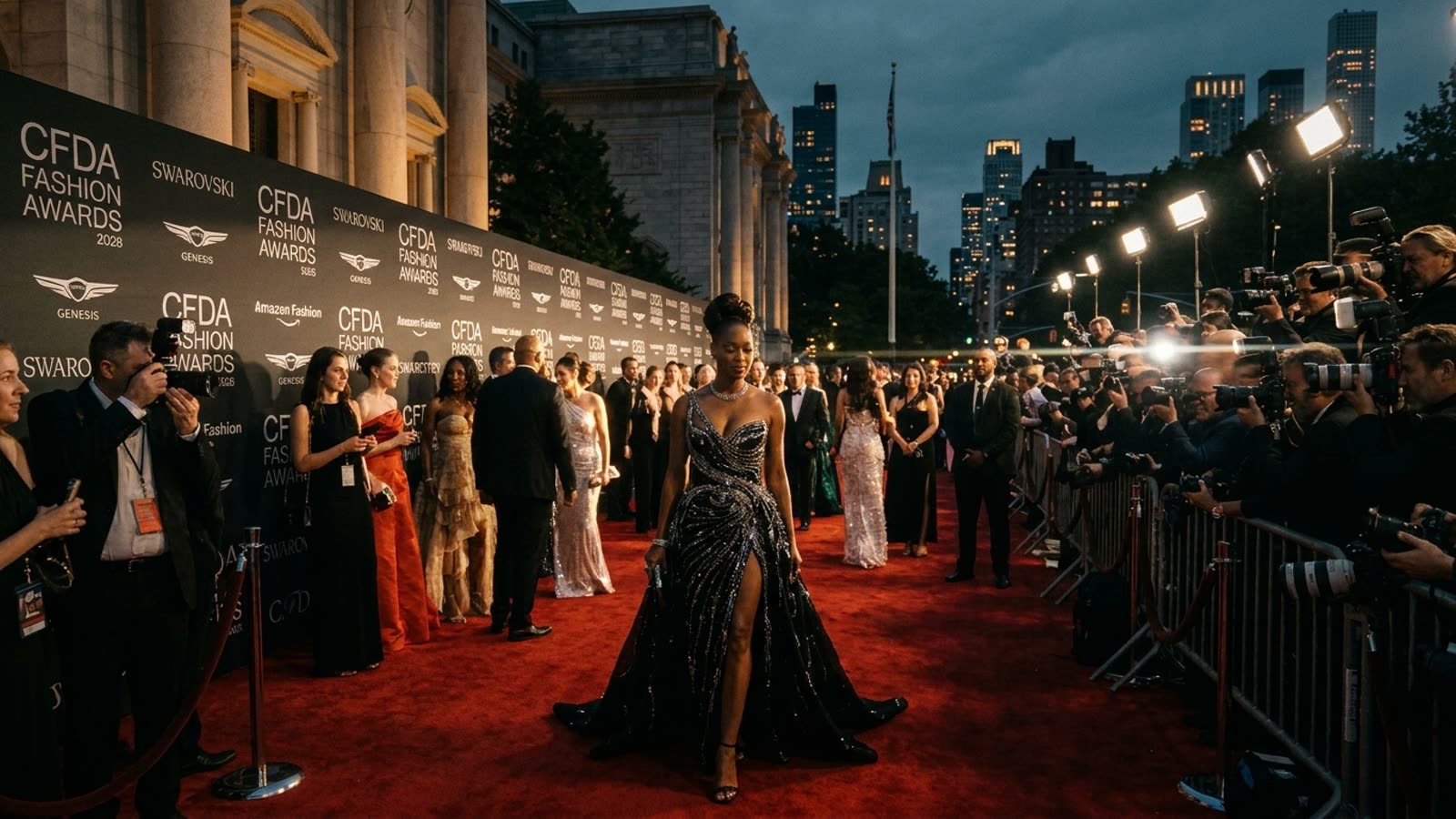
The red carpet delivered the expected parade of hometown talent: designers wearing their own creations, actresses serving as walking advertisements for the labels that dress them for awards season, and the particular New York blend of downtown cool and uptown polish that the CFDA has spent decades cultivating. Yet beneath the sequins and the step-and-repeats, the evening surfaced an industry-wide identity crisis that no amount of champagne could dissolve.
The winners reflect a changing guard
The awards themselves told a story of consolidation and survival. The designers who walked away with top honors were largely those who have figured out how to exist within the gravitational pull of European conglomerates or carved out sustainable niches in direct-to-consumer sales. The old CFDA model—American designer builds buzz, gets acquired by LVMH or Kering, achieves global scale—has largely collapsed. What remains is a bifurcated landscape: a handful of mega-brands with the resources to compete globally, and a constellation of smaller labels fighting for attention in an algorithm-driven marketplace that rewards virality over craftsmanship.
The emerging designer categories, once a reliable pipeline for the next generation of American fashion stars, now feel less like launching pads and more like participation trophies. The path from CFDA recognition to commercial viability has grown so treacherous that winning can feel almost beside the point.
The celebrity-fashion complex shows cracks
The red carpet itself revealed the shifting power dynamics between Hollywood and fashion. The most-discussed looks came from celebrities whose relationships with designers are increasingly transactional—styled for the evening, photographed, posted, forgotten. The era when a designer could build a career on dressing the right actress has given way to something more mercenary. Stylists wield the real power now, and their loyalty is to the look, not the label.
This was visible in the eclectic mix of American and European houses represented on the carpet. The CFDA Awards, theoretically a celebration of American design, featured attendees in Chanel, Valentino, and Saint Laurent alongside the domestic talent. Nobody seemed to find this contradictory, which is perhaps the most telling detail of all.
Our take
The CFDA Awards have become fashion's version of the Kennedy Center Honors: a pleasant evening of mutual congratulation that bears decreasing relationship to where the industry's energy actually lives. American fashion's future is being written in Los Angeles showrooms, TikTok comment sections, and the direct-message negotiations between influencers and brands—not in the gilded halls of the Natural History Museum. The ceremony remains worth attending, the way a family reunion remains worth attending. But nobody mistakes it for where the action is.