The celebrity vacation industrial complex has found its permanent headquarters, and it sits roughly 2,400 miles off the California coast.
Hawaii has always attracted famous faces seeking sun and relative anonymity, but the current wave of high-profile visitors represents something more systematic than the occasional getaway. What was once a scattered pattern of star sightings has calcified into a reliable circuit: the Four Seasons Hualalai, the Montage Kapalua Bay, the private estates dotting Kauai's North Shore. The islands have become less a destination than a standing reservation.
The economics of paradise
Luxury resorts across the Hawaiian islands have restructured their offerings around celebrity clientele, creating tiered privacy packages that can push nightly rates well beyond what even affluent travelers might expect. Properties now compete not on amenities but on discretion—private beach access, helicopter transfers, staff NDAs. The market has segmented itself into those who might see a celebrity and those who pay specifically not to.
This has produced a curious economic phenomenon. Local hospitality workers report that celebrity visits, while lucrative in the short term, have accelerated the islands' drift toward ultra-luxury positioning. Mid-range properties find themselves squeezed, unable to compete for the celebrity dollar but priced out of serving the middle-class tourists who once formed Hawaii's tourism backbone.
The privacy paradox
The appeal of Hawaii for celebrities has always been its combination of American infrastructure and geographic isolation. No passport required, but a six-hour flight from Los Angeles provides a natural buffer against paparazzi. Yet the very concentration of famous visitors has begun to erode this advantage. Where a single celebrity might slip through unnoticed, a critical mass creates its own gravitational pull—photographers follow, social media accounts dedicated to celebrity sightings proliferate, and the anonymity that drew stars in the first place evaporates.
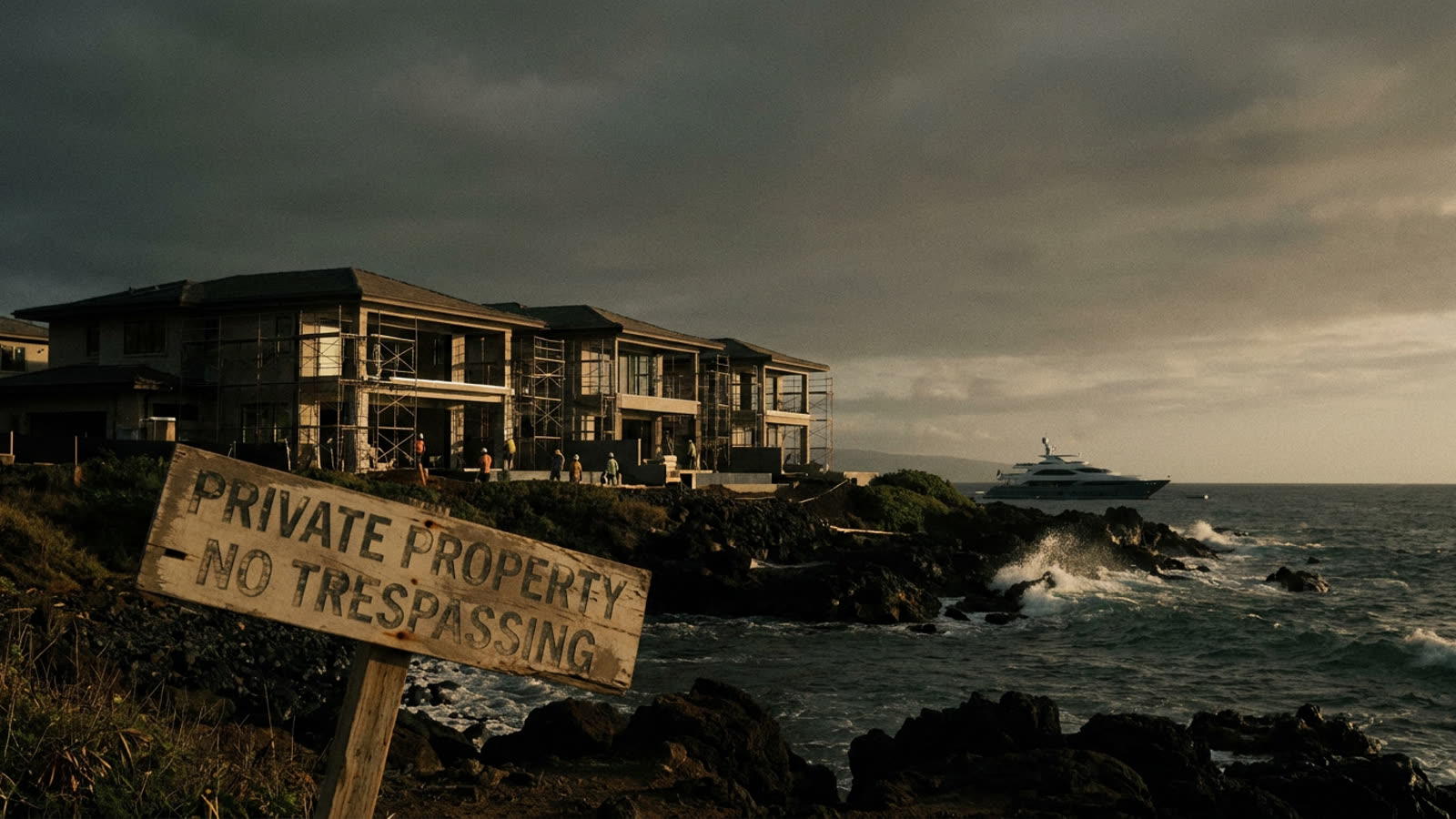
Some have responded by retreating further, purchasing property rather than renting, building compounds designed to be photographed only from above. Others have embraced the visibility, treating Hawaiian vacations as content opportunities rather than escapes from content creation.
Our take
The transformation of Hawaii into Hollywood's backyard pool says less about celebrity taste than about the shrinking geography of American luxury. As international travel grows more complicated and domestic alternatives feel increasingly picked-over, the islands have become a default rather than a choice. That's good for resort shareholders and real estate agents, less clear for the communities navigating a tourism economy that increasingly serves people who could buy the hotel rather than just book a room. Paradise, it turns out, is subject to the same market forces as everywhere else.