The woman once dubbed "the most hated mother in America" was photographed in Florida this week, shortly after reports linked her to a new romantic relationship in New Hampshire. Casey Anthony, now 40, has spent the years since her 2011 acquittal in a peculiar limbo: legally free, socially radioactive, and perpetually newsworthy for doing almost nothing at all.
The sighting itself was unremarkable — a woman in sunglasses, a parking lot, the humid banality of central Florida. Yet TMZ's breathless coverage and the immediate social-media pile-on confirmed what anyone following American true-crime culture already knows: Anthony occupies a singular position in the national psyche, a living Rorschach test for debates about justice, motherhood, and the media's appetite for villains.
The trial that launched a thousand podcasts
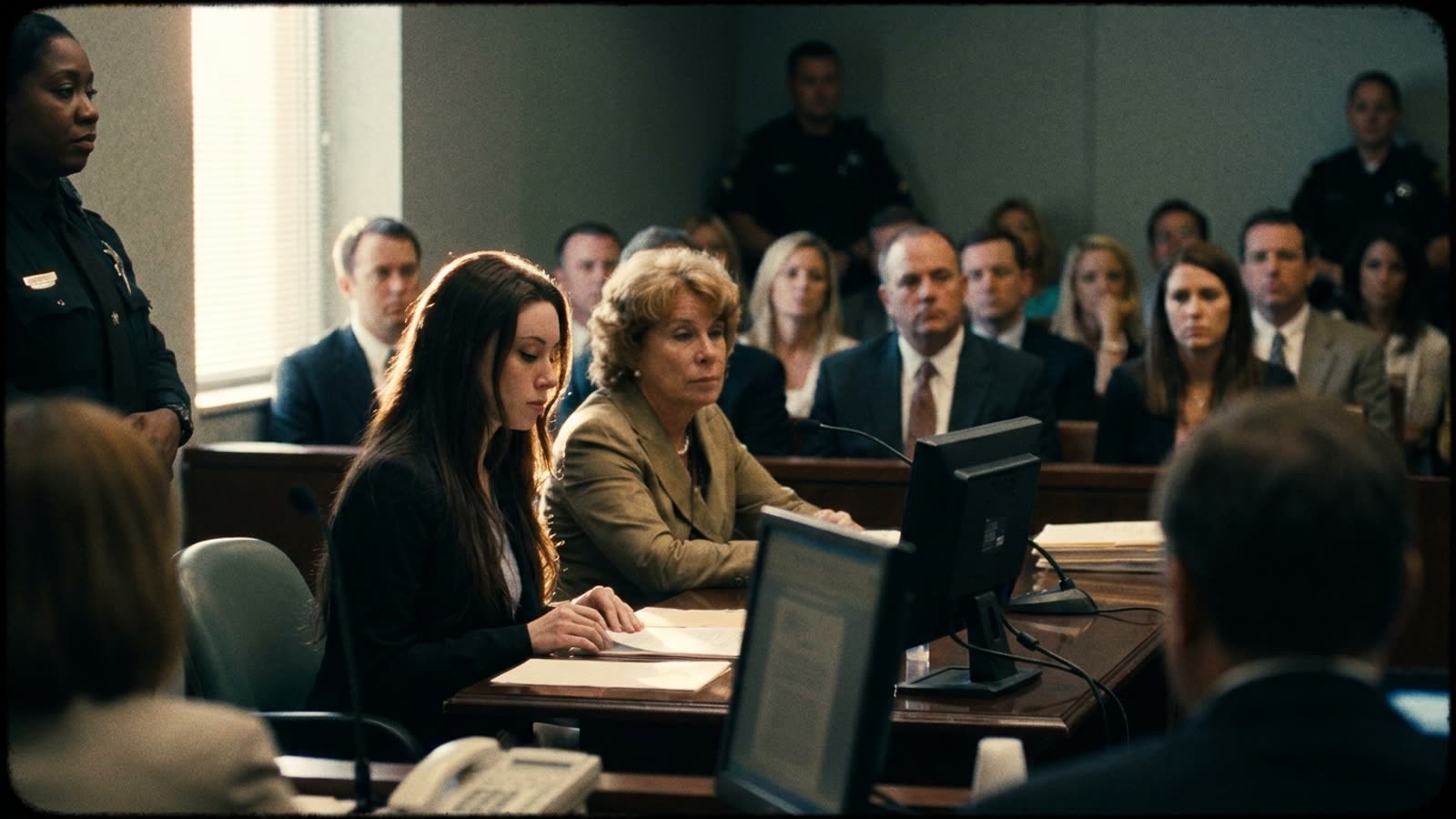
For those who somehow missed it, the 2008 death of two-year-old Caylee Anthony and her mother's subsequent murder trial became a cable-news phenomenon that presaged our current obsession with true crime as entertainment. The acquittal on murder charges — prosecutors failed to prove cause of death — triggered public outrage and spawned an industry of documentaries, podcasts, and armchair forensic analysis that continues to this day.
Anthony's 2017 interview with the Associated Press, her first extended remarks since the trial, did little to rehabilitate her image. A 2022 Peacock documentary allowed her to offer her own account, which was met with widespread skepticism. Each reappearance follows the same script: sighting, outrage, think pieces about why we cannot look away.
The New Hampshire wrinkle
Recent reports suggested Anthony had been romantically involved with someone in New Hampshire, a detail that prompted predictable jokes about witness-protection-level geographic choices. Whether this relationship is ongoing, serious, or merely tabloid speculation remains unclear. What is clear is that any person publicly linked to Anthony faces immediate scrutiny — a kind of reputational contagion that has kept her social circle vanishingly small.
Her continued residence in Florida, where she reportedly lives with a private investigator who worked on her defense, suggests either defiance or inertia. The state that tried to execute her remains, improbably, home.
Our take
Casey Anthony's persistent tabloid presence says less about her than about us. Seventeen years after Caylee's death, the case offers no new information, no closure, no redemption arc. Yet we keep clicking, keep commenting, keep feeding the algorithm that ensures her face will surface again next month, next year, indefinitely. She is not famous for what she did or did not do; she is famous for being famous for being infamous — a closed loop of attention that benefits no one except the platforms that monetize our collective inability to move on. The parking-lot photo is not news. Our inability to ignore it might be.