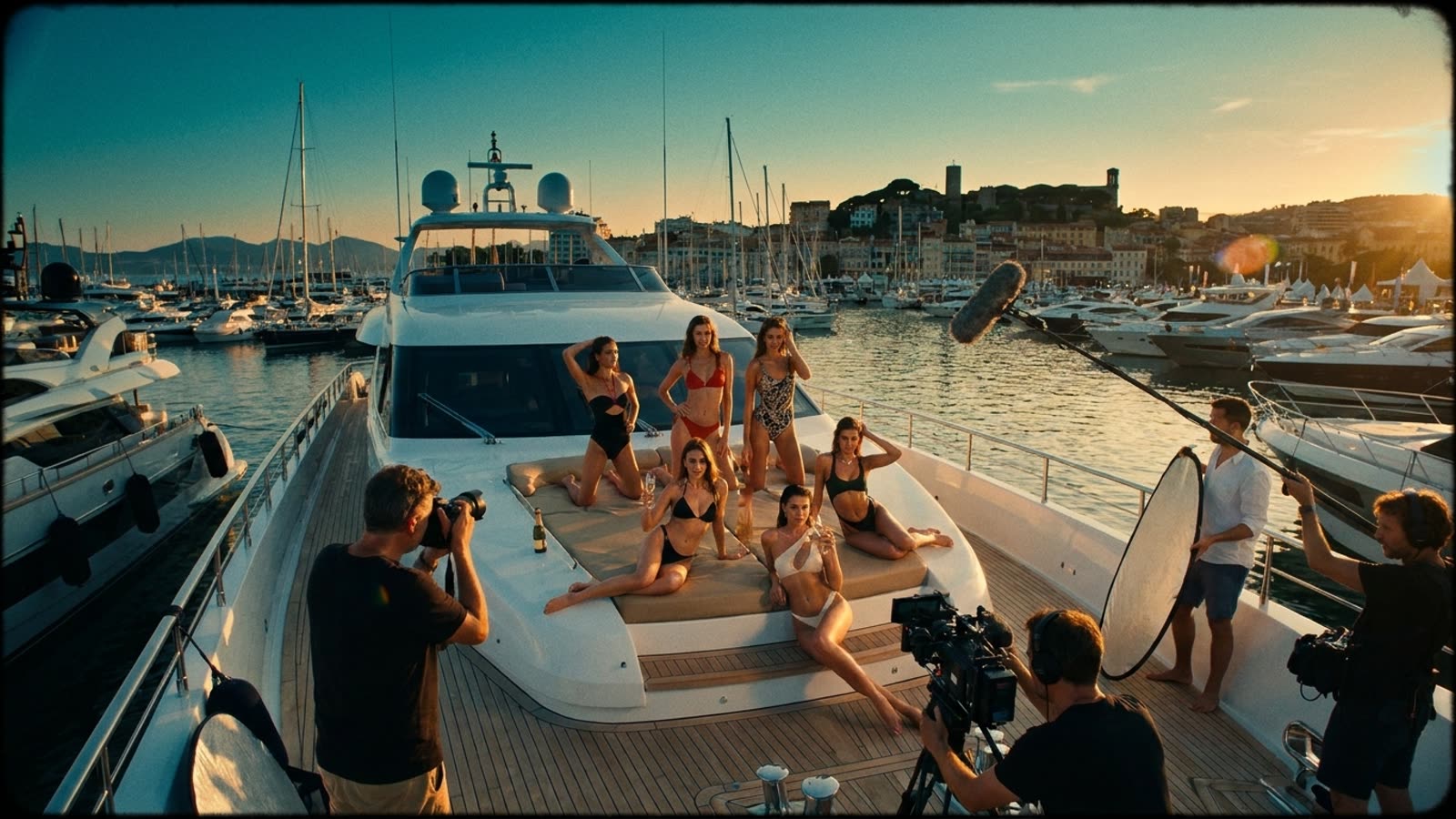
The Cannes Film Festival has always been a dual-purpose event — part cinema showcase, part celebrity spectacle — but the 2026 edition has made the hierarchy unmistakably clear. While arthouse directors compete for the Palme d'Or in darkened theaters, the real competition unfolds on superyachts anchored off La Croisette, where the swimwear is strategic and the paparazzi boats circle like sharks.
This year's festival has produced more viral fashion moments from deck chairs than from the Palais des Festivals. The yacht-to-Instagram pipeline now operates with industrial efficiency: a celebrity boards in the morning, photographs surface by noon, and by evening the swimsuit brand has sold out. It is commerce dressed as leisure, and everyone involved understands the transaction perfectly.
The economics of floating fashion
What makes Cannes yacht culture particularly effective as a marketing vehicle is its aspirational inaccessibility. Unlike a red carpet appearance — which any actress with a publicist can secure — yacht access signals a different tier of celebrity. It suggests wealth, leisure, and the kind of social connections that cannot be purchased directly. Brands have noticed. Swimwear companies now treat Cannes week as their equivalent of Fashion Week, seeding pieces to celebrities with the understanding that Mediterranean sunlight is the best possible lighting.
The numbers support the strategy. Industry analysts estimate that a single well-photographed yacht moment can generate media value exceeding what a traditional advertising campaign would cost. The celebrity gets the yacht invitation; the brand gets the exposure; the festival gets the glamour that keeps sponsors interested. Everyone wins except, perhaps, the films competing for attention.
Cinema's supporting role
This is not to suggest Cannes has abandoned cinema — the programming remains as ambitious as ever, and the critical discourse around competition films still matters to the industry. But the festival's cultural footprint has bifurcated. Serious cinephiles follow the screenings and jury deliberations. Everyone else follows the yacht content.
The festival's organizers have made peace with this arrangement, understanding that celebrity spectacle subsidizes the arthouse programming. Without the tabloid interest that yacht culture generates, Cannes would struggle to command the sponsor fees that keep it financially viable. The swimwear moments are not a distraction from the festival's mission; they are what makes the mission possible.
Our take
Cannes has evolved into something more honest than it used to be — a place where the relationship between celebrity, commerce, and culture is conducted in plain sight rather than behind closed doors. The yacht deck has simply replaced the hotel suite as the venue for this exchange. Whether this represents the corruption of a great film festival or its adaptation to contemporary media realities depends on how much you valued the old pretenses. The films will still get made, the prizes will still matter to the people who care about such things, and the swimwear will still sell out by dinnertime.