There is something almost impolite about the way the Carolina Hurricanes are dismantling the NHL playoffs. They do not brawl. They do not produce viral soundbites. They simply win, game after game, with the quiet efficiency of a well-funded accounting firm closing the books on a fiscal quarter. Saturday's 3-2 overtime victory over the Philadelphia Flyers completed a four-game sweep and extended Carolina's postseason record to a pristine 8-0, yet the achievement will likely be buried beneath basketball highlights and transfer rumours.
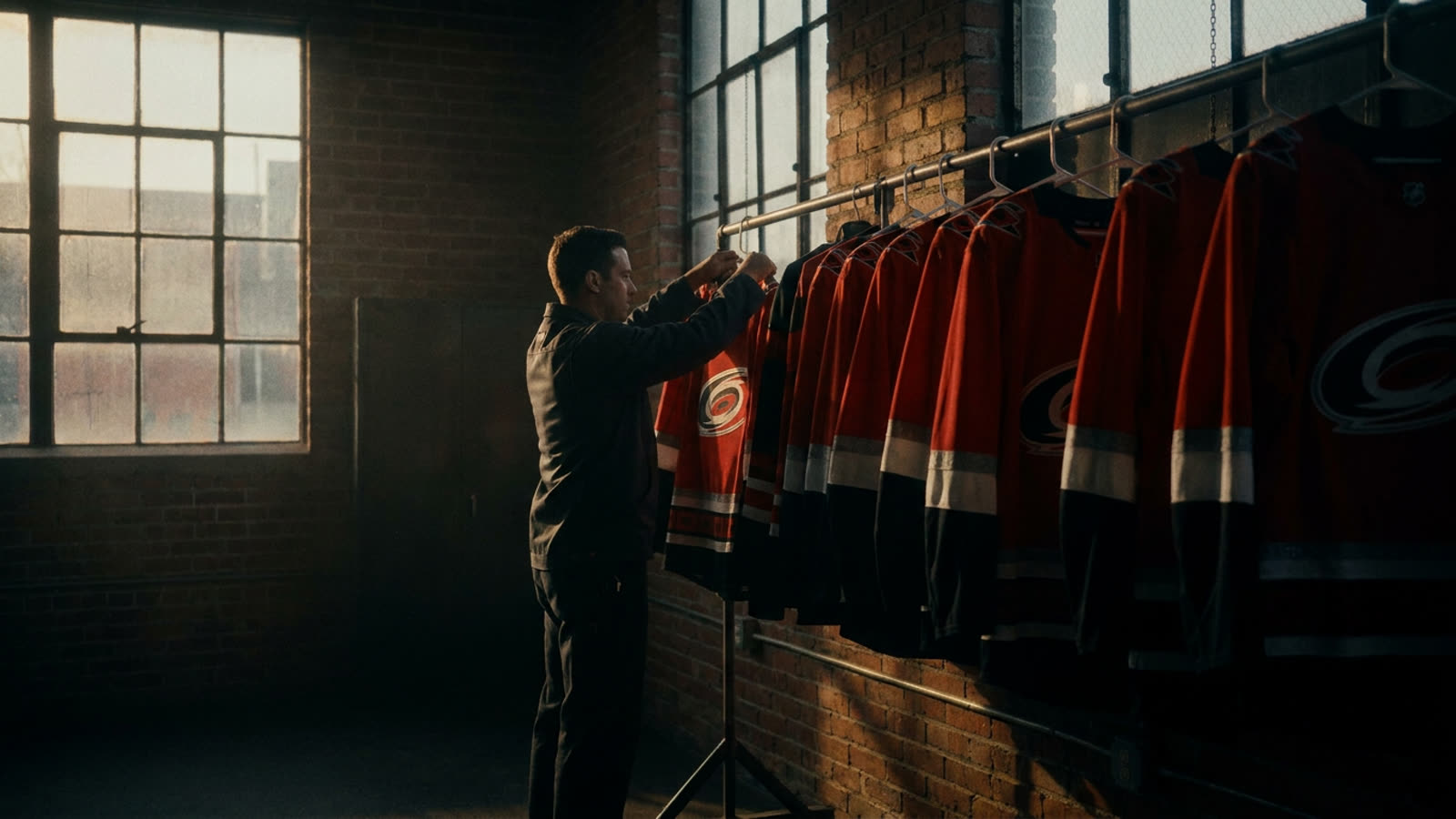
Jackson Blake scored twice, including the overtime winner 5:28 into the extra frame, but the real story is systemic. Rod Brind'Amour's team has now won eight consecutive playoff games without ever trailing in a series. They have outscored opponents, absorbed injuries, and converted role players into postseason contributors with a consistency that borders on algorithmic.
The Brind'Amour blueprint
Brind'Amour, who lifted the Stanley Cup as a player with Carolina in 2006, has built his coaching identity around relentless forechecking and defensive accountability. His teams are not built to dazzle; they are built to suffocate. The Hurricanes rank among the league leaders in shots against per game and penalty-kill percentage this postseason, metrics that rarely trend on social media but reliably correlate with deep playoff runs. Philadelphia, despite a scrappy regular season, never found oxygen in this series.
Why Carolina stays invisible
The Hurricanes play in a market that the national sports media apparatus has never quite figured out how to sell. Raleigh lacks the mythological weight of Original Six cities, and the team's best players—Sebastian Aho, Andrei Svechnikov—are excellent without being transcendent celebrities. There is no villain, no soap opera, no convenient narrative hook. The result is a franchise that could win the Cup and still struggle to crack the top of ESPN's homepage.
Our take
Perfection deserves attention, even when it arrives without fanfare. The Hurricanes are not merely winning; they are dominating in a sport where parity is supposed to be the default setting. If they continue at this pace, the hockey world will eventually be forced to acknowledge what is happening in North Carolina. Until then, Carolina will keep doing what it does best: winning games that nobody outside the Triangle seems to be watching.