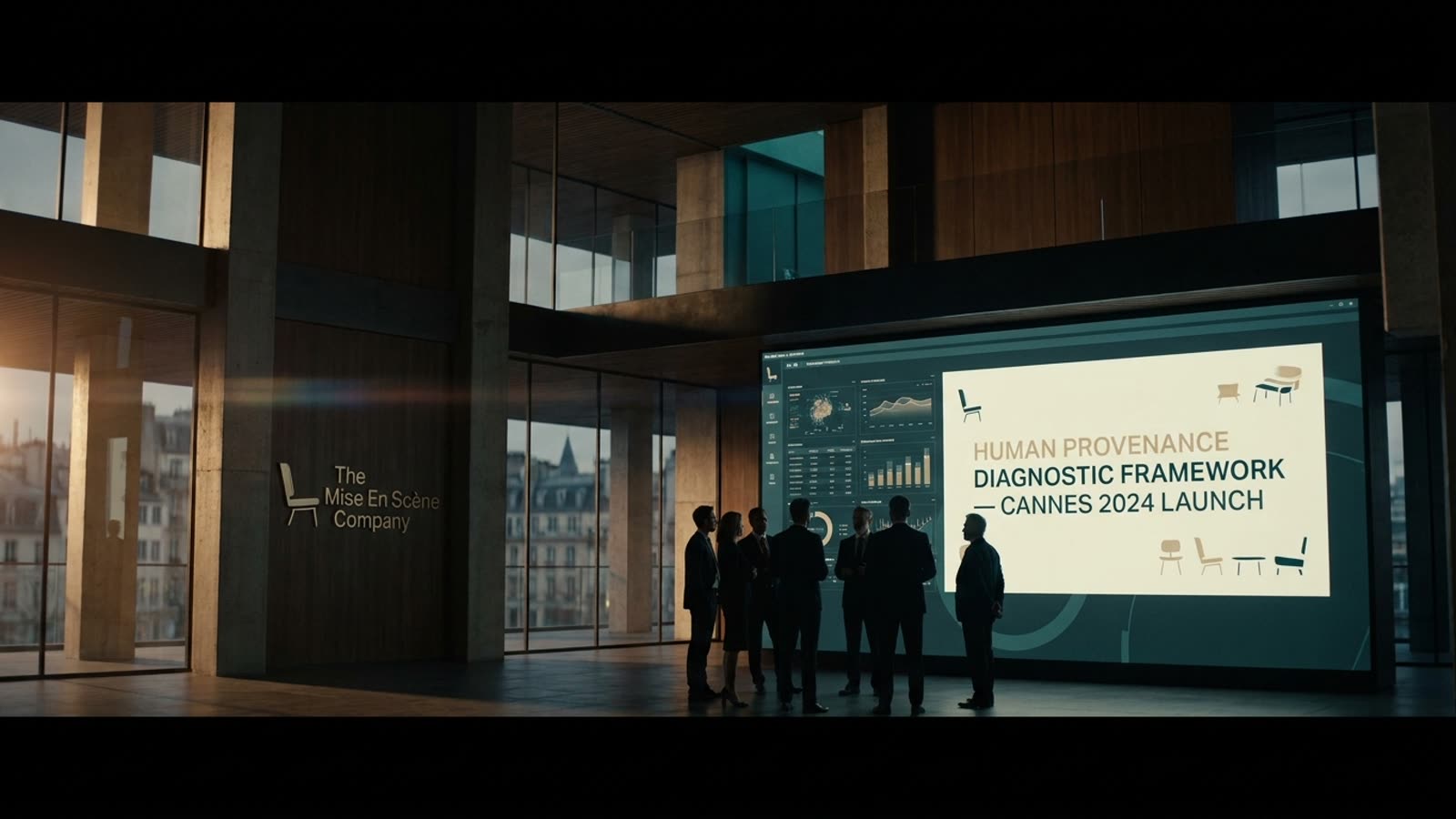
The film industry has spent two years arguing about artificial intelligence without agreeing on what, exactly, anyone should have to disclose. That vacuum ends this week at the Cannes Film Market, where London-based The Mise En Scène Company is unveiling Human Provenance in Film — a voluntary standard designed to let productions certify which elements were made by people and which were generated or assisted by machines.
The timing is not accidental. European regulators are drafting mandatory AI labeling rules that could arrive as early as next year, and Hollywood's guilds remain locked in skirmishes over synthetic performers and AI-written dialogue. A self-regulatory framework that arrives before the mandates do gives the industry a chance to shape the conversation rather than simply react to it.
What the standard actually requires
Human Provenance in Film asks productions to document AI usage across five categories: script and dialogue, visual effects, voice and audio, performance capture, and marketing materials. Participating films receive a certification mark and a public disclosure page — think of it as a nutrition label for creative authenticity. Crucially, the standard does not ban AI; it merely requires honesty about where it appears.
The Mise En Scène Company is opening a consultation period at Cannes, inviting producers, distributors, and guilds to propose amendments before the framework is finalized later this year. That collaborative approach is intentional: a standard imposed from above would face the same resistance that has stalled AI provisions in recent union negotiations.
Why voluntary beats mandatory — for now
Mandatory disclosure sounds appealing until you consider enforcement. Regulators lack the technical capacity to audit visual-effects pipelines, and the line between "AI-assisted" and "AI-generated" is blurrier than most policy documents acknowledge. A voluntary system sidesteps those problems by appealing to reputational incentives: filmmakers who want to market their work as authentically human can prove it, while those who embrace synthetic tools can do so transparently without legal jeopardy.
The risk, of course, is that bad actors simply opt out. But the history of content ratings suggests that industry-wide adoption can create de facto requirements even without legal force. Theaters that refuse to show unrated films effectively compel studios to participate in the MPAA system; distributors that prefer certified titles could create similar pressure here.
Our take
Human Provenance in Film is a modest proposal dressed in the language of revolution. It will not stop AI from transforming cinema, nor will it satisfy critics who want outright bans on synthetic performances. What it might do is buy the industry time — a credible self-regulatory gesture that delays heavier-handed intervention from Brussels and Washington while giving audiences a reason to trust what they are watching. In an era when seeing is no longer believing, that trust is worth certifying.