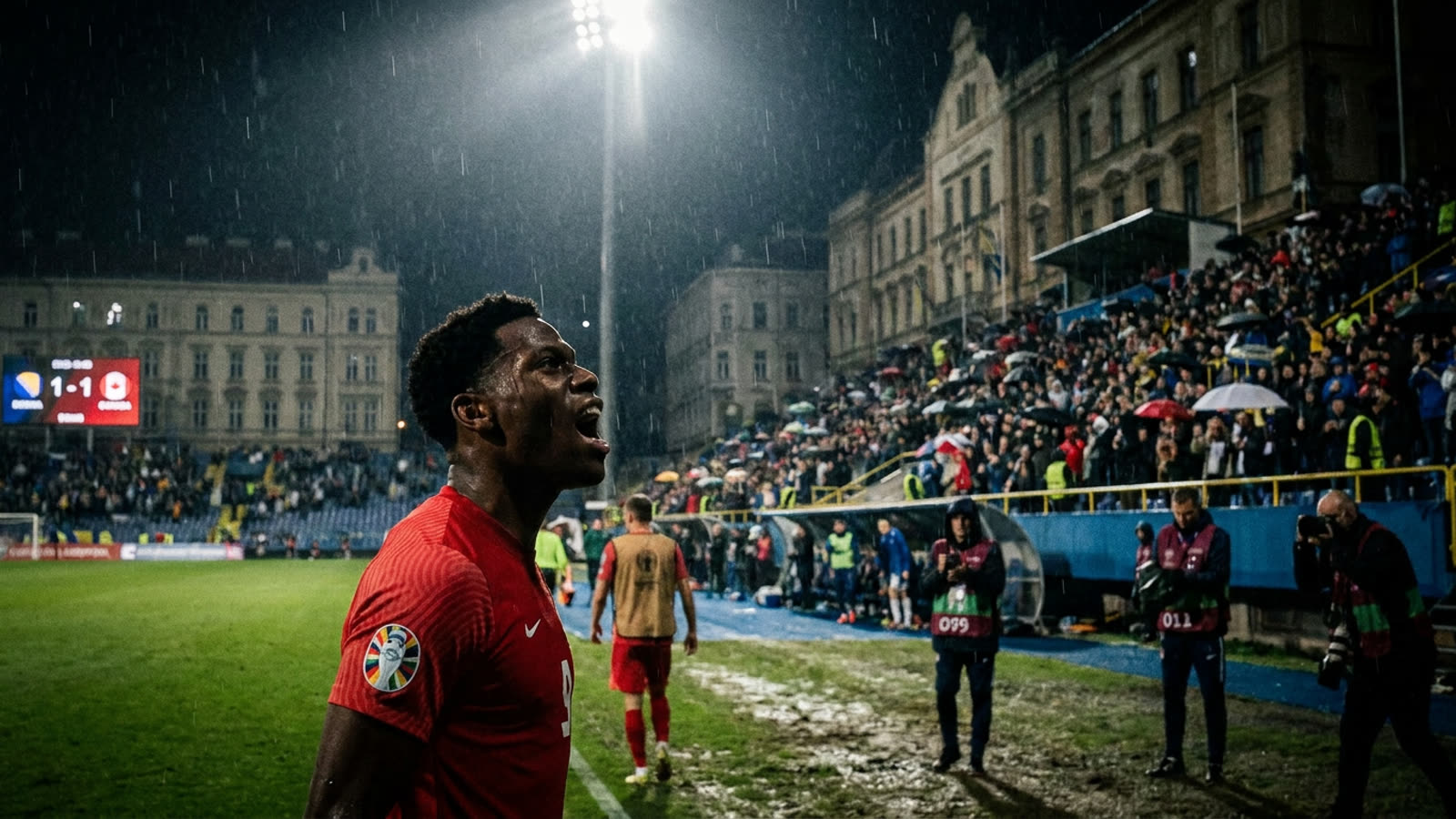
For decades, Canada was the polite neighbor who watched the party through the window. The men's national team qualified for exactly one World Cup before this tournament — Mexico 1986, where they lost all three matches without scoring a single goal. Now, hosting on home soil for the first time, they have done something that sounds modest but carries the weight of forty years: they earned a point.
The 1-1 draw against Bosnia and Herzegovina in Vancouver was not beautiful football. It was grinding, occasionally chaotic, and featured the kind of defensive scrambles that make coaches age visibly. But when Jonathan David converted from the penalty spot in the 67th minute to equalize after Edin Džeko had given Bosnia the lead, something shifted in BC Place. This was not a team grateful to be present. This was a team that believed it deserved to be.
The David factor
Jonathan David has spent years as the quiet star of Canadian soccer — prolific at Lille, respected across Europe, yet somehow underappreciated in the global conversation about elite strikers. His penalty was struck with the confidence of a player who has taken dozens in pressure situations at the club level. No stutter-step, no drama, just placement and power. For Canada, having a finisher of this caliber changes the calculus entirely. They are no longer a team that needs to manufacture miracles; they have someone who can produce quality when it matters.
The 26-year-old now has 30 international goals, a record for the Canadian men's program. In a tournament where established powers are expected to dominate, David gives Canada a puncher's chance in every match.
Bosnia's missed opportunity
Bosnia and Herzegovina, playing in their second World Cup, will feel they let two points slip away. Džeko's header in the first half was a reminder that the 40-year-old remains dangerous in the air, but the team's inability to kill the game when Canada looked vulnerable will haunt them. The Bosnians needed a result against a host nation riding emotional momentum; instead, they head into their match against Morocco knowing a loss could effectively end their tournament.
The broader Group F picture now favors the co-hosts. Canada faces Croatia next, a daunting prospect, but even a narrow defeat would leave them in contention if they can handle their final group match. The path to the knockout rounds is not guaranteed, but it is visible — which is more than Canadian fans could say at any point in the previous four decades.
Our take
A draw is a draw, and Canada will need more than grit to advance deep into this tournament. But there is something to be said for a team that refuses to accept its historical role as a footnote. The Canadian men have spent years building toward this moment through youth development, strategic naturalization, and a genuine belief that they can compete with established powers. One point against Bosnia does not validate that project entirely — but it suggests the project is working. The window is open. Now they have to climb through it.