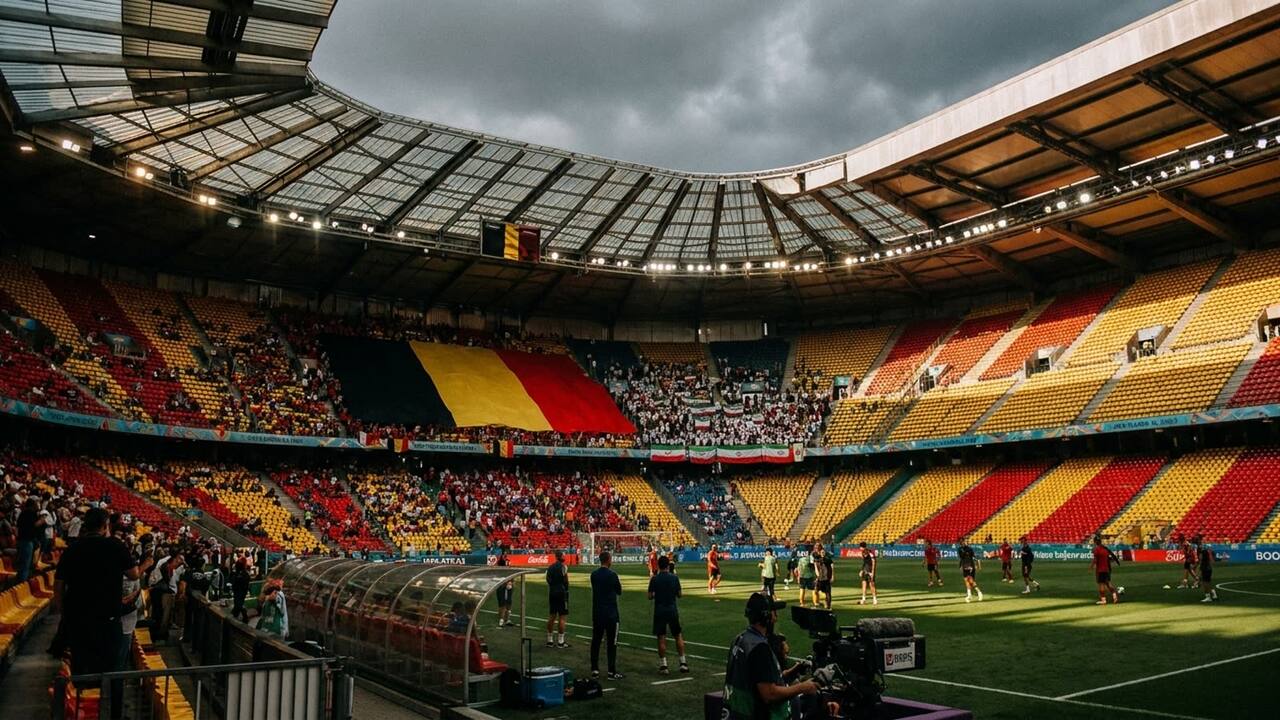
When Belgium face Iran in their Group C encounter, the pre-match handshake will carry more geopolitical weight than most bilateral summits. One side fields a squad of ageing superstars desperate for one last trophy; the other represents a country where simply cheering for the national team has become a political act.
This is World Cup football at its most uncomfortably compelling.
The Belgian twilight
Kevin De Bruyne, Romelu Lukaku, and the remnants of Belgium's vaunted "golden generation" have spent the better part of a decade being called dark-horse favorites, only to stumble when it mattered. Third place in 2018 remains their peak. Now, with De Bruyne past thirty-five and Lukaku's legs visibly heavier, this tournament feels like a final accounting.
Manager Domenico Tedesco has tried to blend the veterans with younger talents, but the chemistry remains uncertain. Belgium's 2-1 win over Canada in their opener was unconvincing—a penalty and a set piece doing the work that fluid attacking play once handled. Against Iran's disciplined low block, they'll need the old magic to reappear.
Iran's impossible position
For Iranian players, every World Cup becomes an exercise in impossible navigation. The regime in Tehran demands patriotic fervor; the diaspora and domestic protesters demand solidarity with the "Woman, Life, Freedom" movement that has convulsed the country since 2022. At the last World Cup, players refused to sing the anthem. Some faced consequences upon returning home.
This time, the squad has been largely silent—a silence that speaks volumes. Head coach Amir Ghalenoei has focused relentlessly on tactics, perhaps hoping that football can provide temporary refuge from politics. Iran's defensive organization remains formidable; they conceded just once in qualifying and held Ecuador to a draw in their opener.
What to watch
The tactical battle is straightforward: Belgium will dominate possession, Iran will sit deep and counter. The more interesting question is what happens in the stands and on social media. Iranian supporters in North America have historically used World Cup matches as protest venues, and security around the stadium will reflect that reality.
On the pitch, watch for Mehdi Taremi, Iran's captain and lone genuine attacking threat. If Belgium's aging center-backs give him space, he has the quality to punish them.
Our take
Sport's claim to exist outside politics has always been a convenient fiction, but some matches expose the lie more nakedly than others. Belgium-Iran is nominally about three points in Group C. In reality, it's a collision between a fading European power desperate for validation and a team whose very existence on this stage raises questions about what international football is willing to overlook. The beautiful game, as ever, is also the complicated one.