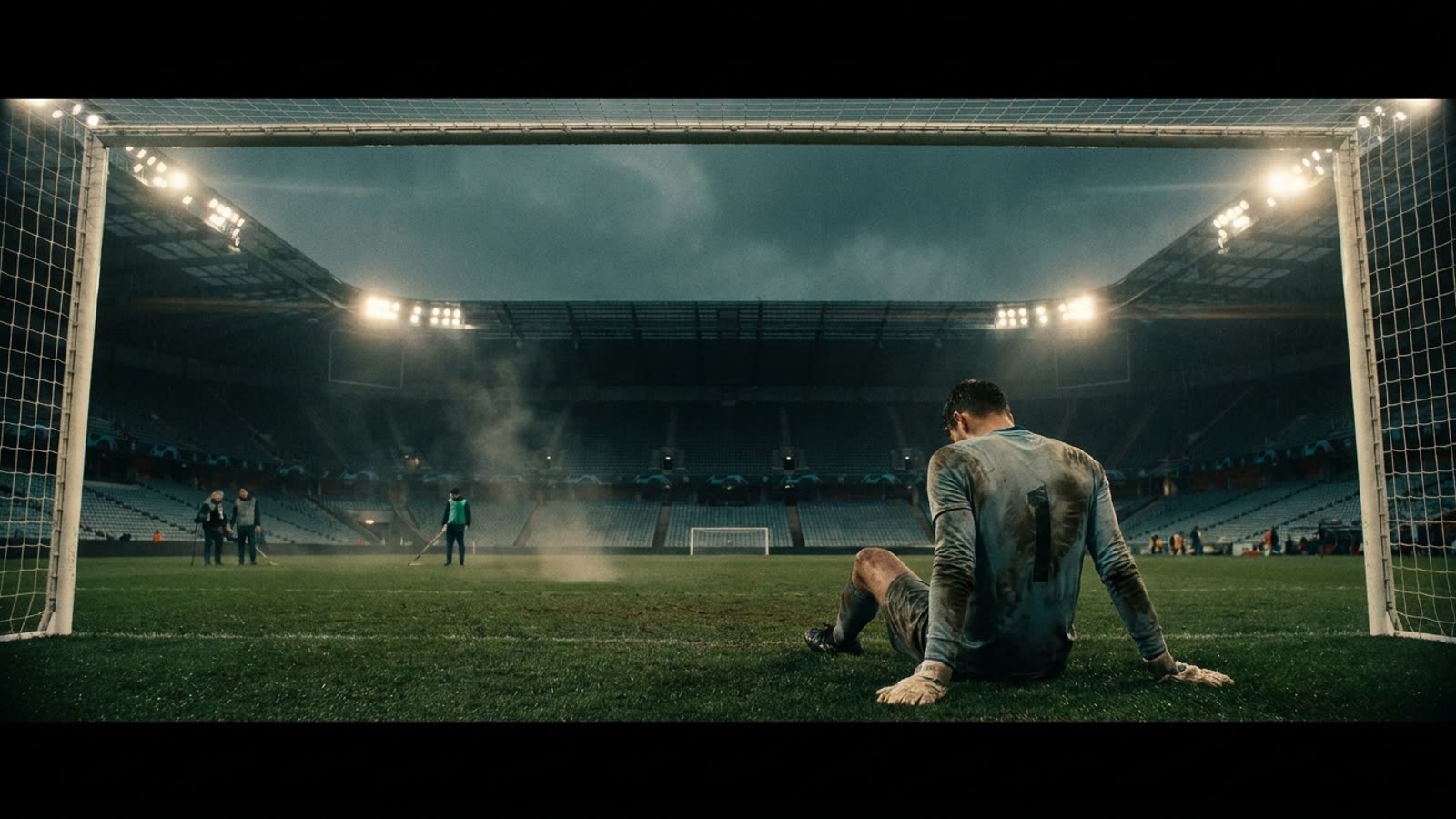
The 2026 World Cup was supposed to belong to the strikers. Haaland's physical dominance, Mbappé's acceleration, Messi's final act — the narrative was pre-written by marketing departments and broadcast partners who understand that goals sell subscriptions. Instead, the tournament's most compelling storyline has emerged from the position football romantics tend to ignore until something goes wrong.
Goalkeepers are having a moment, and it is forcing a reconsideration of how we evaluate excellence in the sport.
The numbers tell a partial story
Statistically, this World Cup has produced fewer goals per match than the 2022 edition in Qatar through the equivalent stage. The easy explanation is defensive discipline — teams sitting deeper, protecting leads, playing for penalties. But the more interesting explanation involves the evolution of goalkeeping itself. Modern keepers are expected to function as auxiliary defenders, sweeper-keepers who read passing lanes and initiate attacks. The best of them are doing something more: they are actively discouraging shots that would have been taken five years ago.
The psychological dimension matters. When a goalkeeper makes two or three extraordinary saves early in a match, attacking players begin second-guessing their decisions. They hold the ball a fraction longer, looking for a better angle that does not exist. The goalkeeper's presence extends beyond his physical reach.
Why we undervalue the position
Football culture has always struggled to celebrate goalkeepers properly. They do not fit the highlight-reel economy that drives engagement. A striker's goal can be replayed endlessly, dissected, mythologized. A goalkeeper's save is reactive, contextual, harder to appreciate without understanding what might have been. The position rewards anticipation and positioning — qualities that are invisible when executed perfectly.
This tournament is changing the calculus slightly. Social media has discovered that a truly spectacular save generates its own viral momentum, particularly when captured from the right angle. The technology has caught up with the artistry.
The tactical implications
Managers are taking notice. Several knockout-stage matches will feature teams whose primary strategic asset is their goalkeeper's ability to steal a result against superior opposition. This is not new — Greece won Euro 2004 with precisely this approach — but the sophistication has increased. Goalkeepers are now integrated into set-piece defending in ways that would have seemed exotic a decade ago, positioned to intercept crosses rather than merely react to headers.
The question for the tournament's remaining weeks is whether a goalkeeper can genuinely be the difference in a final. History suggests the answer is yes, but only when the margins are razor-thin.
Our take
Football's obsession with attacking talent has always been slightly adolescent — the sporting equivalent of judging a novel by its most quotable sentences. This World Cup is offering a corrective. The best goalkeepers are not merely preventing goals; they are imposing their will on matches, shaping the psychological landscape in which the game is played. If Haaland or Mbappé lifts the trophy, the highlight reels will feature their goals. But the honest history of this tournament will acknowledge that the men in gloves determined more outcomes than the men in boots.