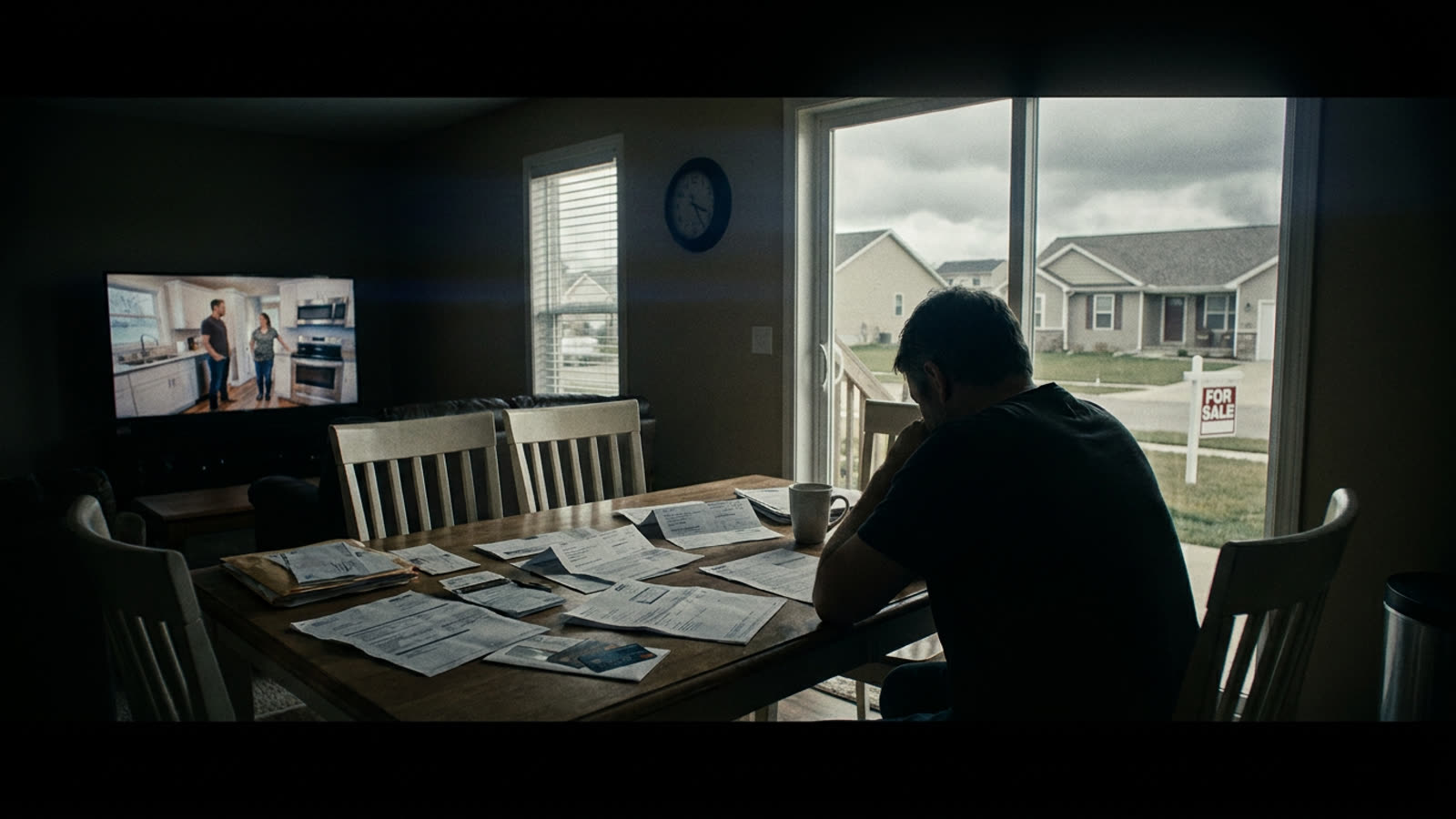
When an entire economy decides to save at the same time, something paradoxical happens: the collective virtue becomes a collective trap. This is the core insight of the balance sheet recession, a concept that emerged from Japan's lost decade and has haunted policymakers ever since.
The mechanism is deceptively simple. After an asset bubble bursts, households and corporations find themselves with debts that exceed the value of their collateral. Their assets have cratered; their liabilities remain. The rational response for each individual actor is to stop borrowing and start paying down debt, even when interest rates fall to zero. But when everyone deleverages simultaneously, spending collapses, and the economy enters a doom loop that traditional monetary policy cannot break.
Why interest rates stop working
In a normal recession, central banks cut rates, borrowing becomes cheaper, and spending eventually recovers. The balance sheet recession breaks this transmission mechanism entirely. When a corporation owes more than its assets are worth, it doesn't want to borrow at any price — it wants to repair its balance sheet. The same applies to households underwater on their mortgages. Cheap money sits idle because there are no willing borrowers, only reluctant savers working through the wreckage of the previous boom.
Japan discovered this the hard way throughout the 1990s. The Bank of Japan slashed rates to near zero, yet credit growth remained anemic. Economists trained on conventional models were baffled. The answer, articulated most clearly by economist Richard Koo, was that Japan wasn't experiencing a normal demand shortfall — it was experiencing a collective balance sheet crisis that required a different toolkit entirely.
The fiscal imperative
If the private sector is determined to save regardless of interest rates, then someone else must borrow and spend to prevent economic collapse. In a balance sheet recession, that someone is the government. Deficit spending becomes not a policy choice but a mathematical necessity: private sector savings must flow somewhere, and if businesses won't invest and households won't consume, the public sector must absorb the excess.
This explains why Japan's government debt ballooned even as its economy stagnated. Critics who demanded fiscal austerity misunderstood the situation — every time Japan attempted to tighten its budget in the 1990s, the economy promptly weakened, forcing renewed stimulus. The debt wasn't causing the problem; it was preventing a worse one.
Our take
The balance sheet recession remains the most important macroeconomic concept that most people have never heard of. It explains not only Japan's lost decade but also why recovery from the 2008 financial crisis proved so sluggish in economies where households had gorged on mortgage debt. The lesson is uncomfortable for ideologues of all stripes: sometimes the textbook response is precisely wrong, and the path out requires accepting that individual rationality can produce collective ruin. Understanding this dynamic won't make the next crisis easier to endure, but it might prevent policymakers from making it worse.