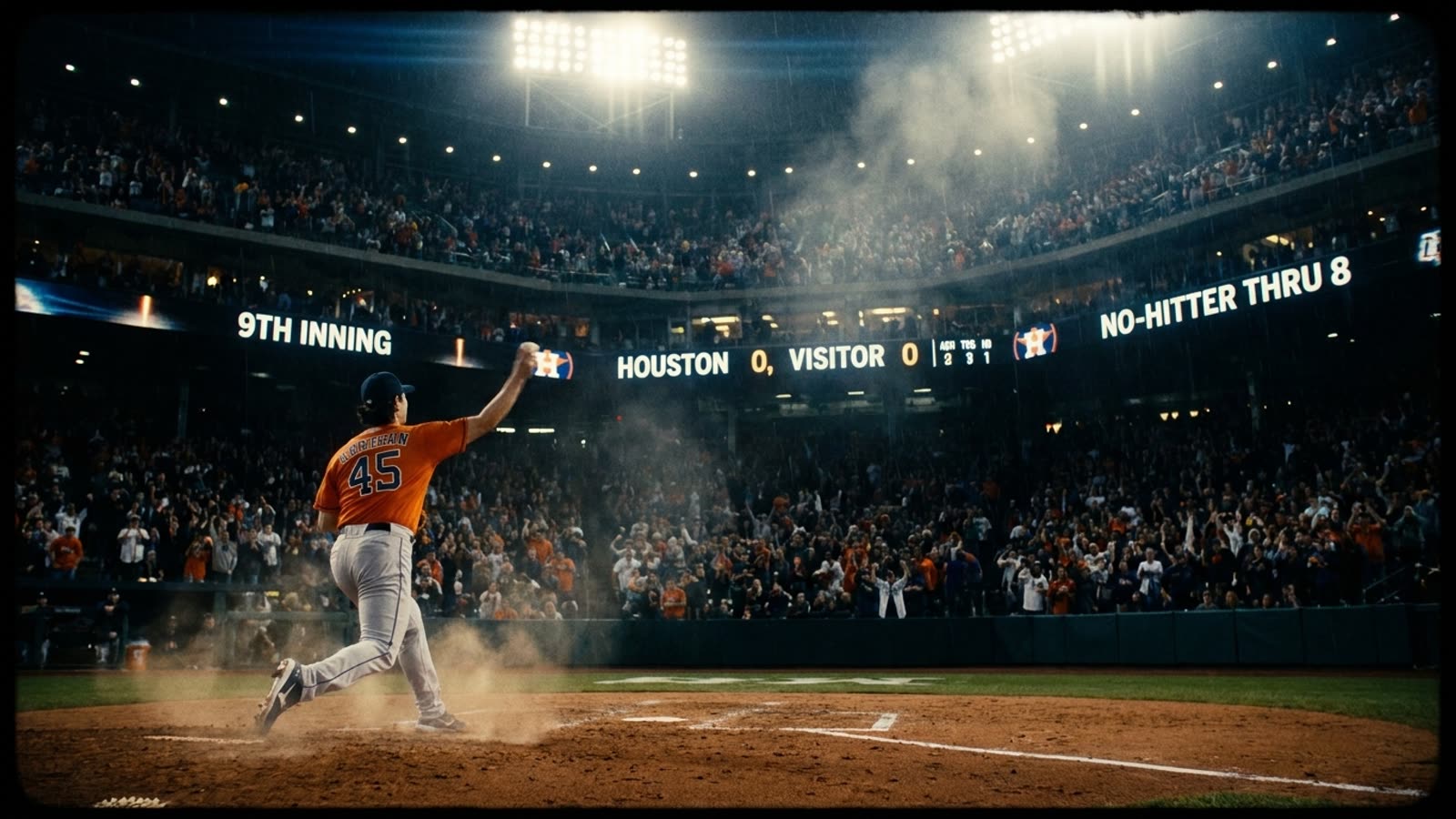
The Houston Astros have done it again, and the sentence barely requires elaboration anymore. On Sunday, the franchise that has turned pitching development into something resembling alchemy completed the 17th combined no-hitter in major league history, with rookie reliever Dennis Santa recording the final outs in what was, improbably, his first appearance at the highest level of professional baseball.
Santa entered in the ninth inning with history on the line and zero big-league innings on his résumé. He exited having etched his name into a record book that Houston seems to treat as a personal ledger. The Astros have now been involved in more combined no-hitters than any franchise in baseball, a statistical quirk that has long since graduated from coincidence to institutional identity.
The Houston pitching paradox
What makes the Astros' sustained excellence so confounding is that it defies the typical explanations. They do not outspend their rivals on starting pitching. They have not hoarded first-round draft picks. Their farm system, while competent, has never been ranked among baseball's elite for pitching prospects. And yet, year after year, arms arrive in Houston and perform beyond their established ceilings.
The organization's pitch-design laboratory and biomechanics program have been well-documented, but documentation does not equal replication. Other franchises have invested heavily in similar infrastructure without approaching Houston's results. The Dodgers spend more. The Rays innovate comparably. Neither has matched the Astros' rate of producing these singular pitching moments.
Santa, a 24-year-old right-hander who spent most of the past two seasons in Double-A, was not considered a top-100 prospect in any major publication entering the year. He is now the answer to a trivia question that will endure for decades.
The vanishing art of the complete game
The combined no-hitter has become baseball's preferred method for achieving the feat, a reflection of how thoroughly the sport has abandoned the idea of a single pitcher working deep into games. Of the 17 combined no-hitters in history, nine have occurred since 2020. The complete-game no-hitter, once the standard, now feels almost quaint—a relic from an era when pitch counts were suggestions rather than mandates.
This shift has not diminished the drama of no-hit bids; if anything, it has multiplied the tension by introducing bullpen management as a variable. Every pitching change becomes a potential breaking point. Every reliever inherits not just runners but history. Santa inherited the cleanest possible ledger and delivered under circumstances that would have rattled veterans with ten times his experience.
Our take
Baseball remains a sport that rewards institutional knowledge over individual brilliance, and no organization has internalized this truth more completely than Houston. The Astros do not need to sign the best pitchers; they need only to find pitchers willing to be taught. Santa's debut is not a fairy tale—it is a case study in what happens when organizational competence meets individual opportunity. The rest of baseball can either figure out what Houston knows or keep watching rookies close no-hitters against them.