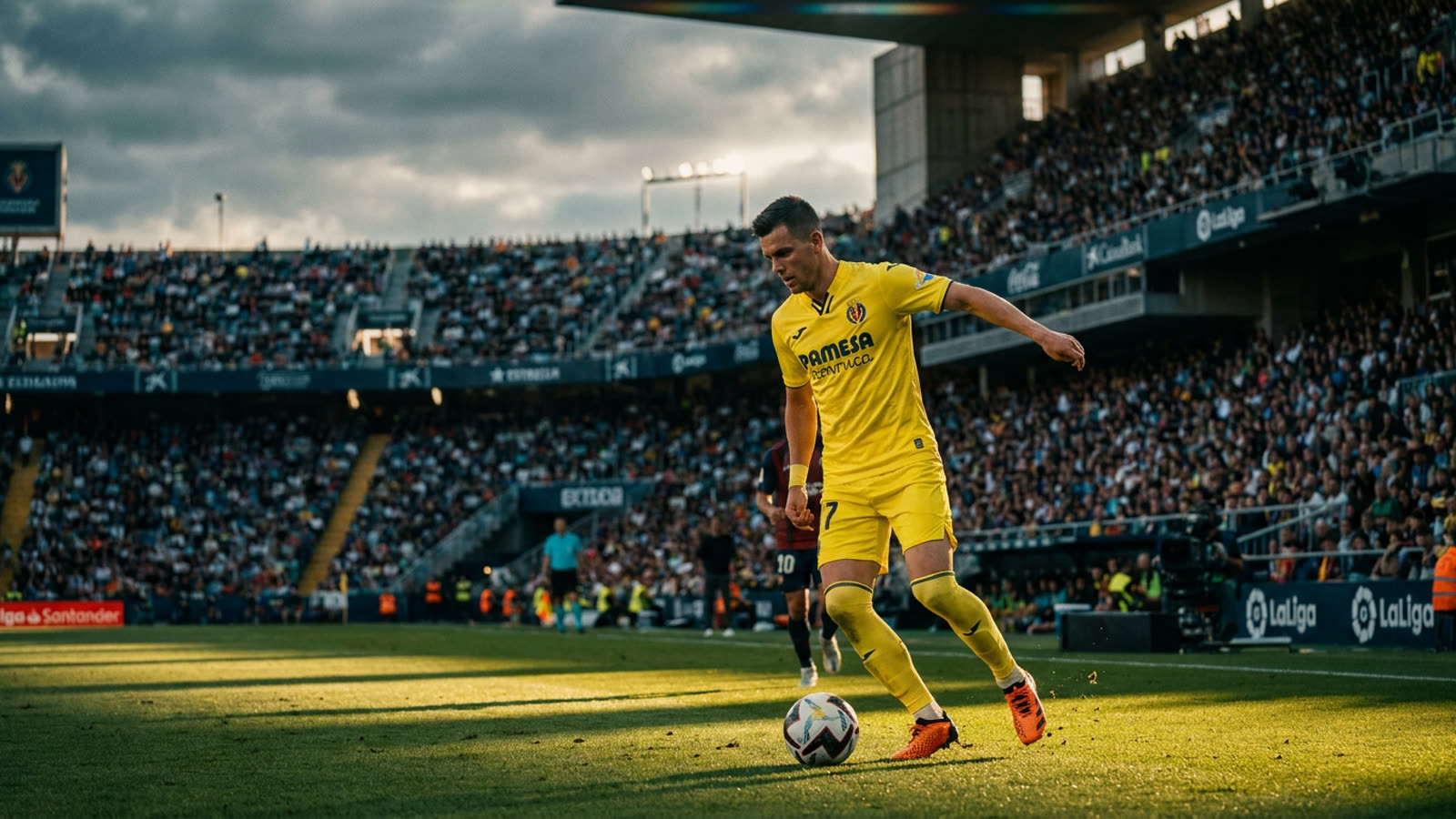
The defending champions do not announce themselves with fireworks; they announce themselves with inevitability. Argentina's Round of 32 opener against Jordan followed a familiar script—patient buildup, a moment of individual brilliance, and the slow suffocation of an overmatched opponent. Giovani Lo Celso's early goal was not spectacular by highlight-reel standards, but it was quintessentially Argentine: the right player in the right space at the right time, a product of a system that has been refining itself since the 2022 triumph in Qatar.
Jordan, making only their second World Cup appearance, entered the match with nothing to lose and played accordingly. Their compact defensive shape frustrated Argentina for stretches, and the Al-Nashama faithful in the stands created an atmosphere that briefly made the knockout round feel like a genuine contest. But this Argentine side has seen every defensive scheme imaginable over the past four years, and Lo Celso's finish in the opening quarter-hour revealed the gap between ambition and execution at the highest level.
The Lo Celso question finally has an answer
For years, Lo Celso has occupied an awkward position in the Argentine hierarchy—too talented to ignore, too inconsistent to build around, perpetually in the shadow of Lionel Messi's generational presence. At Villarreal, he has found rhythm and confidence; with the national team, he has found a defined role as the creative fulcrum when Messi needs rest or when the opposition sits deep enough to require a different kind of penetration.
His goal against Jordan was the product of intelligent movement rather than raw athleticism. He drifted into the half-space between Jordan's midfield and defensive lines, received a simple pass, and finished with the composure of someone who has visualized the moment a thousand times. Scaloni's decision to start him over Enzo Fernández—who came off the bench in the group stage finale—suggests the manager sees something in Lo Celso that the broader public has been slow to recognize.
Jordan's World Cup education continues
The Jordanians arrived in North America as one of the tournament's sentimental favorites, having qualified through a playoff system that rewarded their steady improvement under Hossam Hassan. Their defensive organization in the group stage earned them a point against Mexico and nearly produced an upset against South Korea. Against Argentina, that organization held for fifteen minutes before the quality gap became insurmountable.
This is not a criticism but a statement of developmental reality. Jordan's football infrastructure has grown enormously since their first World Cup appearance in 2022, and their young core—particularly goalkeeper Yazeed Abulaila, who made several sharp saves after the opening goal—will return to future tournaments with invaluable experience. The scoreline matters less than the education.
Our take
Argentina's path to a second consecutive title remains the tournament's most plausible narrative, not because they are the most talented squad but because they are the most complete. Scaloni has built redundancy into every position, Lo Celso's emergence as a genuine starter being merely the latest example. The question is no longer whether Argentina can win without Messi at his peak—they proved that in stretches of 2022. The question is whether anyone else has the depth to match them over seven knockout matches. So far, the answer appears to be no.