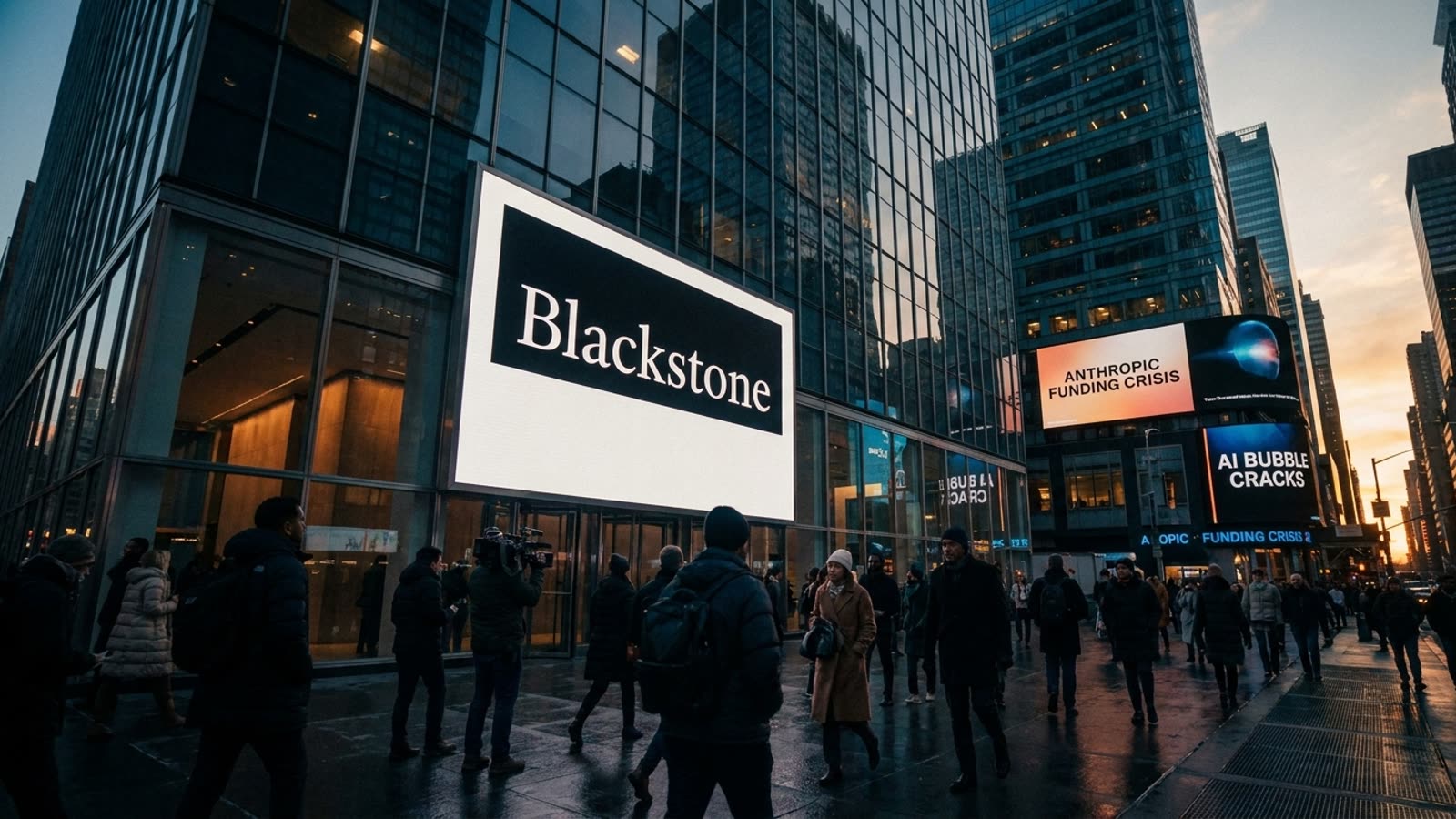
The most revealing number in artificial intelligence right now isn't a benchmark score or a parameter count — it's a yield. Anthropic, the San Francisco lab behind Claude and one of the industry's most credentialed players, is reportedly offering Blackstone double-digit returns on a new chip-financing facility. For a company that has raised over $7 billion in equity and counts Amazon and Google among its backers, that's an extraordinary cost of capital. It suggests the AI industry's infrastructure buildout is entering a phase where even the winners are paying losers' rates.
The compute trap
Anthropic's predicament is structural, not idiosyncratic. Training frontier models requires tens of thousands of Nvidia GPUs, which remain supply-constrained and ruinously expensive. The company cannot simply wait for prices to fall; the competitive window for each generation of models is measured in months. So it borrows. But lenders, having watched the sector's volatility, are demanding compensation for risk that Anthropic's blue-chip investor list cannot fully offset. The double-digit yield — likely somewhere between 10 and 15 percent, based on comparable deals — is private-credit territory, not investment-grade. For context, Apple borrows at around 4 percent.
The deal also complicates Anthropic's stated ambition of achieving investment-grade credit status, a milestone that would unlock cheaper debt and signal institutional maturity. You don't get there by paying hedge-fund rates on equipment financing. The tension is obvious: grow fast enough to justify the valuation, but not so recklessly that the balance sheet screams startup.
What the market is pricing
Blackstone's terms are a market verdict on AI's unit economics. The private-equity giant is not in the business of charity; it is pricing the probability that Anthropic's revenue growth — substantial but still dwarfed by its compute bills — fails to keep pace with its obligations. The firm is also pricing the sector-wide risk that a broader AI correction, of the kind the Financial Times has been warning about, could leave even well-run labs stranded with depreciating hardware and evaporating enterprise contracts.
This is not to say Anthropic is in distress. It is not. But the financing terms reveal that the market distinguishes sharply between equity hype and credit reality. Venture investors can afford to wait a decade for a payout; lenders want their principal back in three years, plus a premium for the sleepless nights.
Our take
Anthropic paying double-digit yields is the AI boom's equivalent of a tech darling issuing junk bonds in 1999 — not a death knell, but a canary. The labs have convinced equity markets that artificial general intelligence is around the corner. Debt markets, which care less about utopia and more about cash flow, are less sure. If the best-funded, most safety-conscious lab in the industry is borrowing at these rates, the second tier is borrowing at worse ones, or not at all. The AI buildout will continue, but its financing costs are becoming a tax on ambition. That tax will eventually show up somewhere — in slower model releases, higher API prices, or, eventually, in the valuations themselves.