Masayoshi Son has spent the past decade funding companies that promised to replace human labor with software. Now he wants to buy a company that employs 800,000 human beings—and replace them with robots.
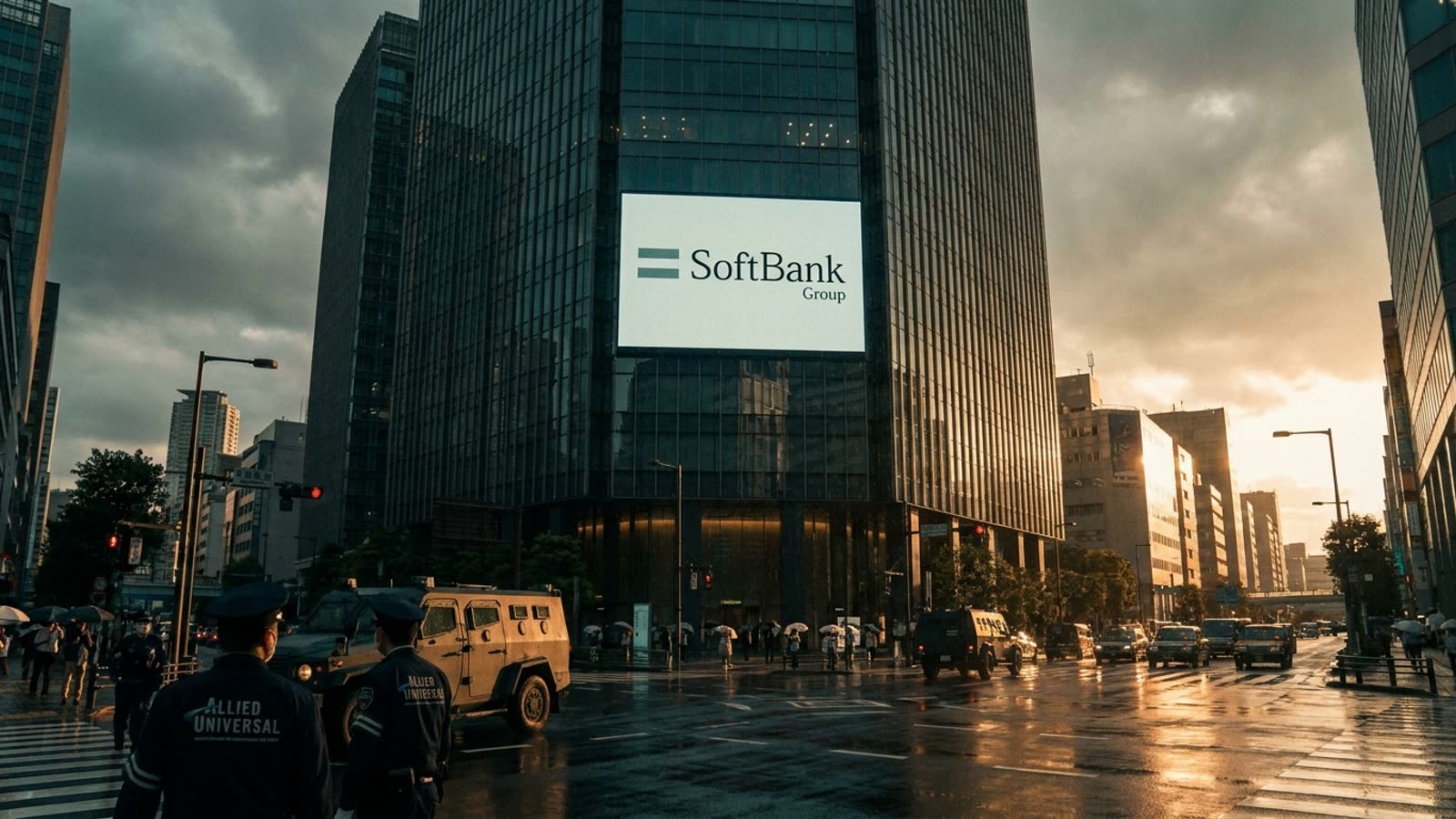
SoftBank is in discussions to acquire Allied Universal, the American security services giant that guards everything from corporate campuses to concert venues, according to people familiar with the matter. The deal, if completed, would represent one of the largest acquisitions in SoftBank's history and the clearest signal yet that Son views physical security as the next frontier for his robotics and AI ambitions.
The logic behind the sprawl
Allied Universal is not a technology company. It is a labor arbitrage business, deploying hundreds of thousands of guards across North America and Europe at thin margins. The company, formed through a 2016 merger and subsequent acquisitions, generates revenues north of $20 billion annually but operates in an industry notorious for high turnover, wage pressure, and commoditized services.
Son's interest makes sense only if you view Allied Universal not as a security firm but as a distribution network for autonomous systems. SoftBank has poured billions into robotics ventures, from Boston Dynamics to warehouse automation startups. What it lacks is a customer base with immediate, large-scale demand for patrol robots, surveillance drones, and AI-powered monitoring. Allied Universal's client roster—Fortune 500 companies, hospitals, airports—provides exactly that.
The financial puzzle
Private equity firms Warburg Pincus and Caisse de dépôt et placement du Québec currently control Allied Universal. Any deal would likely value the company at a significant premium to its last valuation, potentially exceeding $25 billion including debt. For SoftBank, which has spent the past two years unwinding Vision Fund positions and nursing losses from WeWork and other disasters, the acquisition would mark a return to the aggressive dealmaking that defined Son's pre-2022 era.
The timing is notable. SoftBank's share price has recovered substantially from its 2022 lows, buoyed by the AI boom and Arm Holdings' successful public offering. Son appears to be using that financial breathing room to place another transformative bet—this time on atoms rather than bits.
Our take
Son's thesis is not crazy: security is a massive, fragmented industry ripe for technological disruption, and owning the incumbent gives you both the customer relationships and the transition period to swap humans for machines gradually. But the execution risk is enormous. Allied Universal's value proposition today depends on cheap, flexible labor; its value proposition tomorrow depends on expensive, unproven robots. Managing that transition while servicing debt and satisfying clients who just want their lobbies guarded is a challenge that would humble most operators. Son has never been accused of humility, which is either his greatest strength or the reason this ends like WeWork.