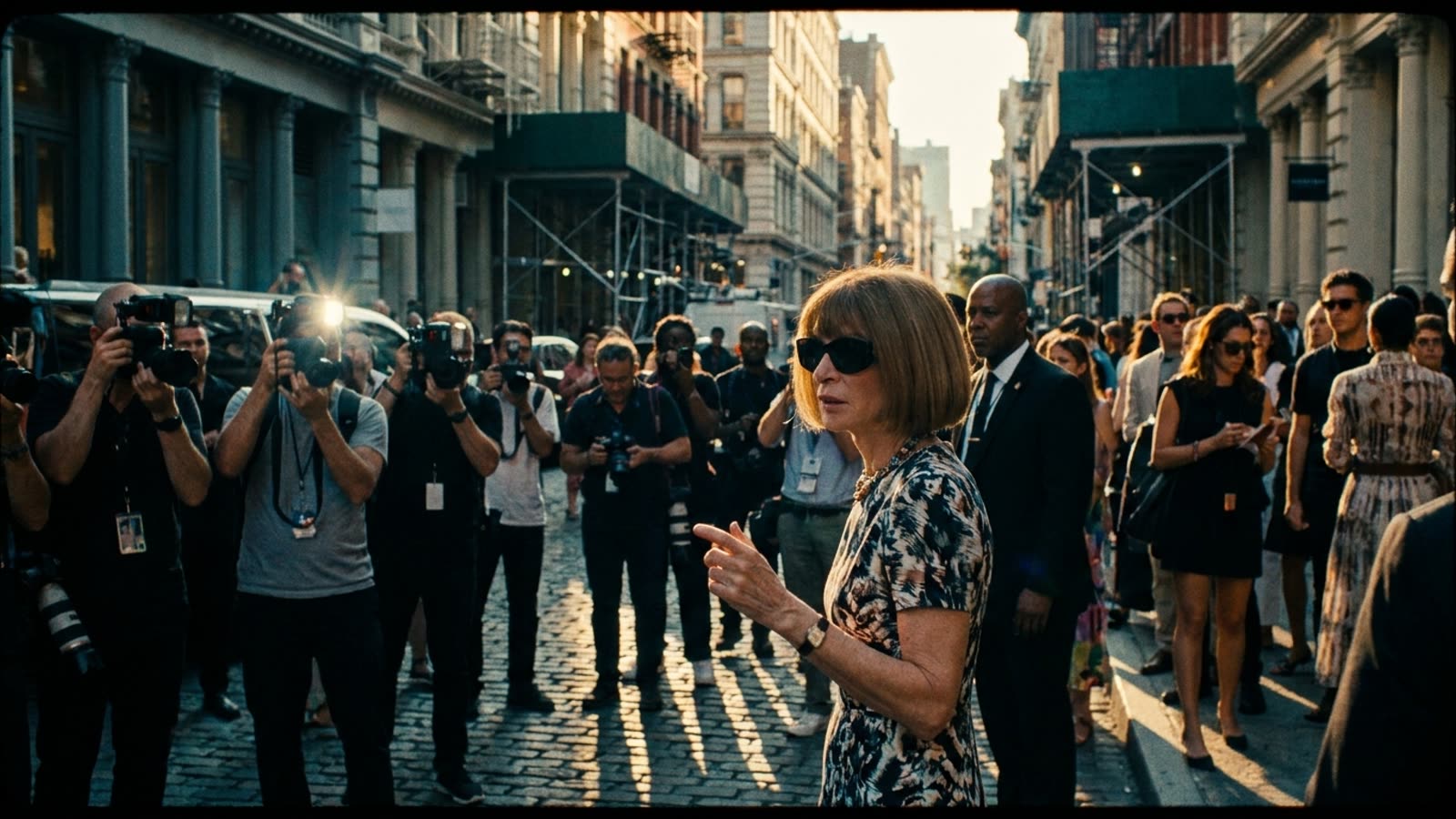
When Anna Wintour arrived at American Vogue in 1988, fashion magazines were trade publications for department store buyers. Today, the Met Gala she chairs commands higher viewership than most award shows, and fashion weeks drive more tourism revenue than major sporting events. This transformation—from niche industry to cultural hegemon—is inseparable from Wintour's particular genius: understanding that exclusivity paradoxically increases with exposure.
The Conde Nast doctrine
Wintour's innovation wasn't putting celebrities on covers—that was already happening. It was systematically dismantling the wall between fashion and entertainment while somehow making fashion more rarefied in the process. Under her watch, Vogue became simultaneously more accessible and more aspirational. The magazine's circulation peaked around 2015 at roughly 1.2 million, but its cultural footprint expanded exponentially through digital platforms, documentaries, and the transformation of fashion events into must-see spectacles.
The business model she pioneered—luxury brands subsidizing cultural influence through advertising—now underpins the entire fashion ecosystem. When LVMH or Kering commits tens of millions to a fashion show, they're not buying magazine pages. They're buying entry into the cultural conversation that Wintour orchestrates.
The attention economy in couture
The Met Gala exemplifies Wintour's methodology. What began as a local fundraiser for the Metropolitan Museum's Costume Institute now generates more social media engagement than the Oscars. By controlling the guest list with papal authority, Wintour created artificial scarcity in an age of infinite content. The event raises over $15 million annually, but its real value lies in establishing fashion as culture's commanding heights.
This model has been replicated globally. Fashion weeks in Milan, Paris, and London now function as city-branding exercises. The "Wintour effect"—fashion as civic infrastructure—has transformed how luxury goods companies allocate capital. They're no longer just selling handbags; they're selling cultural relevance.
Our take
Wintour's true legacy isn't the devil-wears-Prada caricature but something more profound: she understood before anyone else that in the attention economy, mystique increases with visibility if properly stage-managed. As fashion faces challenges from sustainability concerns and digital-first brands, the Wintour playbook—gatekeeping disguised as democratization—remains the industry's operating system. Her successor, whenever that transition occurs, will inherit not just a magazine but an entire cultural apparatus built on the principle that everyone wants what they can't quite have.