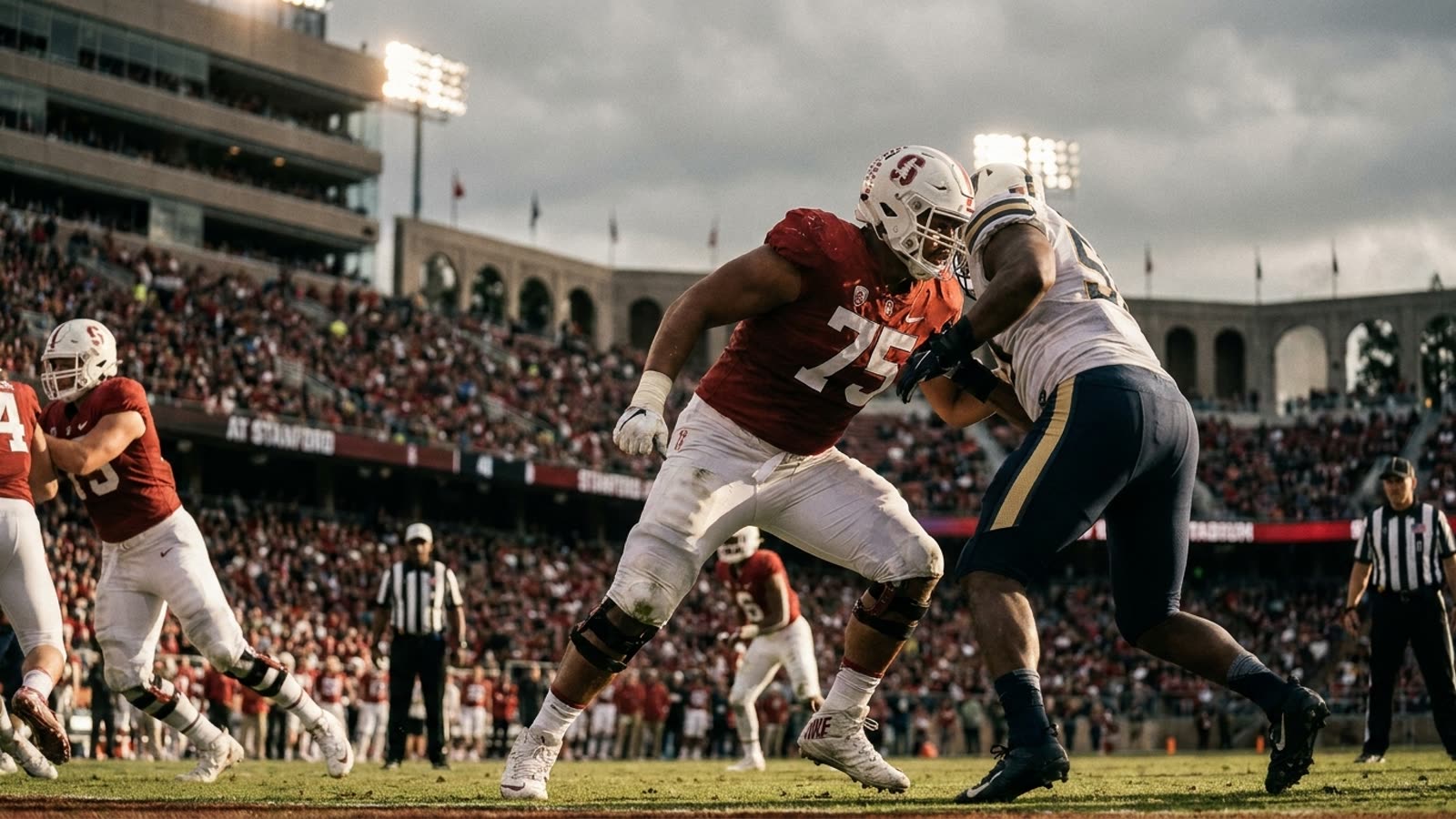
Andres Peat Jr. has made the only rational choice available to a projected first-round pick in 2026: he is staying in the NFL draft despite having college eligibility remaining. The Stanford offensive lineman, son of seven-time Pro Bowl guard Andres Peat, reportedly informed the team this week that he will not withdraw his name before the deadline. For a player with his pedigree and projection, another year of unpaid labor was never a serious consideration.
The decision is notable not because it is surprising but because it crystallizes a trend that has been accelerating since the transfer portal and NIL money reshaped college football's economics. Elite prospects with first-round grades no longer view additional college seasons as developmental opportunities. They view them as actuarial risks.
The Peat calculus
Peat Jr. enters the draft with a bloodline that NFL scouts treat as a leading indicator. His father played 10 seasons with the New Orleans Saints, earned more than $60 million in career earnings, and demonstrated the durability that offensive line coaches prize above almost everything else. The younger Peat, at 6-foot-6 and roughly 310 pounds, has the frame and technique that translate to the professional game. Mock drafts have placed him in the first round for months.
The math is unforgiving. A first-round pick in the 2026 draft will sign a four-year contract worth between $15 million and $40 million depending on slot, with the fifth-year option providing additional security. Another year at Stanford would pay him nothing in salary, expose him to the same injury risk that ended countless careers before they began, and offer marginal improvement in draft stock. The upside is capped; the downside is catastrophic.
The college football labor problem
Peat's decision is a symptom of a structural dysfunction that NIL has papered over but not resolved. College football generates billions in revenue while relying on athletes who cannot negotiate their own compensation. NIL deals have introduced some market dynamics, but they remain unevenly distributed and legally precarious. The best prospects have always subsidized the system by providing labor worth far more than their scholarships. Now they are increasingly opting out.
The transfer portal has accelerated this reckoning. Players who once felt institutional loyalty now move freely, following money and opportunity. Peat could have entered the portal, secured a larger NIL package at another program, and returned to the draft in 2027. He chose not to because the NFL's guaranteed money dwarfs anything college can offer. That calculation will only become more common as draft-eligible players recognize their leverage.
What it means for Stanford
The Cardinal lose a potential anchor on an offensive line that was already thin. Stanford's football program has struggled to compete with the resource advantages of SEC and Big Ten schools, and the departure of a legacy player with first-round talent underscores the challenge. The Pac-12's dissolution scattered Stanford's traditional rivals; the program now competes in the ACC while trying to maintain academic standards that limit its recruiting pool. Losing Peat to the draft rather than to the portal is a small mercy, but it is still a loss.
Our take
Andres Peat Jr. is doing what every rational actor in his position should do: converting his talent into guaranteed money before a torn ACL or broken ankle can destroy his earning potential. The only people who should be troubled by this decision are the administrators who built a system that depends on elite athletes accepting compensation far below their market value. That system is crumbling, and Peat's choice is one more crack in the foundation.