For most of human history, the merchant's nightmare has been the same: too much of the wrong thing, not enough of the right one. Sumerian traders scratched inventory counts into clay tablets. Medieval guilds hoarded raw materials against uncertain harvests. The corner grocer eyeballed the weather and hoped. Demand forecasting, the art of predicting what people will want and when, has always been educated guesswork dressed up in spreadsheets.
Now machine learning is turning that guesswork into something closer to clairvoyance, and the implications extend far beyond faster shipping. The companies mastering AI-driven supply chains are not merely more efficient; they are operating in a fundamentally different relationship with time.
The forecasting revolution
Traditional demand planning relied on historical sales data, seasonal patterns, and the intuition of experienced buyers. A competent forecaster might achieve accuracy rates in the mid-sixties — meaning roughly a third of predictions would be meaningfully wrong. Modern neural networks, trained on vastly larger datasets that include weather patterns, social media sentiment, local events, and macroeconomic indicators, are pushing accuracy into the high eighties for many product categories.
The difference sounds incremental. It is not. A twenty-point improvement in forecast accuracy can halve the capital tied up in safety stock while simultaneously reducing stockouts. For a large retailer, this translates to billions in freed working capital and millions of sales that would otherwise have been lost to empty shelves.
More profoundly, AI systems can detect demand signals that humans cannot perceive. A spike in searches for a particular ingredient in a specific postal code, correlated with an approaching cold front and a local school holiday, might trigger preemptive restocking that no human planner would have anticipated.
The warehouse becomes a brain
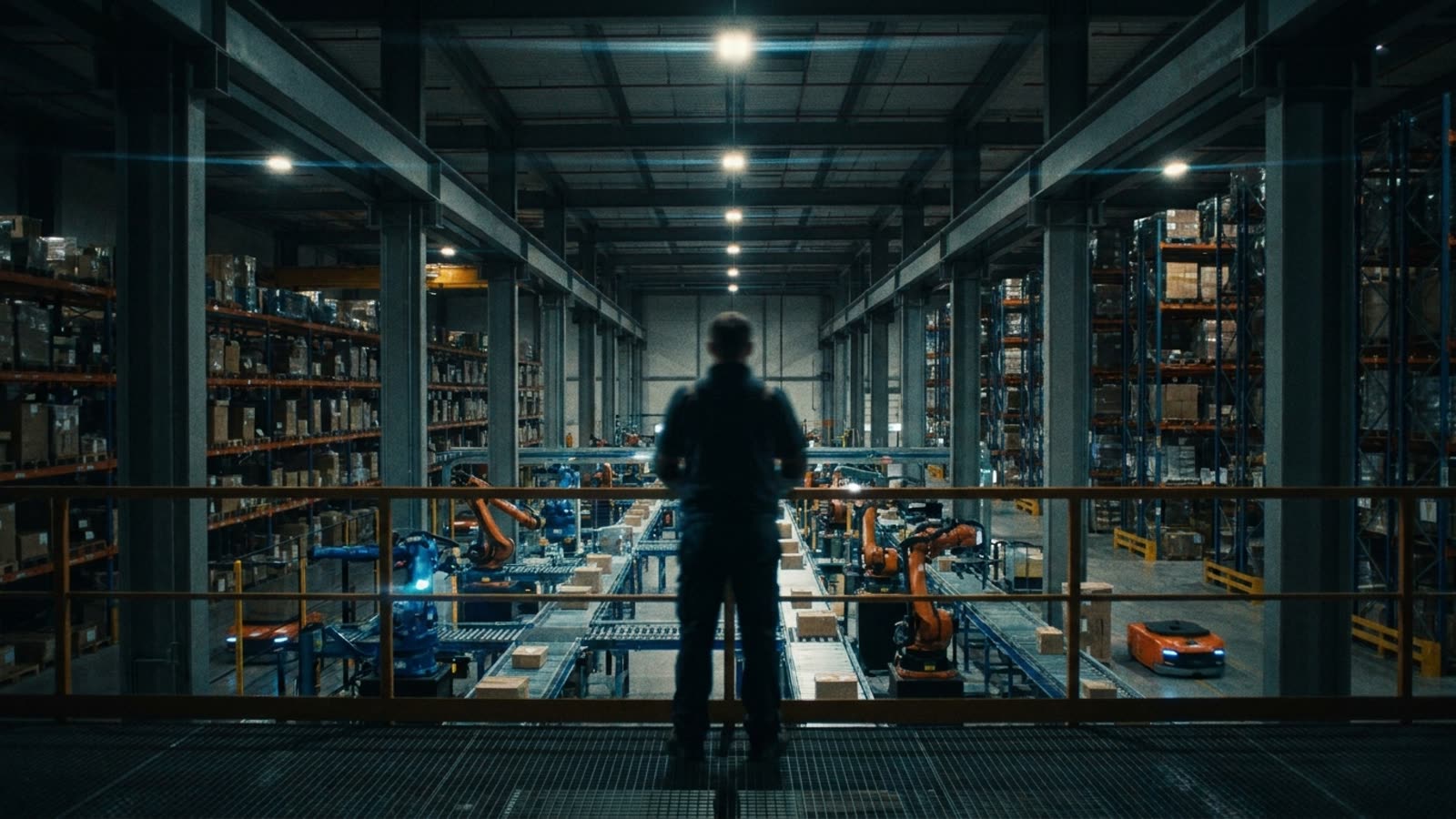
The physical infrastructure of logistics is being reshaped to accommodate algorithmic decision-making. Warehouses increasingly resemble neural networks made concrete, with goods positioned not by category but by predicted co-purchase probability. The item most likely to be ordered alongside what you just bought is already moving toward the packing station.
This spatial reorganization extends to the macro level. Companies are using AI to determine not just what inventory to hold, but where to hold it. Dynamic positioning means goods migrate across distribution networks in anticipation of demand, sometimes crossing oceans before any customer has clicked a button.
Our take
The AI transformation of supply chains is arguably more consequential than the chatbots capturing public imagination. When the system that moves physical goods through the world becomes predictive rather than reactive, the economic implications cascade through every industry. Manufacturers can produce closer to actual demand, reducing waste. Retailers can operate with leaner balance sheets. Consumers get what they want faster, often without realizing the logistical ballet that made it possible. The catch, of course, is that this efficiency creates dependencies — and the companies that master these systems will enjoy structural advantages that late adopters may never overcome.