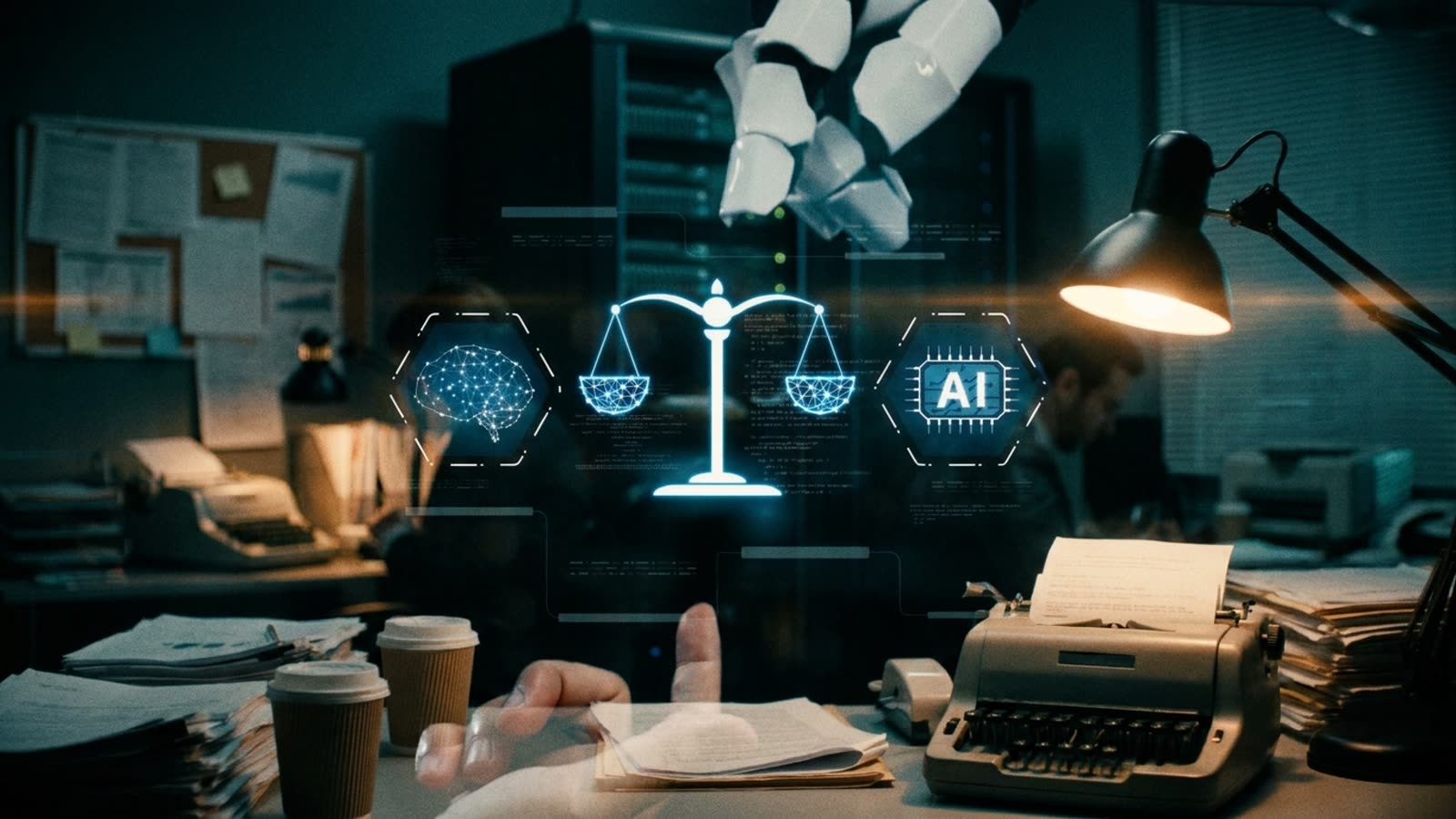
For more than a century, the court reporter has occupied a peculiar position in the machinery of justice: invisible yet essential, present at every deposition, every trial, every congressional hearing, fingers flying across a stenotype at speeds exceeding 225 words per minute. Now that profession faces an existential question. When AI can transcribe speech with remarkable accuracy, what exactly are we paying the human to do?
The answer turns out to be more interesting than the question suggests.
The accuracy problem that isn't
Modern speech-to-text systems have achieved word error rates below five percent in controlled conditions — impressive enough that many law firms have quietly begun using them for internal memos and first-draft depositions. But courtrooms are not controlled conditions. They feature overlapping speakers, heavy accents, technical jargon, mumbled asides, and the occasional witness who breaks into tears mid-sentence. More critically, they feature consequences. A misheard "can" for "can't" in medical testimony could alter a verdict. A dropped "not" before "guilty" is not a typo; it is a potential miscarriage of justice.
Court reporters do not merely transcribe. They interrupt. "Could you repeat that?" "Could counsel speak one at a time?" They are the only person in the room whose job is to ensure the record is perfect, and whose professional certification depends on maintaining that standard. An AI system has no such incentive structure, no liability, no oath.
The economics of replacement
None of this has stopped the pressure. The court reporting profession has been shrinking for two decades, with training programs closing and the median age of practitioners climbing steadily. Starting salaries have not kept pace with the years of specialized education required. Meanwhile, a jurisdiction facing a backlog of cases and a shortage of reporters faces an obvious temptation: automated transcription costs a fraction of the human rate.
Several states have begun pilot programs using AI transcription for certain proceedings, typically lower-stakes hearings where the risk of consequential error is deemed acceptable. The results have been mixed enough to slow wholesale adoption but promising enough to keep the experiments running. The profession watches these trials with the grim attention of someone reading their own medical chart.
What machines cannot certify
The deeper issue is not accuracy but accountability. A court transcript is not a convenience; it is a legal document. Someone must attest to its correctness. Someone must be cross-examined if it is challenged. Someone must bear professional consequences if it is wrong. AI systems can produce text, but they cannot take an oath, cannot be deposed, cannot have their license revoked.
This is the crevice into which the profession is retreating: not as transcriptionists but as certifiers, editors, and guarantors of record. The human court reporter of the future may spend less time typing and more time reviewing AI-generated drafts, correcting errors, and affixing their certification to a document they can swear is accurate. It is a different job than the one they trained for. Whether it is a sustainable one remains unclear.
Our take
The court reporter's predicament illuminates something broader about AI's incursion into professional work. The technology rarely eliminates jobs cleanly; instead, it reshapes them into something the original practitioners may not recognize or want. The stenographer who spent years mastering a physical skill now finds that skill commoditized, their value shifted to judgment, accountability, and the willingness to stake their name on a document's accuracy. It is a defensible niche, but a smaller one. The question every profession facing similar pressure must answer is whether the niche is large enough to sustain a career — or merely a holding pattern before the next wave.