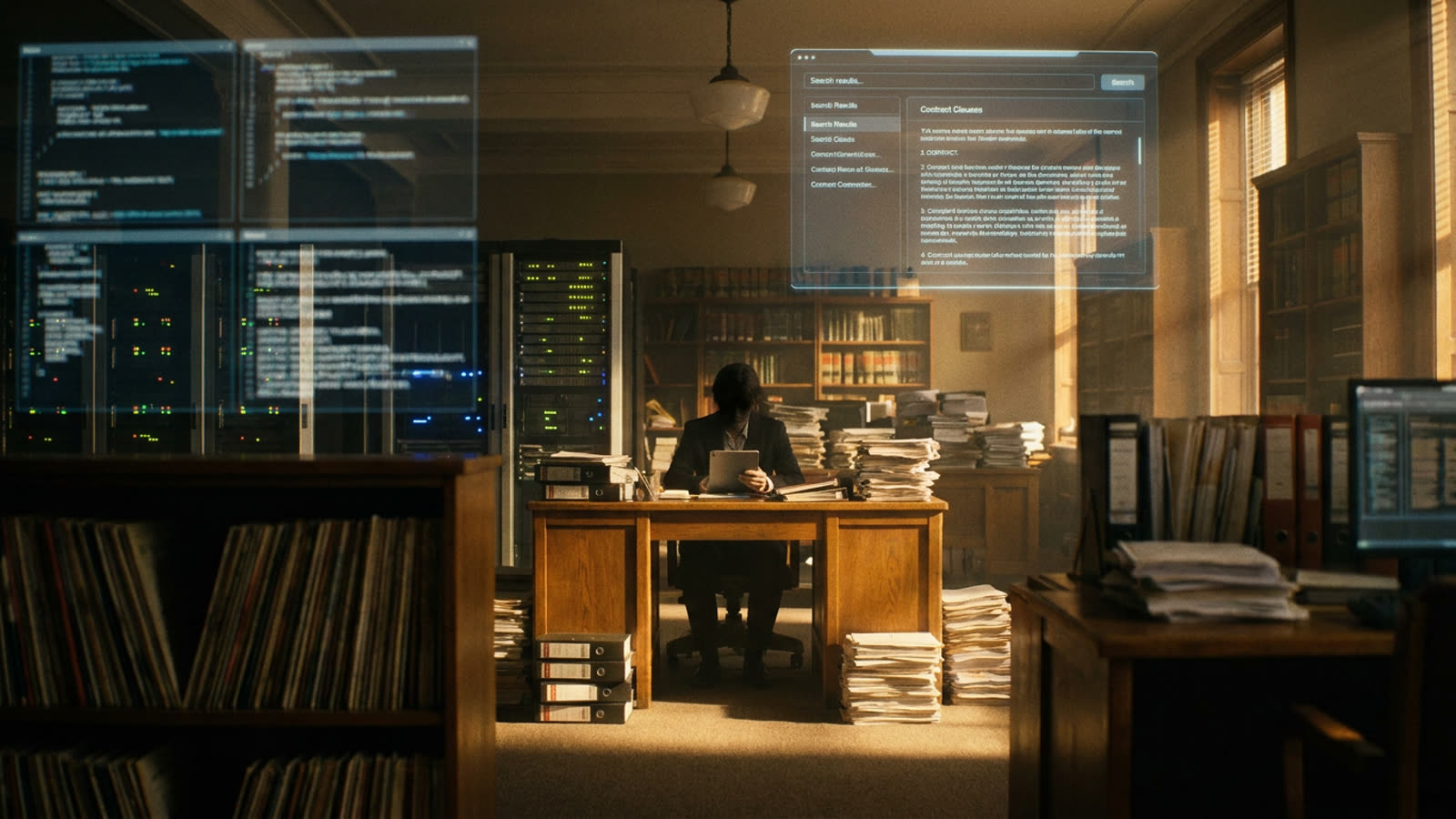
The paralegal profession has always occupied an awkward middle ground in the legal hierarchy—too skilled to be mere secretaries, too constrained by licensing rules to practice law, and too expensive to ignore when budgets tighten. For decades, law firms solved this tension by treating paralegals as leverage: bill their hours at a markup, assign them the tedious but essential work that associates resented, and use their output to justify partner fees. That model is now collapsing, and the collapse is happening faster than most law schools or bar associations care to admit.
The transformation is not hypothetical. Large language models can now review thousands of documents in hours rather than weeks, extract relevant clauses from contracts with accuracy rates that match or exceed human reviewers, and generate first drafts of routine legal memoranda that require only light editing. The economics are brutal: what once required a team of paralegals billing at several hundred dollars per hour can now be accomplished by a single attorney supervising an AI system for a fraction of the cost. Clients have noticed.
The leverage model breaks down
Big Law's profitability has long depended on a pyramid structure. Partners at the top generate business; associates and paralegals below do the work; the spread between what clients pay and what labor costs is where profits live. Paralegals were particularly profitable because they required no law degree, commanded lower salaries than associates, and could be billed at rates that bore little relation to their compensation. A paralegal earning a modest annual salary might generate several times that amount in billable revenue.
AI disrupts this arithmetic completely. When document review software can process a due diligence room in a weekend, there is no need for the paralegal team that would have spent three weeks on the same task. When contract analysis tools can flag non-standard terms across hundreds of agreements, the human reviewer becomes a quality-control checkpoint rather than the primary worker. The leverage that made paralegals profitable now makes them redundant.
What remains is judgment
Not all paralegal work is algorithmic. The best paralegals have always done more than process documents—they understand the rhythm of litigation, anticipate what attorneys need before being asked, and develop institutional knowledge that no software can replicate. They know which judges are sticklers for formatting, which opposing counsel will negotiate in good faith, and which clients need hand-holding through depositions. This tacit expertise is precisely what AI cannot provide.
The paralegals who survive will be those who lean into judgment rather than volume. They will become case managers, client liaisons, and workflow architects—roles that require understanding both the technology and the humans it serves. The ones who defined their value by the number of documents they could review are already updating their resumes.
Our take
The legal profession has resisted efficiency gains for centuries, often deliberately. Complexity meant billable hours; billable hours meant revenue. AI is forcing a reckoning with that model, and paralegals happen to be the first casualties. But the disruption will not stop with them. Associates who spend their early years on document review are next. Partners whose main value was managing large teams of junior staff will follow. The firms that thrive will be those that recognize AI as an opportunity to deliver better legal work at lower cost—and that means rethinking not just who does the work, but what legal work actually is. The paralegal's obsolescence is not a tragedy. It is the opening act of a much larger transformation.