The Big Four accounting firms have spent more than a century perfecting the art of sampling. When auditors examine a company's books, they cannot check every transaction—there are simply too many. So they developed statistical methods to select representative samples, extrapolate findings, and render professional judgment on whether financial statements are materially accurate. It is a system built on educated guessing, and it has worked remarkably well.
Artificial intelligence is making sampling obsolete.
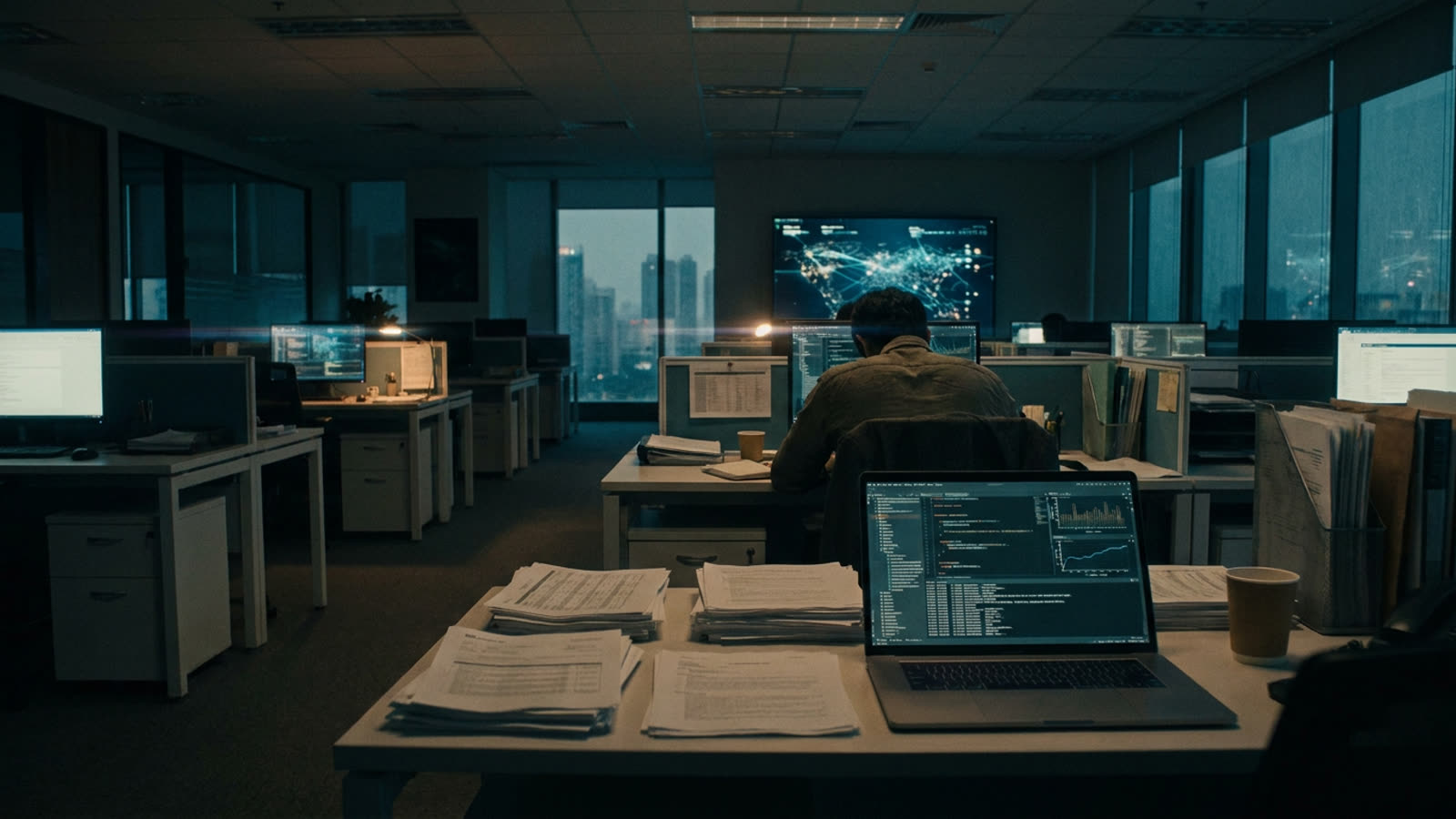
Modern audit software can now ingest an entire general ledger—millions of transactions—and analyze every single entry for anomalies. What once required weeks of junior staff time happens in hours. The implications extend far beyond efficiency gains; they strike at the philosophical core of what auditing means.
From samples to census
Traditional auditing operates on the premise that checking a statistically valid sample provides reasonable assurance about the whole. If you examine a hundred invoices and find two errors, you can estimate the error rate across thousands. This approach emerged from necessity: human auditors simply could not process every transaction.
AI-powered audit tools eliminate this constraint. They can flag every journal entry posted outside business hours, every round-dollar transaction, every vendor payment that deviates from historical patterns. The shift from sample-based to census-based examination represents perhaps the most significant methodological change in auditing since the profession standardized in the early twentieth century.
The practical effects are already visible. Auditors report catching anomalies they would have missed under sampling regimes—not because the old methods were flawed, but because some irregularities hide in the unexamined majority. A company cooking its books can no longer assume that certain transactions will escape scrutiny simply because the sample did not include them.
The judgment question
Yet technology that can flag anomalies cannot determine whether those anomalies matter. A payment posted at midnight might indicate fraud, or it might indicate an accountant working late to close the quarter. AI excels at pattern recognition; it struggles with context.
This limitation reveals something important about auditing that even auditors sometimes forget: the profession is fundamentally about judgment, not arithmetic. The numbers must add up, but the real work lies in understanding why they add up the way they do, and whether that story makes sense.
AI is thus reshaping the auditor's role rather than replacing it. Junior staff spend less time on routine transaction testing and more time investigating the flags that algorithms generate. Partners spend less time reviewing sampling methodologies and more time evaluating whether AI-identified anomalies represent genuine risks. The cognitive demands are shifting upward.
What the machines miss
The most sophisticated fraud often involves transactions that are individually unremarkable. A CFO who understands the company's normal patterns can structure improper entries to avoid algorithmic detection. The classic audit failures—Enron, WorldCom, Wirecard—involved schemes that would not necessarily have triggered pattern-recognition alerts because the perpetrators understood exactly what normal looked like.
This points to a deeper truth: AI auditing tools are trained on historical data, which means they are optimized to catch the kinds of fraud that have been caught before. Novel schemes, by definition, do not match known patterns. The technology may actually create a false sense of security, leading auditors to trust algorithmic outputs without applying the professional skepticism that remains the profession's most valuable asset.
Our take
The transformation of auditing by AI is neither the revolution its boosters claim nor the threat its critics fear. It is something more interesting: a case study in how intelligent automation changes the nature of expertise. The auditor of the future will need to understand both accounting principles and algorithmic limitations, to know when to trust the machine and when to override it. The profession is not being replaced; it is being elevated. Whether the humans can keep up with that elevation remains the open question.