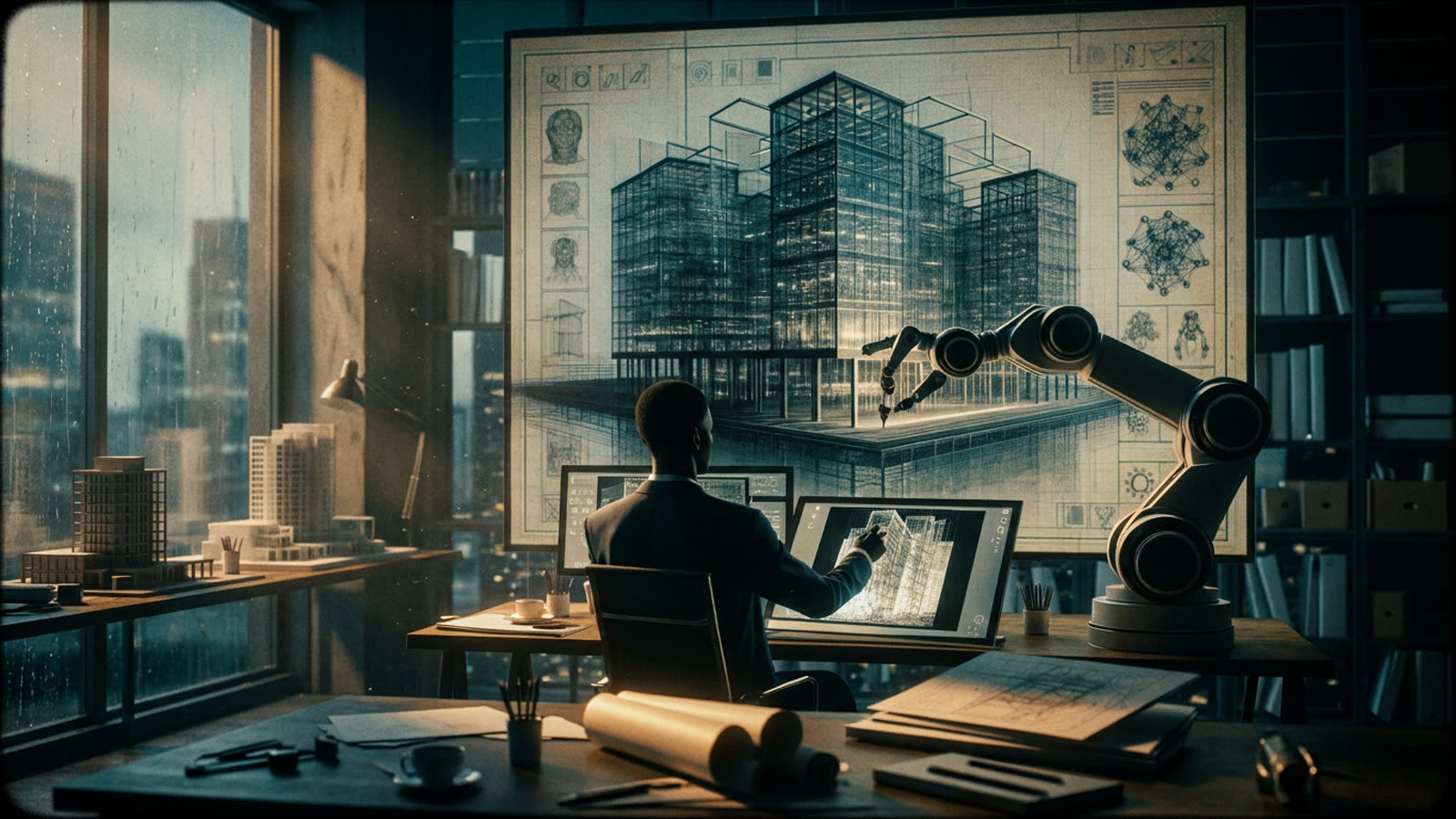
The architectural profession has always been bifurcated: the visionaries who sketch napkin concepts, and the technicians who transform those sketches into buildable reality. For generations, the latter role served as the proving ground for the former. Young architects spent years — sometimes the better part of a decade — producing construction documents, learning through the painstaking labor of drawing every wall section, every window detail, every plumbing chase. That apprenticeship is now evaporating.
AI-powered drafting tools have reached a threshold where they can generate code-compliant construction drawings from schematic designs in hours rather than weeks. The software doesn't tire, doesn't misread specifications, and doesn't need to be taught that a fire-rated corridor requires specific door assemblies. It simply knows, having ingested millions of building documents during training.
The economics of elimination
Architecture firms have operated on a familiar business model: bill clients for senior partners' vision while staffing projects with junior architects whose lower billing rates still generate margin on documentation work. A mid-sized firm might employ three or four junior staff for every senior designer. That ratio is becoming untenable.
When AI can produce a set of permit drawings that previously required two hundred hours of junior architect time, the math shifts brutally. Firms still need human review — someone must verify the AI hasn't hallucinated a structural connection or misinterpreted a local code amendment — but review is faster than creation. The junior architect's role is compressing from producer to proofreader.
What gets lost in translation
The architectural establishment's defense has been predictable: you cannot design buildings without first understanding how they are drawn. There is truth here. The act of drafting teaches spatial reasoning, material logic, and the gap between intention and execution. Architects who never drew a building detail may struggle to imagine one.
But this argument assumes the old apprenticeship was the only path to competence. It may simply have been the path that existed. Surgeons once learned anatomy by drawing cadavers; now they learn from imaging software and simulation. The knowledge persists even as the acquisition method transforms.
The profession's quiet restructuring
What emerges is a profession increasingly polarized between conceptual designers and technical reviewers, with the middle ranks hollowed out. The path from graduate to principal — once a fifteen-year climb through documentation, project management, and client relations — may compress dramatically. Or it may simply disappear for most entrants, leaving architecture as a field with many aspirants, few positions, and a small cohort of AI-augmented practitioners who can do the work of entire departments.
The firms adapting fastest are not the largest but the most leveraged: small practices where a handful of experienced architects use AI to compete for projects that once required teams of twenty. The democratization of production capacity is real, even if its beneficiaries are not the junior architects who might have staffed those teams.
Our take
Architecture will not become worse because fewer humans draw wall sections. It may become more interesting, as designers freed from documentation spend more time on the problems that matter: how buildings meet the ground, how light enters rooms, how spaces shape behavior. But the profession will also become smaller, more exclusive, and less forgiving of those who entered expecting a methodical climb. The draftsman's desk is being cleared. What replaces it is not yet a desk at all.