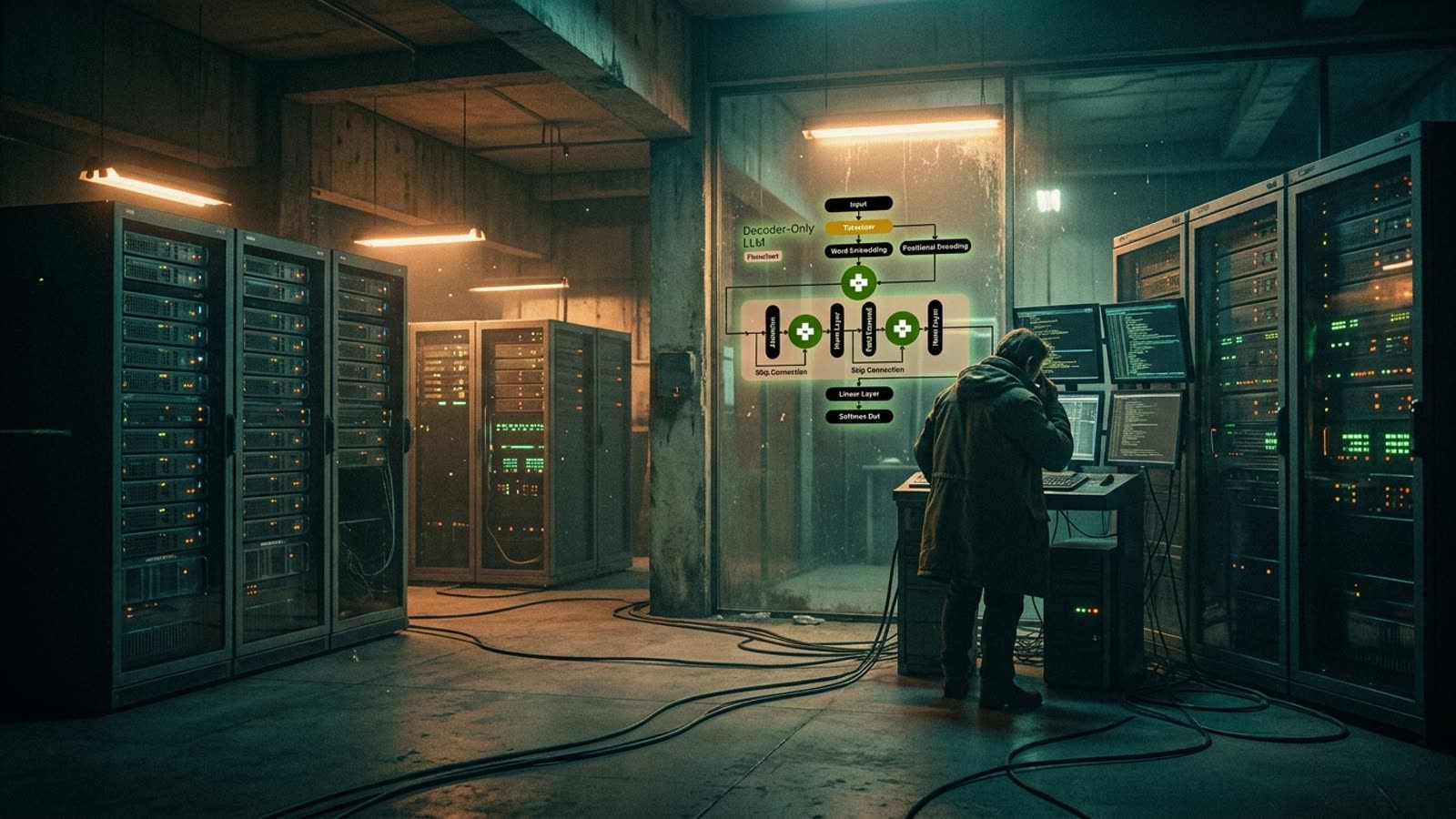
The most sophisticated AI systems in the world share an embarrassing secret: they make things up. Not occasionally, not under stress, but routinely and with perfect confidence. This fundamental flaw — known as hallucination — has persisted through every generation of language model development and remains the primary barrier between impressive demos and trustworthy deployment.
The nature of the beast
Hallucination in AI isn't a bug in the traditional sense. It emerges from the very architecture that makes these systems powerful. Large language models learn to predict text by analyzing patterns across vast datasets, developing what researchers call a "statistical understanding" of language. They excel at producing plausible-sounding text precisely because they've seen millions of examples of how humans write. But plausibility and accuracy are different things.
When a model generates text about the Treaty of Westphalia or quantum mechanics, it's not retrieving facts from a database. It's producing what statistically "should" come next based on patterns it learned during training. Sometimes those patterns align with reality. Sometimes they don't. The model has no mechanism to distinguish between the two.
Why the obvious fixes don't work
The persistence of hallucination isn't for lack of trying. Researchers have attempted numerous approaches: fine-tuning models on factual datasets, implementing "retrieval-augmented generation" that queries external databases, training models to express uncertainty, and building elaborate fact-checking layers. Each method helps at the margins but none eliminates the core problem.
Retrieval systems can reduce hallucination for information that exists in their databases, but they introduce new failure modes — the model might misinterpret retrieved information or hallucinate details to connect disparate facts. Training models to say "I don't know" helps, but determining when to deploy that response requires the very factual grounding the model lacks. Even the most sophisticated approaches, like constitutional AI and chain-of-thought reasoning, simply push the hallucination problem into more subtle territories.
The deployment dilemma
This creates a peculiar situation in the AI industry. Companies have built systems that can write sophisticated code, analyze complex documents, and engage in remarkably human-like conversation. Yet these same companies must warn users not to rely on their products for factual information. Legal firms experimenting with AI for research have discovered fabricated case citations. Medical researchers have found AI-generated papers referencing non-existent studies. News organizations have had to retract AI-assisted articles containing invented quotes.
The result is a technology that excels in creative and analytical tasks where hallucination might even be beneficial — brainstorming, fiction writing, exploratory analysis — but struggles in domains where accuracy is non-negotiable. This limits AI deployment in many of the fields that could benefit most from automation: medicine, law, journalism, and scientific research.
Our take
The hallucination problem reveals something profound about the nature of intelligence and knowledge. These models demonstrate that you can achieve remarkable linguistic competence without genuine understanding — a finding that should humble anyone who equates eloquence with expertise. Until researchers develop fundamentally new architectures that can reliably distinguish between what they know and what they're merely guessing, AI will remain a powerful but inherently unreliable partner. The question isn't whether this problem will be solved, but whether the solution will require abandoning the transformer architecture that launched the current AI revolution.