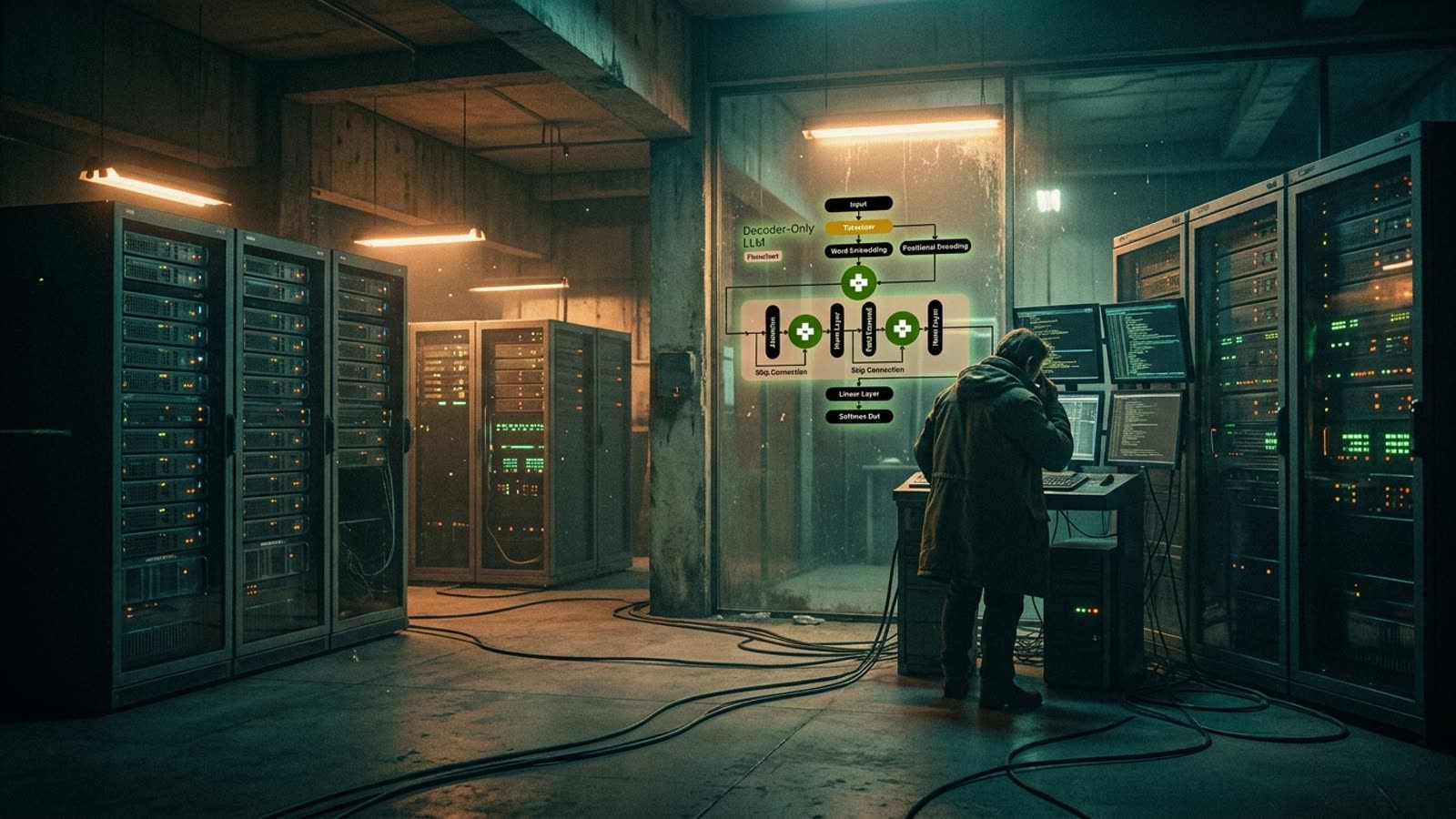
The most instructive thing about contemporary artificial intelligence is not what it can accomplish but what it consistently fails to do despite enormous investment and genuinely brilliant engineering. These failures are not bugs awaiting patches; they are windows into the fundamental architecture of systems that process language without understanding it in any human sense.
The dominant AI paradigm—large language models trained on vast text corpora—excels at pattern matching at superhuman scale. Feed such a system enough examples of how humans discuss quantum mechanics or Renaissance painting, and it will produce fluent text on those subjects. But fluency and comprehension are not synonyms, a distinction that matters enormously once you move beyond generating plausible prose.
The arithmetic problem that isn't really about arithmetic
Ask a frontier language model to multiply two four-digit numbers, and it will often fail. This is not because multiplication is inherently difficult—pocket calculators solved it decades ago—but because these systems do not compute in any traditional sense. They predict probable next tokens based on statistical patterns in training data. When they succeed at arithmetic, they are essentially recalling memorized patterns; when they fail, they are interpolating poorly. The same architecture that writes convincing poetry cannot reliably count the letters in a word.
This limitation extends to any task requiring genuine symbolic manipulation: formal logic, precise scheduling, consistent multi-step planning. The models can approximate these activities when the patterns are familiar, but they lack the rigid, deterministic reasoning that even simple software handles trivially. Bolting calculators and code interpreters onto language models helps, but the core architecture remains fundamentally probabilistic.
The memory that isn't memory
Language models do not remember conversations the way humans do. Each interaction exists within a fixed context window—a kind of working memory that holds recent text but discards everything beyond its boundary. The system has no persistent model of you, no accumulated understanding of your preferences, no genuine continuity of relationship. What feels like memory is either clever prompt engineering or external databases that retrieve relevant text and inject it into the context.
This matters because genuine intelligence involves building and revising mental models over time. A human expert develops intuitions, refines judgments, and recognizes when new information contradicts old assumptions. Current AI systems start fresh each session, their apparent personality a statistical average of their training data rather than an evolving perspective.
The confidence without calibration
Perhaps the most consequential limitation is that language models cannot reliably distinguish what they know from what they are fabricating. They generate text with uniform confidence whether stating a verifiable fact or inventing a plausible-sounding citation. This "hallucination" problem is not a failure of training data quantity or model size; it emerges from the fundamental objective of predicting probable text rather than verified truth.
Humans possess metacognition—awareness of our own uncertainty. We know when we are guessing, when we should look something up, when our confidence is warranted. Language models have no such self-knowledge. They cannot say "I don't know" with genuine epistemic humility because they have no mechanism for distinguishing knowledge from pattern completion.
Our take
None of this diminishes what language models genuinely accomplish. They are extraordinary tools for drafting, brainstorming, translation, and information synthesis. But treating them as nascent general intelligences mistakes fluency for understanding. The hype cycle benefits from conflating these categories; clear thinking requires separating them. The most productive path forward involves deploying these systems where their strengths matter and their limitations are manageable—while maintaining appropriate skepticism about claims that the next model will transcend these architectural constraints. Intelligence, it turns out, involves more than predicting the next word.