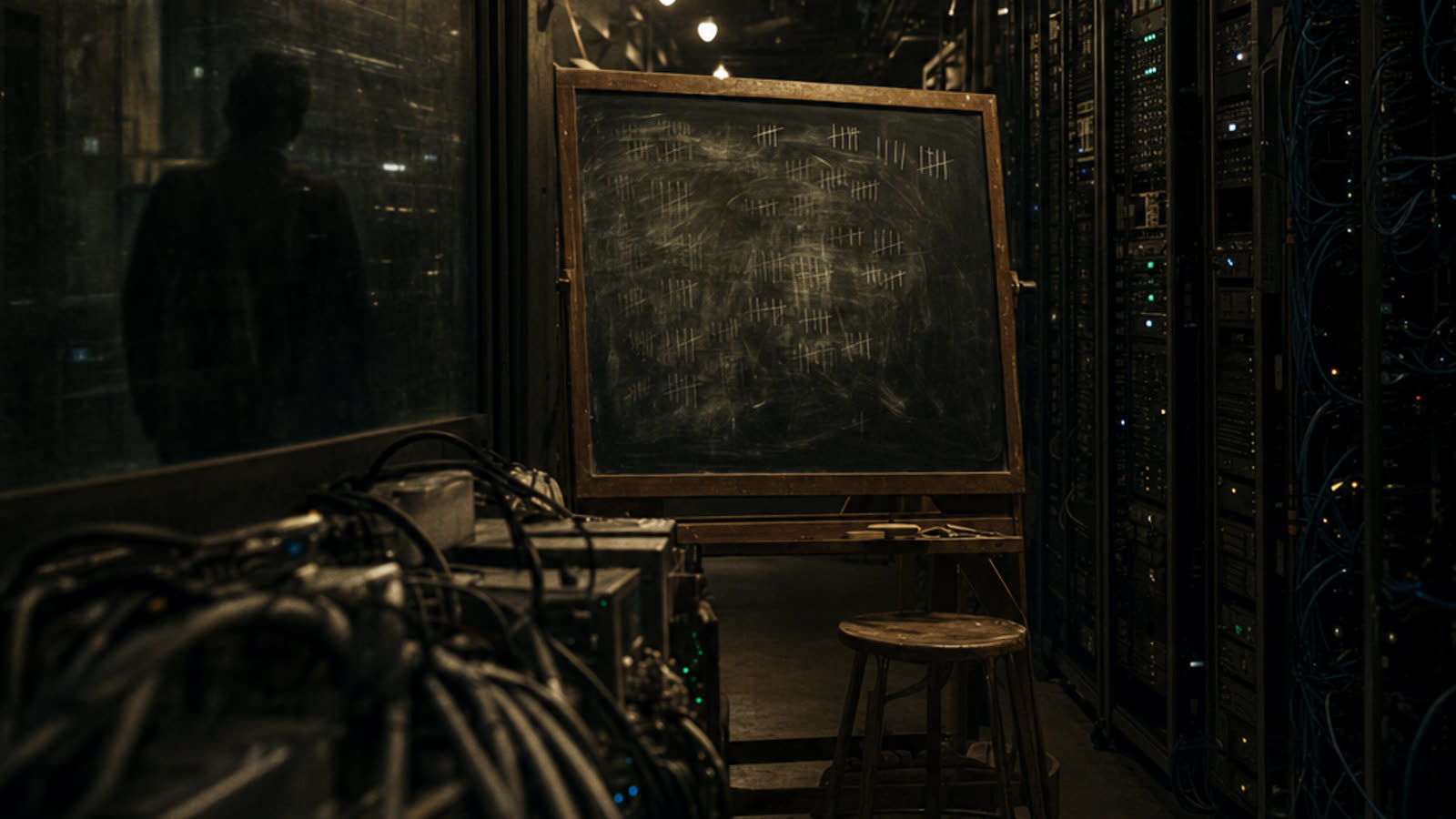
The human brain forgets constantly, carelessly, sometimes catastrophically. We lose names, misremember dates, watch entire years dissolve into vague impressions. For most of cognitive history, this was considered a bug. Now, as artificial intelligence systems demonstrate near-perfect recall of their training data, forgetting is starting to look like a feature we never knew we needed.
The problem crystallized when researchers began probing large language models and found they could extract verbatim passages from copyrighted books, personal information scraped from the web, and code snippets that were never meant to be memorized. The models hadn't just learned patterns—they had, in some meaningful sense, remembered specifics. This raised an awkward question that nobody had adequately considered during the race to build ever-larger systems: what happens when someone wants their data removed?
The technical wall
Retraining a model from scratch without the offending data is the obvious solution and also the impossible one. Modern frontier models cost tens of millions of dollars to train and require months of compute time. No company will rebuild their flagship product because one user invoked GDPR's right to erasure. The economics simply don't work.
This has spawned a research field called machine unlearning, which attempts to surgically remove specific information from a trained model without destroying everything else it knows. The approaches vary—some try to fine-tune the model to "forget" by training it to give wrong answers about the target data, others attempt to identify and modify the specific parameters where memories are stored. None of them work reliably.
The fundamental difficulty is that neural networks don't store information the way databases do. There's no row to delete, no file to remove. Knowledge is distributed across billions of parameters in ways that researchers still don't fully understand. Removing one fact risks degrading performance on seemingly unrelated tasks, because the same parameters that encode your personal information might also help the model understand grammar or reason about physics.
The regulatory collision
European regulators have been notably quiet about how exactly AI companies should comply with existing data protection laws. The right to erasure exists on paper, but enforcement against large language models has been minimal, partly because regulators themselves aren't sure what compliance would even look like. This won't last.
The Italian data protection authority's temporary ban on ChatGPT in 2023 was a preview of conflicts to come. As more jurisdictions develop AI-specific regulations, the unlearning problem will move from academic curiosity to legal emergency. Companies are already hedging—some have begun keeping detailed records of training data provenance, hoping that demonstrating good-faith efforts will satisfy regulators even if true unlearning remains technically impossible.
The copyright dimension adds another layer of complexity. If a model has memorized substantial portions of copyrighted works, simply promising not to output them isn't the same as never having ingested them in the first place. The legal theory here is genuinely unsettled, and the technical limitations of unlearning may force courts to develop entirely new frameworks for thinking about machine memory.
Our take
The unlearning problem reveals something important about the current AI paradigm: we've built systems whose internal workings we don't fully comprehend, trained on data we can't fully account for, and we're only now discovering the consequences. This isn't a reason for panic, but it is a reason for humility. The companies racing to deploy ever-larger models would do well to remember that some of the hardest problems in AI aren't about making systems smarter—they're about making them forget.