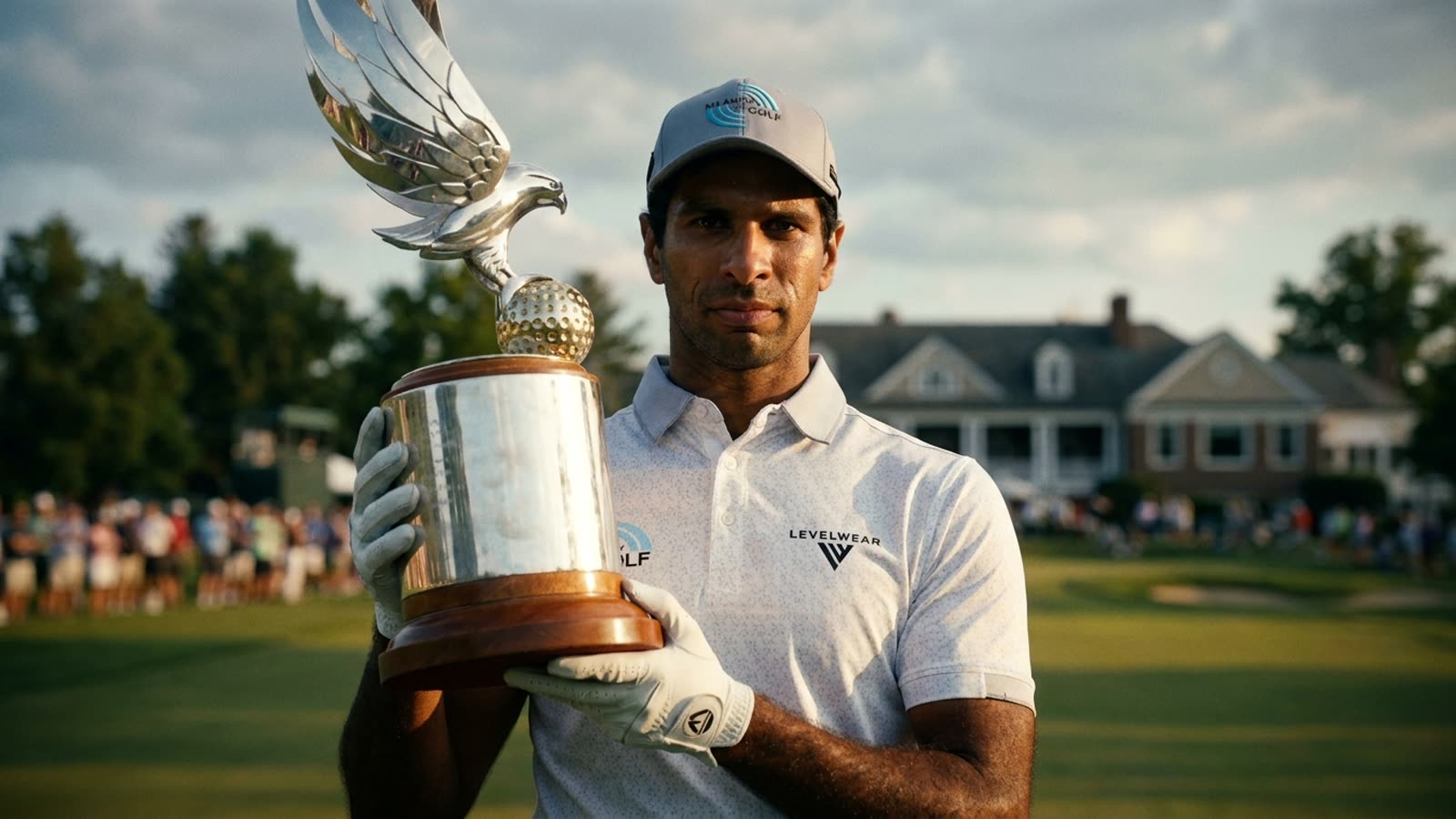
For years, Aaron Rai has been professional golf's most visible eccentric and least visible contender. The double-gloved Englishman—he wears one on each hand, a quirk born of childhood grip issues—has plied his trade across the DP World Tour and latterly the PGA Tour with the quiet competence of a journeyman and none of the fanfare reserved for his compatriots. Rory McIlroy gets the Nike campaigns. Tommy Fleetwood gets the hair. Rai, 31, from Wolverhampton, gets polite applause and mid-pack finishes. Until Sunday at Aronimink, when he posted a bogey-free 65 to win the 108th PGA Championship and become England's first male major winner since Danny Willett's 2016 Masters.
The final round that rewrote his career
Rai began the day three shots off the lead, a position that historically produces major champions about as often as it produces lottery winners. But Aronimink's closing stretch, softened by morning rain and then baked firm under a Philadelphia sun, proved treacherous for the leaders ahead of him. Kurt Kitayama matched the lowest final round in major championship history with a 63, yet it was not enough; he had started too far back. The overnight leaders—including two top-ten players in the world rankings—stumbled through the back nine with the nervous putting that major Sundays extract from even the steadiest hands. Rai, meanwhile, made birdie at 14 and 16 with the demeanor of a man completing a Tuesday practice round. His two-putt par at 18 sealed the championship by a single stroke.
What the gloves tell you about the man
The two-glove look has always been Rai's calling card, the thing commentators mention when they have nothing else to say about him. He adopted it as a teenager to manage hyperhidrosis—excessive sweating—and never saw a reason to change. It is, in miniature, his entire philosophy: functional, unbothered by aesthetics, resistant to outside opinion. He is not a bomber; his driving distance ranks in the middle of the PGA Tour pack. He is not a magician around the greens. He simply does not make unforced errors, a quality that sounds banal until you watch a major championship unravel for everyone else.
England's quiet golf renaissance
Rai's victory is the latest evidence that English golf is producing talent at a rate not seen since the Faldo-Woosnam era, even if the spotlight remains fixed elsewhere. Matt Fitzpatrick won the 2022 US Open. Tyrrell Hatton has become a Ryder Cup mainstay. Justin Rose, now 45, remains competitive in majors. Yet none of them have captured the American imagination the way Spaniards, Australians, or even Northern Irish players have. Rai is unlikely to change that calculus—he is too reserved, too uninterested in personal branding—but he may not need to. A Claret Jug or a green jacket demands attention regardless of the winner's media training.
Our take
There is something deeply satisfying about watching a player win a major through sheer, unglamorous competence. Rai did not hole out from a bunker or drain a 40-footer on 18. He simply made fewer mistakes than everyone else on a course that punished mistakes ruthlessly. In an era when golf's discourse is dominated by LIV defections, equipment controversies, and the perpetual Rory narrative, Rai's victory is a reminder that the sport still rewards the virtues it always has: patience, discipline, and the quiet confidence to wear two gloves when everyone else wears one.