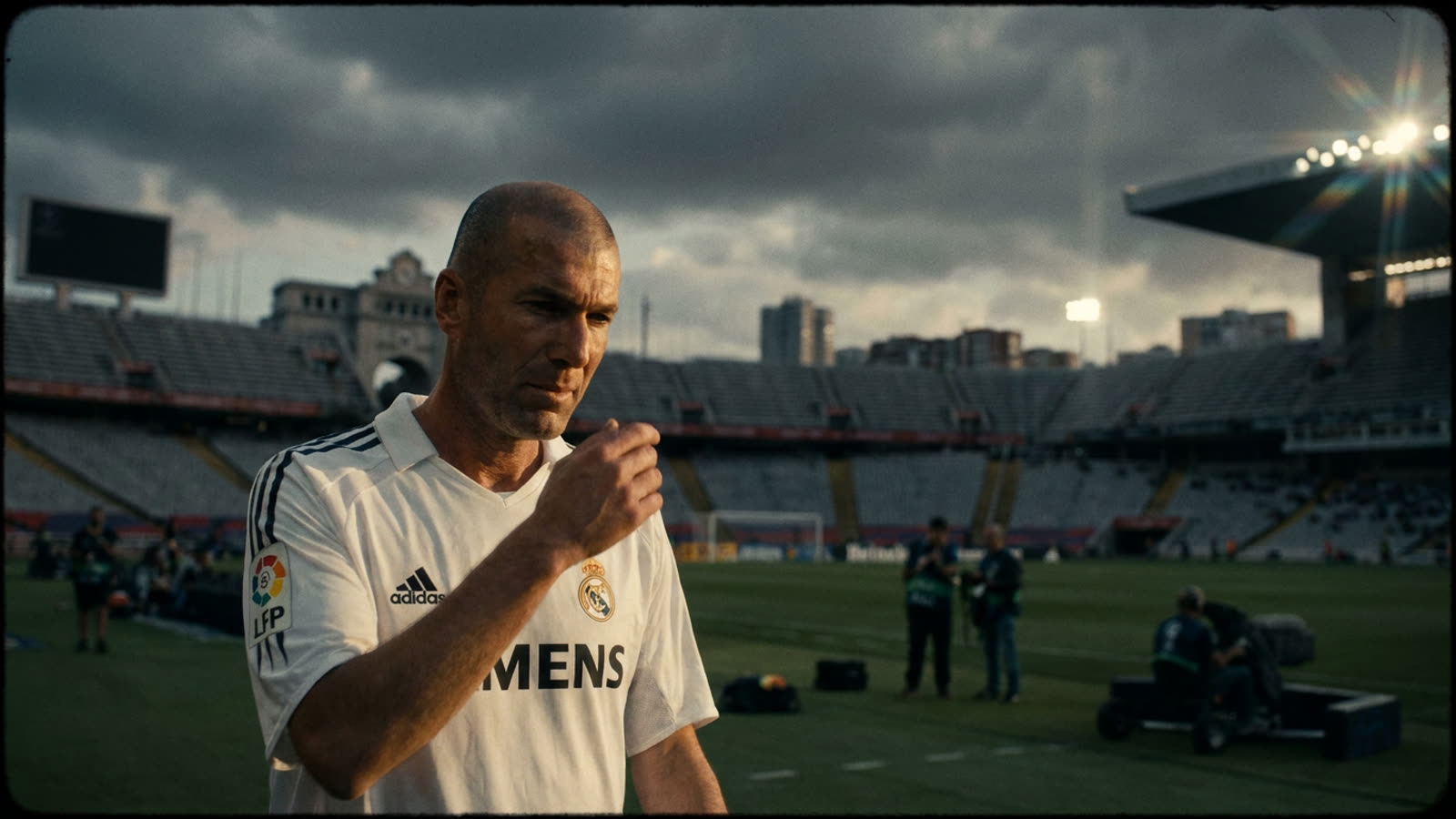
No athlete has ever walked away from sport quite like Zinedine Zidane did in Berlin. With the World Cup trophy minutes from his grasp, with a career that had already secured immortality, with the entire football world watching, he lowered his head and drove it into Marco Materazzi's chest. Then he walked past the trophy, down the tunnel, and into a silence that has never fully resolved.
The moment remains genuinely inexplicable. Not because we lack explanations—Materazzi's provocation, Zidane's notorious temper, the unbearable pressure of a final—but because none of them feel adequate to what we witnessed. Here was arguably the most elegant player of his generation, a man whose touch on a football seemed to bend physics, choosing violence in the moment that mattered most.
The architecture of a legend
Zidane's career before that night in Berlin had followed the classical arc of sporting greatness. Two goals in the 1998 World Cup final against Brazil. The volley against Bayer Leverkusen in the 2002 Champions League final that remains, by reasonable consensus, the most beautiful goal ever scored. Three FIFA World Player of the Year awards. A Ballon d'Or. He had done everything the sport asks of its heroes.
What made Zidane singular wasn't just technical mastery—plenty of players have possessed that—but the strange, almost mystical calm he projected while performing acts of extraordinary difficulty. The roulette turn, his signature move, looked like a man stepping casually through a revolving door while defenders lunged at air. He made the impossible appear inevitable.
The psychology of the final
The 2006 final itself was Zidane's valedictory performance. He had announced his retirement before the tournament. France, aging and unfancied, had reached Berlin largely through his individual brilliance. He opened the scoring with a Panenka penalty so audacious it grazed the crossbar on its way in—a chip when the stakes demanded certainty. For most of the match, he was the best player on the pitch.
Then came the 110th minute. Whatever Materazzi said—and the Italian has confirmed it involved Zidane's sister—it found something in Zidane that tactical fouls and physical intimidation never could. The headbutt wasn't a moment of passion; the footage shows Zidane walking away, then turning back with terrible deliberation. He chose it.
Our take
The temptation is to psychoanalyze, to locate the headbutt in Zidane's biography—the son of Algerian immigrants, the pride and the wounds that entails, the red cards that punctuated even his greatest seasons. But perhaps the more honest response is simply to sit with the discomfort. Zidane's exit reminds us that greatness doesn't redeem character, that the same intensity that produces transcendence can produce destruction, and that sport's narratives don't always resolve into meaning. He walked past the trophy. The trophy didn't care. Neither, in the end, did history—it remembers both the volley and the headbutt, and refuses to choose between them.