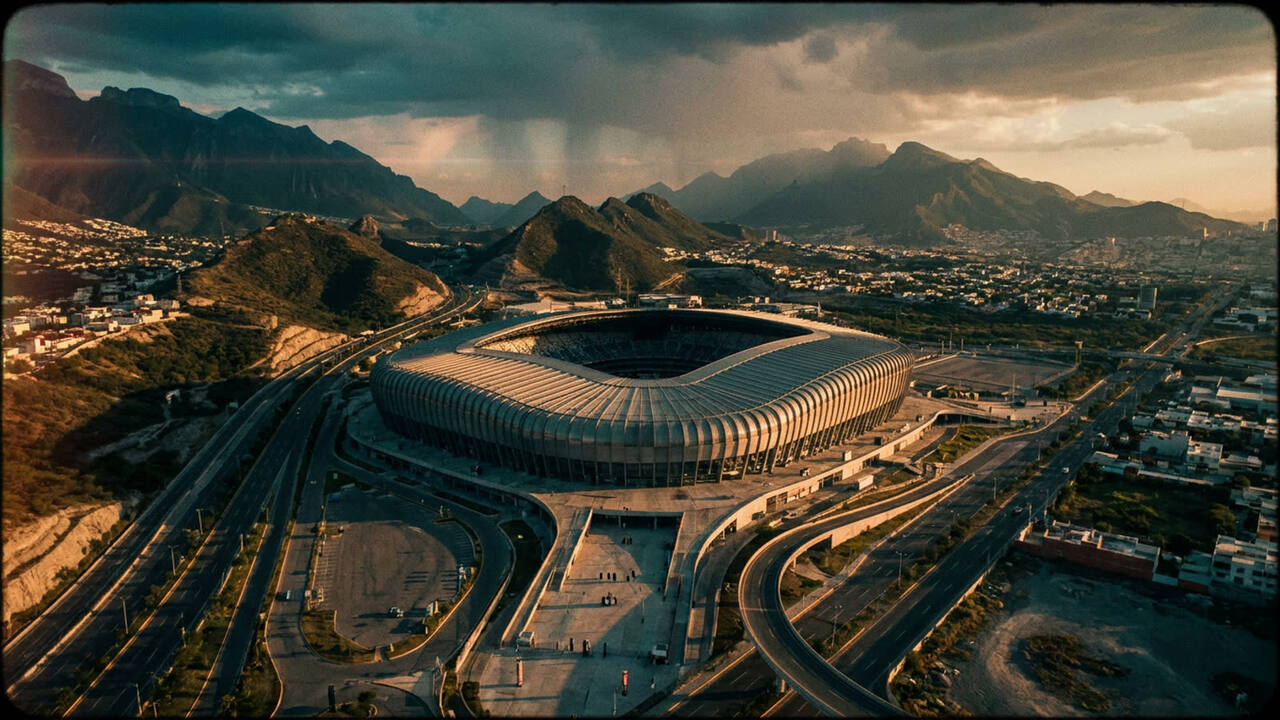
The 2026 World Cup has been, by most metrics, a success: record attendance, minimal security incidents, and enough upsets to keep neutrals engaged. But as the tournament shifts from group stage to knockouts, a less comfortable truth is emerging. Where you play may matter as much as how you play.
FIFA's decision to spread the tournament across three countries and sixteen venues was sold as a celebration of North American unity. In practice, it has created a logistical lottery. Teams assigned to the western bracket — with knockout matches concentrated in Los Angeles, San Francisco, and Seattle — face fundamentally different conditions than those routed through the eastern corridor of Miami, Atlanta, and New York. The climate gaps alone are staggering: a noon kickoff in Phoenix can see pitch-side temperatures exceed 40°C, while an evening match in Seattle might require long sleeves.
The travel tax nobody mentions
Consider the arithmetic. A team based in Miami that advances through the eastern bracket could play every knockout match within a two-hour flight radius. A team that drew the western path but trained in the east faces transcontinental journeys between rounds — sometimes with only three recovery days. In a tournament where marginal gains decide outcomes, accumulating jet lag while your opponent stays local is not a minor disadvantage.
The effect compounds as the bracket narrows. FIFA's seeding ensured that certain heavyweights landed on opposite sides, but it could not account for the physical reality of American geography. Spain, drawn into the western bracket, has quietly set up a secondary training base in California. England, routed east, benefits from shorter hops but faces the humidity of a Gulf Coast summer. Neither condition is neutral; both shape squad rotation and recovery protocols in ways that never appear on the tactics board.
Altitude, grass, and the hidden variables
Then there are the pitches themselves. Venues in Mexico City and Guadalajara sit at altitudes that punish teams unaccustomed to thin air. Several American stadiums use retractable natural grass trays installed over artificial surfaces — a compromise that has drawn complaints about inconsistent footing. Players have learned to check the turf during warmups the way drivers check tire pressure: a small variable that becomes decisive at speed.
FIFA's official line is that all venues meet tournament standards. This is technically true and practically meaningless. Meeting a minimum threshold is not the same as providing equal conditions. The federation's own medical staff have acknowledged that hydration protocols vary by venue, and that some stadiums' cooling systems struggle with capacity crowds. The much-mocked "hydration breaks" — now a fixture of afternoon matches — exist precisely because certain venues cannot guarantee safe playing temperatures without them.
Our take
None of this is match-fixing, and none of it is scandal. It is simply the unavoidable consequence of staging a global tournament across a continent-sized host. But it does mean that when we crown a champion in New Jersey on July 19, we should acknowledge the full picture. The winner will have beaten excellent opponents, yes — but also a geography that was never quite fair. The beautiful game, it turns out, has an ugly commute.