Football has produced faster players, stronger athletes, and more precise finishers than Johan Cruyff. What it has never produced is a more complete thinker about the game itself. The Dutch forward, who died in 2016, left behind something rarer than trophies: a coherent philosophy that continues to structure how the sport's most successful clubs understand what they are trying to do.
Cruyff's genius was recognizing that football is fundamentally a problem of space. Not running, not shooting, not even passing—space. "Playing football is very simple," he once said, "but playing simple football is the hardest thing there is." This apparent paradox contains the entire Cruyffian worldview: complexity emerges from the relentless pursuit of simplicity, and simplicity requires intelligence that most players never develop.
The turn that changed everything
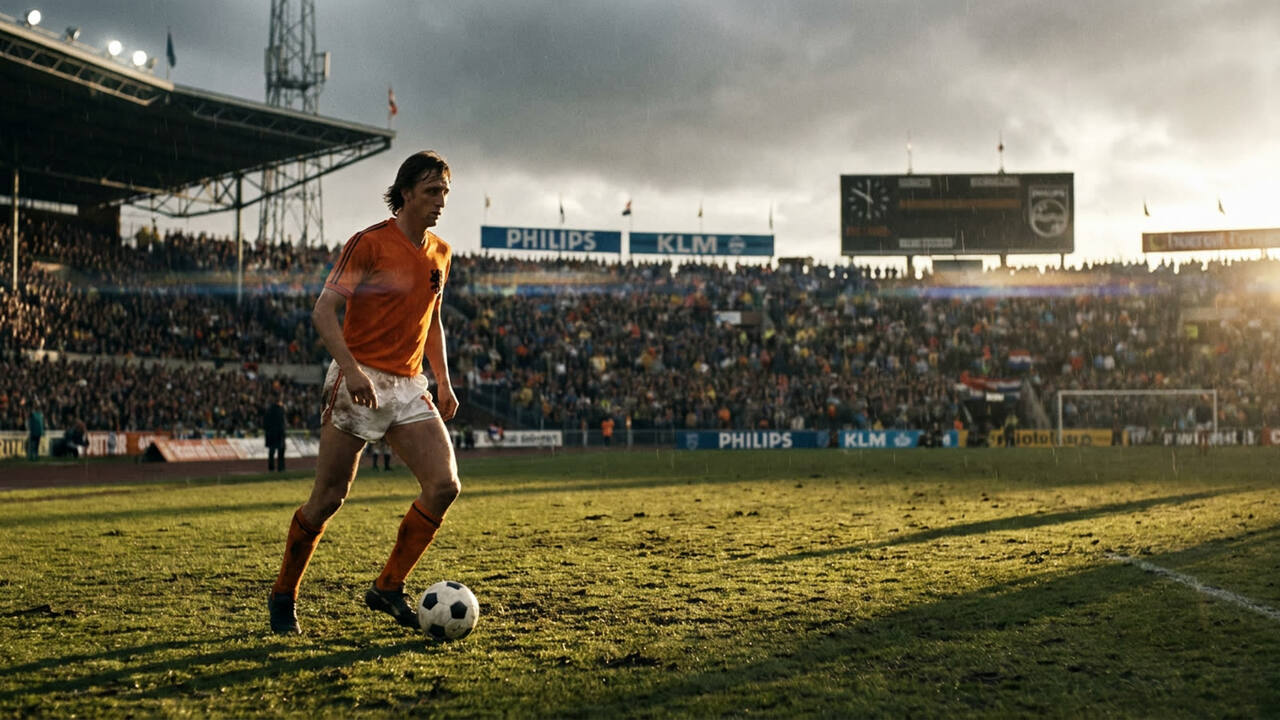
The 1974 World Cup in West Germany introduced global audiences to both Cruyff and the Dutch system that would become known as Total Football. The concept—every outfield player capable of playing every position, the team moving as a single organism expanding and contracting across the pitch—sounds almost mystical described in words. Watching it was stranger still. Defenders appeared in attack. Forwards tracked back to midfield. The rigid positional assignments that had defined football since its codification seemed suddenly optional.
The tournament's most enduring image is the "Cruyff Turn," executed against Sweden's Jan Olsson. Cruyff appeared to be preparing a pass, then dragged the ball behind his standing leg and accelerated in the opposite direction, leaving Olsson grasping at memory. The move has been replicated millions of times since. What cannot be replicated is the mind that invented it in competitive conditions, the spatial intelligence that recognized the possibility before the body executed it.
Barcelona as laboratory
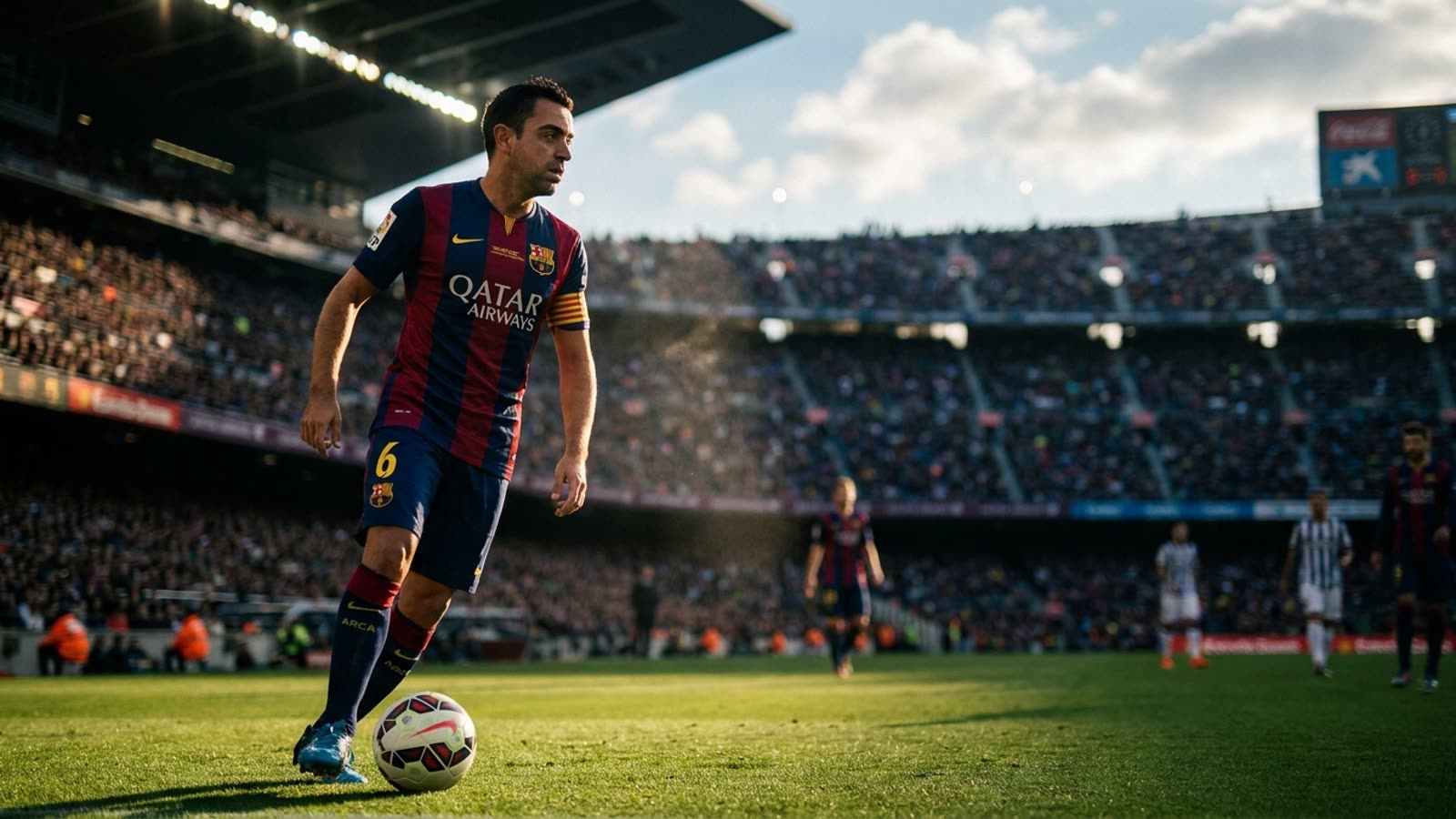
Cruyff's playing career at Barcelona was transformative, but his managerial tenure from 1988 to 1996 proved more consequential. He built the "Dream Team" that won four consecutive La Liga titles and the club's first European Cup, but his deeper project was institutional. He restructured La Masia, the youth academy, around his principles. He insisted that every team from the youngest children to the first squad play the same way: possession-based, position-fluid, technically demanding.
The results took decades to fully mature. Pep Guardiola, a defensive midfielder in Cruyff's Dream Team, internalized the philosophy and later managed Barcelona to the most dominant stretch in club football history. Guardiola's teams—at Barcelona, Bayern Munich, and Manchester City—are recognizably Cruyffian: obsessed with ball retention, allergic to long clearances, constructed around players who think faster than they run.
Why the ideas endure
Many tactical innovations in football prove temporary, effective until opponents adapt. Cruyff's influence persists because it operates at a level below tactics. He was not proposing a formation or a set of plays but a relationship to the game itself. Football, in his view, should be beautiful because beauty and effectiveness are not opposed—the most elegant solution to a spatial problem is usually the correct one.
This aesthetic dimension explains why Cruyff's legacy divides opinion even now. Pragmatists argue that football's purpose is winning, and winning requires whatever methods produce results. Cruyffians counter that how you win matters, that football without ideas is merely exercise. The argument cannot be resolved because it concerns values, not facts.
Our take
Cruyff was that rarest figure in professional sport: someone whose influence increased after he stopped playing and coaching. His ideas now feel inevitable, the way all truly original thinking eventually does. Every time a centre-back carries the ball into midfield, every time a manager speaks of "positional play," every time a youth academy prioritizes technique over physicality, Cruyff's ghost is present. He did not merely play football exceptionally well. He changed what football was trying to be.