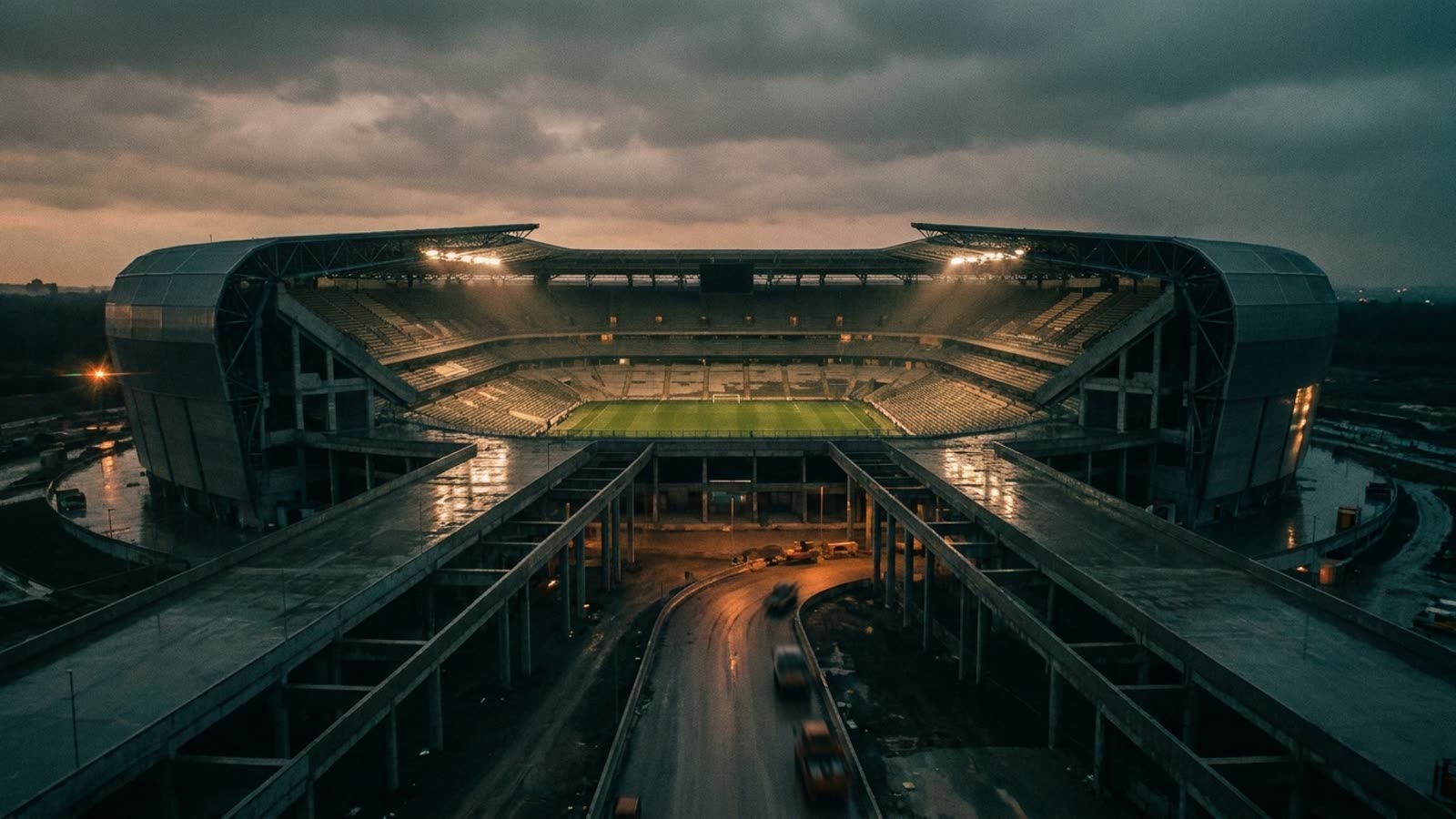
The 2026 World Cup opened Wednesday at Estadio Azteca with the host nation defeating South Africa 2-0, a scoreline that will be forgotten by the knockout rounds but a moment that will be studied for decades. Not because of the football itself—competent, occasionally electric, ultimately routine—but because it marked the official beginning of FIFA's most ambitious gamble: the belief that 48 teams spread across three nations can produce a tournament more compelling than the 32-team format that defined modern World Cup excellence.
The expanded tournament, first announced in 2017, has been debated in abstract terms for nearly a decade. Now it is concrete. Sixteen groups of three teams each, with the top two advancing—a format that mathematically guarantees some groups will produce collusion-friendly final matchdays where both teams know exactly what result sends them through together. FIFA's counter-argument has always been volume: more nations means more stories, more upsets, more global engagement. Wednesday's opener suggested both sides might be right.
The case for expansion
Mexico's victory featured moments that justified the tournament's existence: a packed Azteca roaring at decibel levels that made tactical communication impossible, South Africa's Bafana Bafana competing with genuine belief rather than the resignation that sometimes afflicts smaller nations at World Cups, and a global television audience reportedly exceeding 800 million. The expanded format has brought first-time qualifiers and nations that hadn't appeared in decades back to football's biggest stage. For supporters in those countries, the abstract debates about tournament dilution are irrelevant—their team is here, and that matters.
The case against
Yet the group-stage mathematics remain troubling. In a three-team group, the final matchday features only one game, meaning two teams can calculate precisely what result benefits both. The 1982 World Cup's "Disgrace of Gijón"—when West Germany and Austria played out a mutually beneficial 1-0 result while Algeria watched helplessly—occurred under similar conditions. FIFA has scheduled simultaneous kickoffs for some critical matches, but the format's structure makes collusion easier to execute and harder to prove than the four-team groups that replaced the 1982 system.
The American test
The tournament's other grand experiment—hosting across three countries and four time zones—begins in earnest this week as matches spread from Mexico City to Toronto to Los Angeles. The logistics are unprecedented: teams will travel distances that would span multiple European countries, fans will navigate three different visa regimes, and broadcasters will juggle kickoff times designed to satisfy audiences from São Paulo to Seoul. Whether this produces a genuinely continental celebration or a fragmented viewing experience won't be clear until the knockout rounds, when the tournament's emotional intensity traditionally peaks.
Our take
FIFA's expansion was always about money dressed in the language of inclusion, and there's nothing inherently wrong with that—football is a business, and more participants means more television markets. The question is whether the product suffers. Wednesday's opener suggested the floor remains high: a World Cup match at Azteca, regardless of format, still generates electricity that no club competition can match. But the ceiling may be lower. The 32-team World Cup produced groups of death that guaranteed drama; the 48-team version produces groups of three that guarantee mathematics. We'll know by July whether FIFA found a way to have both.