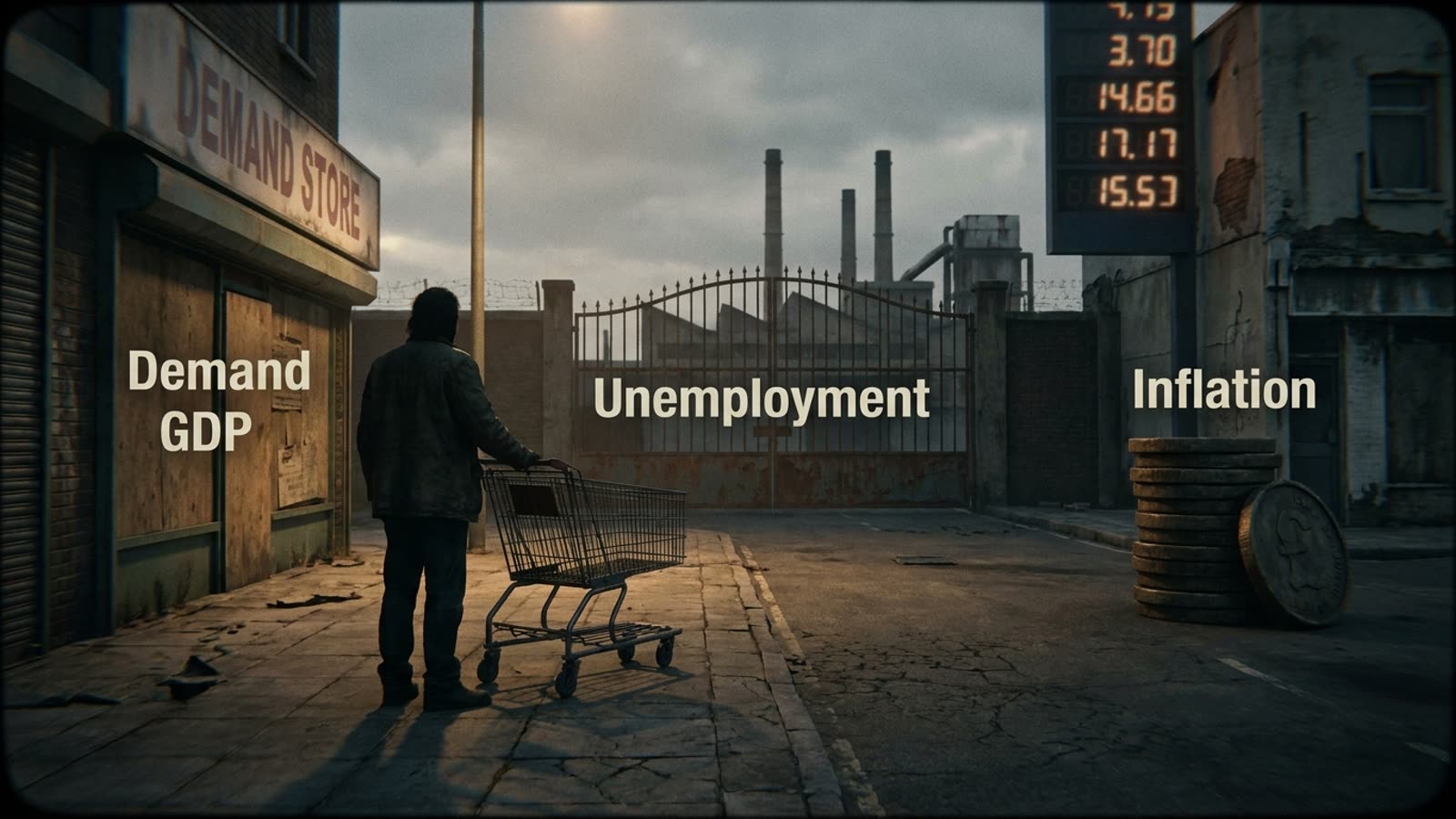
The arithmetic should be simple. If your salary rises by four percent and prices rise by three, you are ahead by one percent. You should feel richer. You do not.
This is not a failure of mathematics but a collision between how economists measure prosperity and how households actually experience it. The gap has persisted across decades, political administrations, and wildly different economic conditions, which suggests it is not a bug in the data but a feature of how modern life is structured.
The sequence problem
Inflation statistics capture price changes across a basket of goods measured at regular intervals. Your raise, by contrast, arrives once — perhaps annually, perhaps less often. The mismatch in timing creates a psychological ratchet. Prices creep upward continuously, nibbling at your purchasing power week by week. The raise lands as a single event, often months after you first noticed things getting tighter. By the time the new salary hits your account, you have already absorbed months of higher costs. The raise feels like catching up, not getting ahead, because that is precisely what it is.
Compounding the timing problem is the stickiness of commitments. Rent or mortgage payments, insurance premiums, and subscription services adjust at their own cadences, often lagging official inflation figures. When they do reset, they tend to jump rather than glide. A landlord who held rent flat for two years may demand a double-digit increase in year three. The annual average looks moderate; the lived experience does not.
The substitution illusion
Official inflation measures assume consumers substitute cheaper alternatives when prices rise — ground beef for steak, store brands for name brands. This is economically rational and statistically defensible. It also means the index tracks a moving target. The basket you are measured against is not the basket you wanted. Your quality of life may have quietly downgraded while the numbers insist you are holding steady.
Housing amplifies this distortion. Shelter costs in most inflation indices rely on complex imputations — what a homeowner would theoretically pay to rent their own dwelling — rather than the mortgage payment they actually write each month. For renters, the index captures average rents across all leases, not the spot price facing someone signing a new lease today. Both methods smooth volatility, which is useful for macroeconomic analysis and largely useless for understanding why your budget feels so strained.
The hedonic adjustment
Statisticians adjust prices for quality improvements. A television that costs the same as last year's model but offers higher resolution is recorded as a price decline. Your smartphone, packed with more processing power than a room-sized computer from a generation ago, is technically cheaper in quality-adjusted terms even if the sticker price climbed. These adjustments are intellectually honest — you are getting more for your money — but they do not reduce the number on your credit card statement. The gains are real; they are also non-negotiable. You cannot pay your electric bill with the extra pixels.
Our take
The persistent gap between measured inflation and felt inflation is not a conspiracy, nor is it evidence that the numbers are wrong. It is a reminder that aggregate statistics describe economies, not lives. Your budget is a sequence of specific transactions at specific moments, shaped by contracts you signed years ago and obligations you cannot easily escape. The raise that looks generous on a spreadsheet dissolves into the texture of daily spending before you notice it arrived. Understanding this does not make the bills easier to pay, but it does explain why prosperity so often feels like running in place.