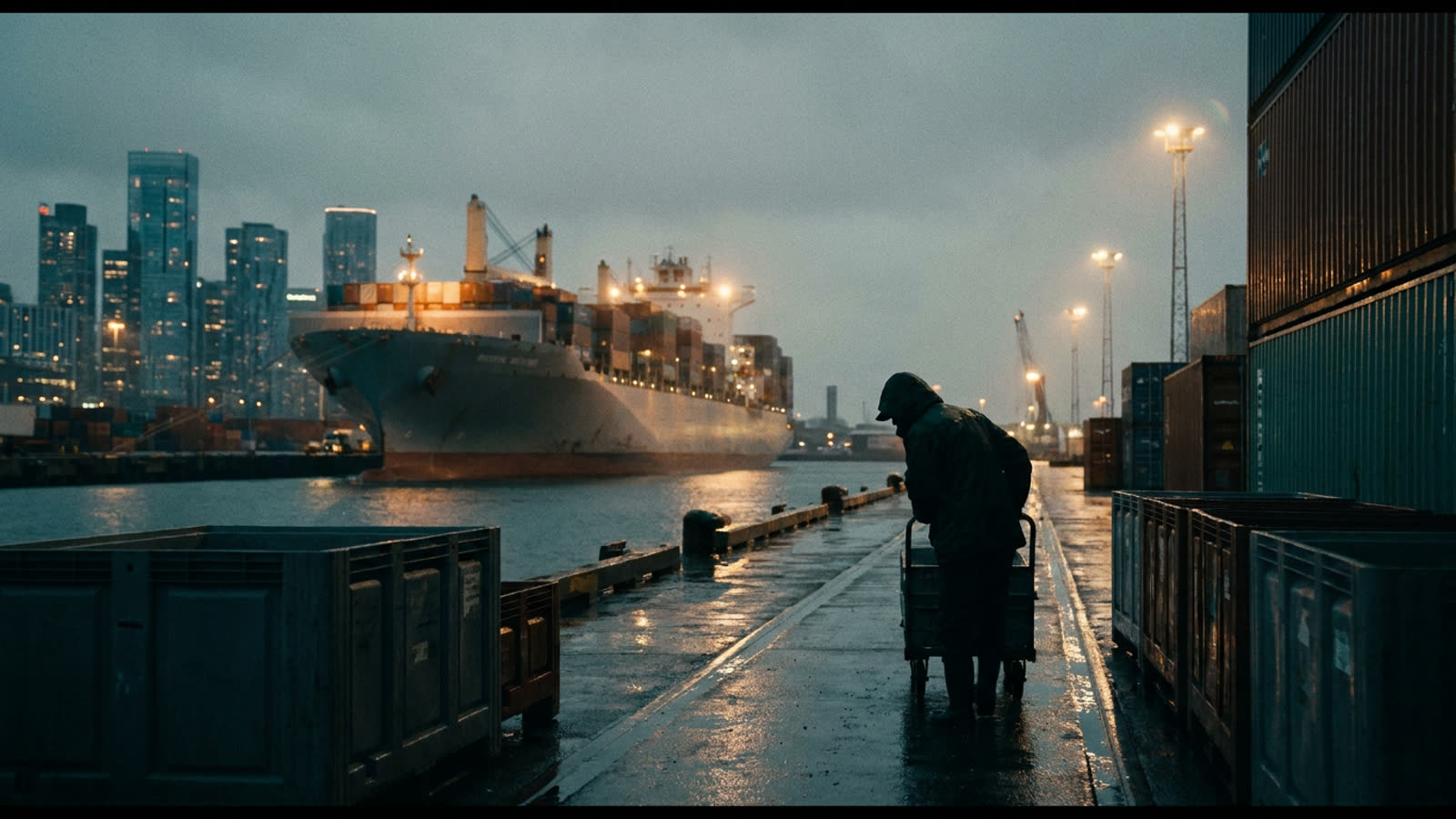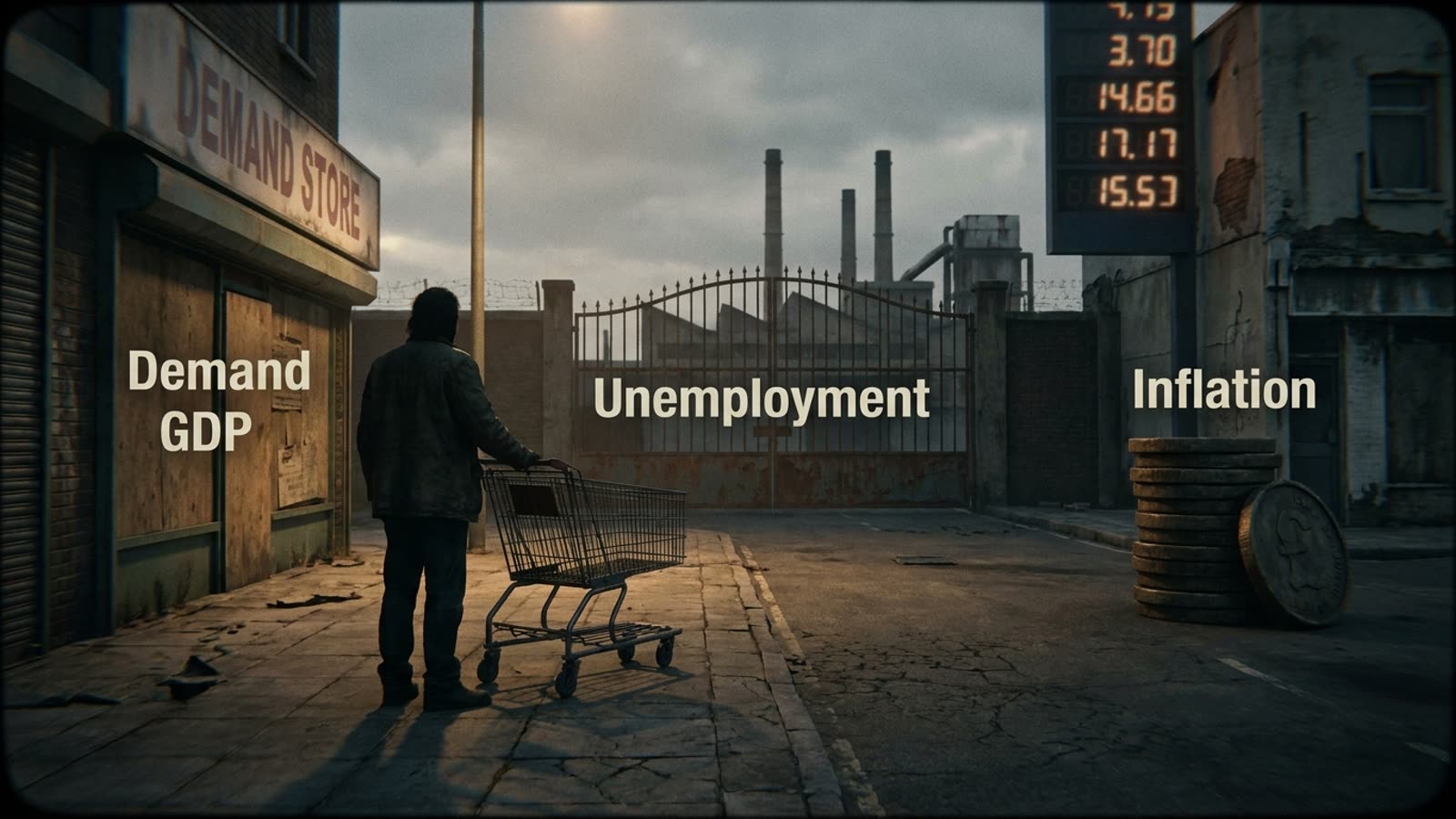
Most economic problems come with their own solutions. Inflation too hot? Raise interest rates, cool demand, watch prices settle. Growth too slow? Cut rates, stimulate spending, let the engine rev. The elegance of modern central banking rests on this basic hydraulic logic: push one lever, move one needle. Stagflation breaks the machine.
The term itself — a portmanteau of stagnation and inflation — sounds almost playful, like an economist's dad joke. But the condition it describes is anything but amusing. When an economy suffers simultaneously from rising prices and falling output, policymakers face an impossible choice. Fight inflation with higher rates, and you crush an already weakening economy. Stimulate growth with lower rates, and you pour accelerant on the inflationary fire. There is no clean exit.
The anatomy of a paradox
In normal recessions, demand collapses. People stop buying, businesses stop hiring, and prices — eventually — fall. The pain is real but the logic is coherent. Stagflation inverts this. Prices keep climbing even as the economy contracts, typically because the shock originates on the supply side rather than the demand side.
The textbook example remains the oil crises of the 1970s. When petroleum prices quadrupled, the cost of producing and transporting nearly everything spiked. Businesses passed those costs to consumers. But because the shock reduced productive capacity rather than consumer appetite, the usual recessionary relief valve — falling prices — never opened. The result was a decade of misery that destroyed political careers, rewrote economic orthodoxy, and left scars on an entire generation of savers.
Why conventional tools fail
Central banks are powerful but not omnipotent. They can influence how much money sloshes through an economy; they cannot conjure oil from sand or chips from thin air. When inflation stems from genuine scarcity — whether of energy, semiconductors, or labor — monetary tightening treats the symptom while worsening the disease.
This is the trap that made the 1970s so painful. The Federal Reserve, under successive chairs, oscillated between fighting inflation and cushioning recession, achieving neither. It took Paul Volcker's brutal rate hikes in the early 1980s — pushing unemployment above ten percent — to finally break the cycle. The lesson was clear: half-measures prolong stagflation; only overwhelming force ends it. The corollary was equally clear: the cure can feel worse than the disease.
The human cost
Economists debate stagflation in terms of Phillips curves and output gaps. For households, the experience is simpler and grimmer. Wages stagnate or fall in real terms because employers, squeezed by rising input costs and falling sales, cannot offer raises. Meanwhile, the prices of essentials — food, fuel, rent — keep climbing. Savings erode. Debt accumulates. The middle class, caught between static income and rising expenses, hollows out.
Perhaps worse is the psychological toll. Inflation alone is disorienting; stagflation is demoralizing. The implicit social contract — work hard, save diligently, and your position will improve — feels void. That sense of betrayal has political consequences, fueling populism and eroding trust in institutions.
Our take
Stagflation is rare precisely because it requires a specific and unfortunate alignment of shocks. But rarity is not impossibility, and the forces that produce it — supply disruptions, commodity volatility, geopolitical fragmentation — have not disappeared from the world. Understanding the phenomenon is not an academic exercise. It is insurance against complacency, a reminder that the economy's guardrails have limits, and that some problems admit no painless solutions.