The personal library should be extinct by now. Every argument for its obsolescence is sound: e-readers weigh nothing, streaming audiobooks fill commutes, and any text ever printed is a search away. Storage is expensive, moving is brutal, and paper attracts dust and silverfish with equal enthusiasm. Yet the home bookshelf not only persists but has become, paradoxically, more intentional—a designed object in an era that promised to dissolve objects into data.
The persistence is not nostalgia, or not merely nostalgia. It is something closer to self-portraiture.
The shelf as autobiography
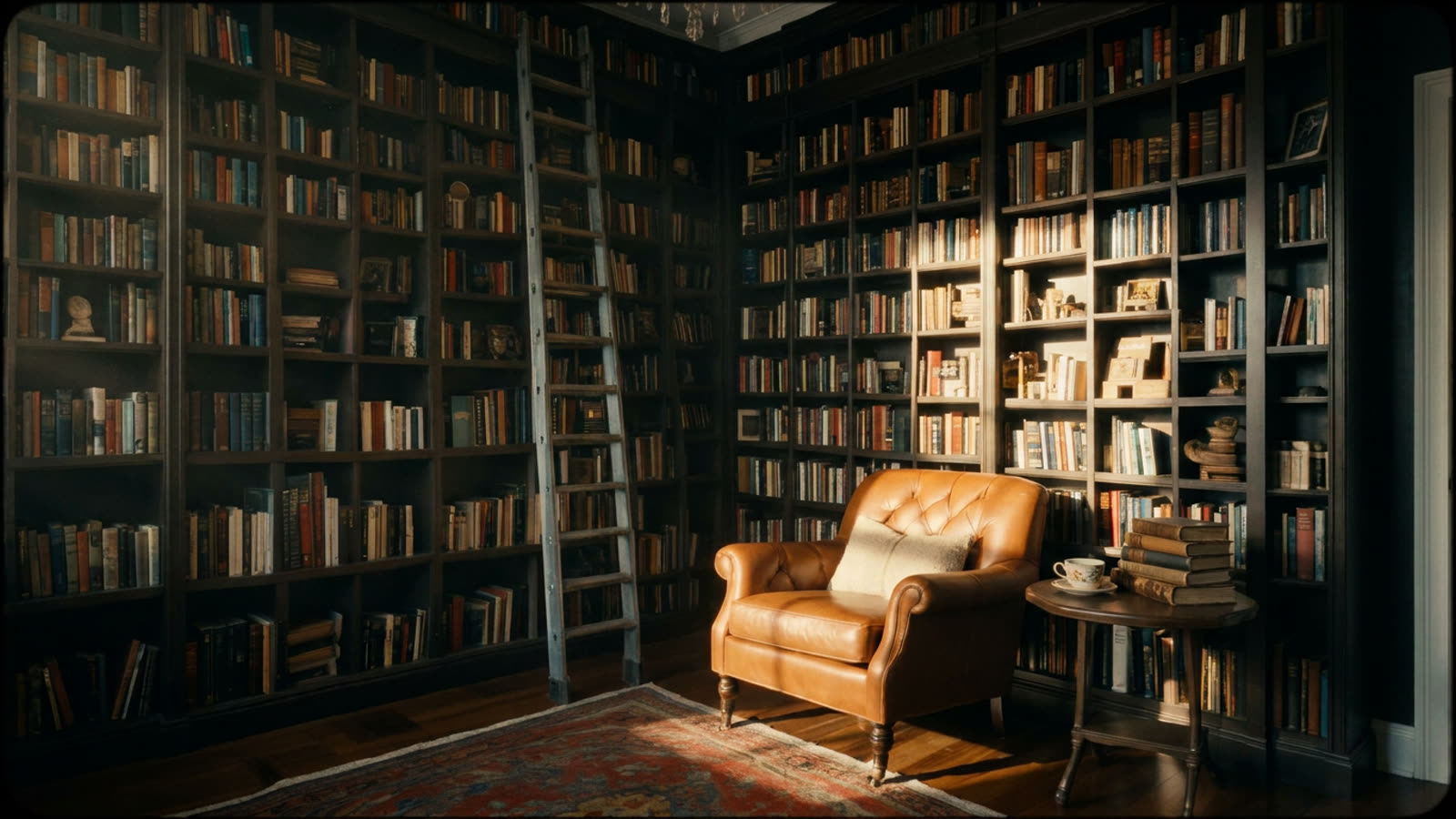
A personal library is a record of who you wanted to become at various points in your life. The unread Proust signals one ambition; the dog-eared Agatha Christie, another. The arrangement itself carries meaning—alphabetical suggests a certain temperament, thematic clustering another, chaotic piling a third. Interior designers report that clients now request "curated" bookshelves with the same specificity they once reserved for kitchen countertops. The books are chosen not only for content but for spine color, height, and what they communicate to dinner guests.
This is not new. The gentleman's library of the 18th century was always partly theatrical, its leather-bound volumes signaling education and taste to visitors who would never crack a single cover. What has changed is democratization: the performance once reserved for manor houses now unfolds on IKEA Billy shelves in studio apartments, visible in Zoom backgrounds and Instagram posts.
The economics of deliberate friction
Physical books cost more, take up space, and require effort to acquire. These are features, not bugs. In a frictionless digital environment, the deliberate introduction of friction becomes a form of commitment. Buying a hardcover is a small declaration that this text matters enough to occupy square footage in your life. The book you keep after three moves has survived a repeated audit of value.
Publishers have noticed. The trade has bifurcated: mass-market paperbacks compete on price with e-books, while premium hardcovers, special editions, and small-press objects compete on beauty and permanence. The middle has hollowed out. A book is now either disposable or an artifact.
The library as anti-algorithm
Digital reading is relentlessly optimized. Algorithms suggest the next title based on the last, creating feedback loops that narrow rather than expand. The physical shelf, by contrast, is a monument to serendipity. The eye wanders; the hand reaches for something forgotten. A book bought for one reason resurfaces years later to meet a different need. The personal library is a hedge against the tyranny of relevance—a repository of the irrelevant that might, someday, become essential.
Our take
The home bookshelf has outlived its utility and discovered a new purpose: it is a physical protest against the weightlessness of digital life. Every book you keep is a small act of defiance against the cloud, a bet that matter still matters. The library endures not because we need it, but because we want proof that we are more than our browsing history.