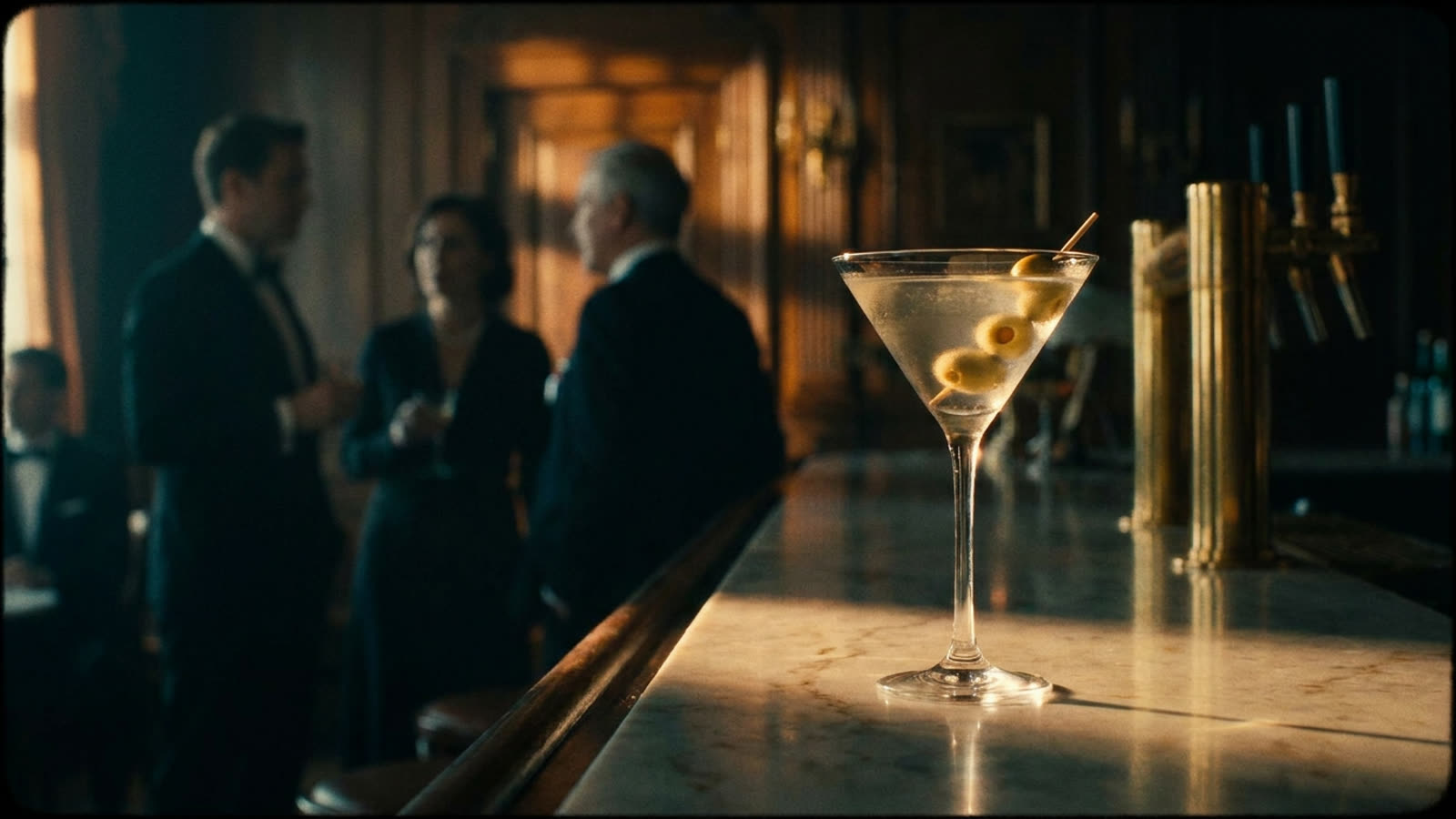
Every generation believes it has finally perfected the martini, and every generation is certain the previous one got it wrong. The ratio debates alone could fill libraries: Winston Churchill allegedly glanced at a bottle of vermouth from across the room; contemporary bartenders now pour equal parts gin and vermouth without apology. This endless tinkering reveals the martini's true nature. It is less a drink than a mirror.
The cocktail emerged in the late nineteenth century, though its precise origin remains contested between San Francisco and New York with the tiresome intensity of a custody dispute. What matters is that by the time Prohibition arrived, the martini had already become shorthand for urban sophistication. Bathtub gin needed something to mask its roughness, and vermouth provided cover. The drink survived illegality by being useful.
The corporate weapon
The postwar decades transformed the martini from cocktail into corporate ritual. The three-martini lunch became so embedded in American business culture that Jimmy Carter campaigned against it as a tax-deductible excess. Mad Men dramatized this era with characteristic precision, but the show's influence on contemporary drinking habits proved more complicated than simple nostalgia. Young professionals who binged the series in the early 2010s discovered that drinking like Don Draper required a tolerance they had not inherited.
What they did inherit was the martini's symbolic weight. Ordering one still signals a certain self-seriousness, a rejection of whatever sugary novelty currently dominates Instagram. The drink demands attention. It arrives cold, clear, and unforgiving. There is nowhere to hide.
The vermouth correction
For decades, American bartenders treated vermouth as a vestigial ingredient, something to be minimized or eliminated entirely. The "dry martini" became a competition in absurdist reduction. This was always a mistake, born partly from genuine preference and partly from the sad reality that most bars stored their vermouth improperly until it oxidized into something resembling furniture polish.
The craft cocktail movement changed this. Quality vermouths from small producers began appearing behind serious bars, and bartenders started treating the fortified wine as an actual ingredient rather than a rumor. A properly made fifty-fifty martini, with fresh vermouth and good gin, tastes nothing like the astringent gasoline many drinkers expect. It tastes like a cocktail.
The vodka question
Purists will insist that a vodka martini is not a martini at all, merely chilled vodka in a particular glass. They are technically correct and socially tedious. The vodka martini exists because people wanted the martini's cultural signifiers without gin's botanical intensity. James Bond popularized the variant, though his preference for shaking over stirring introduced a texture most bartenders consider inferior. None of this matters to the millions who order vodka martinis annually. They are buying the idea of the drink, and the idea transfers across base spirits.
Our take
The martini's immortality stems from its emptiness. It is a vessel for projection, capable of signifying rebellion or conformity, austerity or indulgence, depending entirely on who holds the glass. Every era pours its anxieties into that iconic V-shaped receptacle and calls the result timeless. The drink itself remains indifferent, waiting for the next generation to discover it and believe, once again, that they alone understand what it means.