The capsule wardrobe promises liberation through limitation: thirty-odd pieces, endlessly remixed, freeing you from decision fatigue and the tyranny of trend. It is an idea so seductive that it resurfaces every few years like a well-tailored phoenix, each time marketed as revolutionary. The concept has survived disco, grunge, fast fashion, and the rise of resale apps. Its persistence tells us less about how we dress and more about how we wish we dressed.
The term itself traces to Susie Faux, a London boutique owner who coined it in the 1970s, though the underlying principle is older still. Postwar rationing forced a generation of Europeans to build functional wardrobes from scarcity. Faux simply gave the practice a name and a philosophy: invest in quality basics, rotate seasonally, resist impulse. Donna Karan popularized the idea in America with her "Seven Easy Pieces" collection in 1985, a system of interchangeable separates aimed at working women who needed to look polished without thinking too hard about it.
The minimalist industrial complex
The capsule wardrobe found its most fervent evangelists in the 2010s, when minimalism became a lifestyle brand. Blogs and later Instagram accounts documented thirty-item wardrobes with the reverence once reserved for religious devotion. The aesthetic was always suspiciously uniform: neutral palettes, natural fibers, backgrounds so uncluttered they suggested either monastic discipline or expensive interior design. What began as a practical response to limited resources became aspirational content for people with disposable income and walk-in closets.
The irony is that capsule wardrobes, as typically presented, require substantial upfront investment. The philosophy assumes you can afford to buy the "right" cashmere sweater once rather than replacing a cheaper version repeatedly. It assumes your body will remain stable, your lifestyle predictable, your taste unchanging. These are not universal conditions. They are privileges dressed up as principles.
The performance of restraint
What the capsule wardrobe really sells is not simplicity but the appearance of simplicity. Owning fewer clothes has become its own form of conspicuous consumption, a way of signaling that you have transcended the vulgar need for variety. The thirty-piece wardrobe photographed against white walls is not evidence of restraint; it is evidence of curation, which is a different skill entirely.
Meanwhile, the fashion industry has adapted. Brands now market "capsule collections" that are simply smaller product drops, often priced at a premium. The language of minimalism has been absorbed into the machinery of consumption. You are not buying less; you are buying differently, and probably still buying too much.
Our take
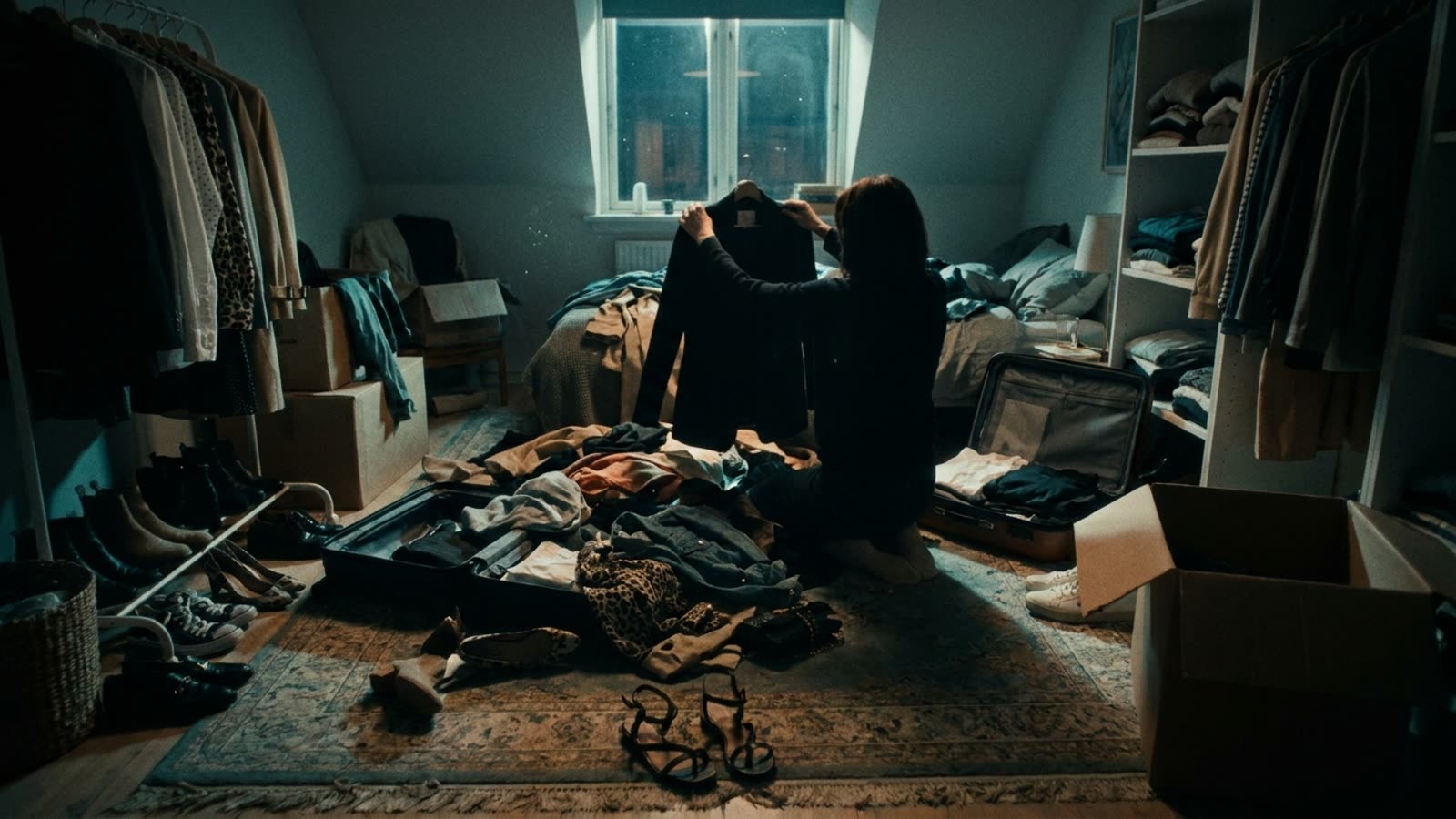
The capsule wardrobe is not a solution to overconsumption; it is a fantasy about the kind of person you might become if you owned the right trench coat. There is nothing wrong with wanting fewer, better things. But the relentless documentation of curated closets has turned a sensible idea into a performance, and performances require audiences, and audiences require content, and content requires consumption. The most honest capsule wardrobe is the one nobody photographs: the clothes you actually wear, stained and beloved, until they fall apart.