When Jimmy Kimmel began making calls on behalf of Spencer Pratt, the simulation officially broke. The late-night host who spent the better part of two decades treating The Hills villain as a punchline has pivoted to something approaching genuine advocacy, personally reaching out to potential donors and corporate sponsors to help the Pratt family rebuild after the devastating Los Angeles wildfires destroyed their Pacific Palisades home earlier this year.
The arrangement is so cosmically unlikely that it demands examination. Kimmel built a comedy franchise on mocking the Speidi industrial complex; Pratt built a brand on being mockable. Now they are collaborating on fundraising calls like old college roommates organizing a charity 5K.
The disaster that rewrote the script
The January wildfires that tore through Pacific Palisades displaced thousands and leveled entire neighborhoods, including the Pratt family home. Spencer and Heidi Montag, who had reinvented themselves as surprisingly relatable Instagram parents after years in reality TV wilderness, suddenly became sympathetic figures in a way their publicists could never have engineered. The couple's tearful videos documenting their loss went viral — not for the usual reasons Pratt content circulates, but because genuine tragedy is difficult to perform.
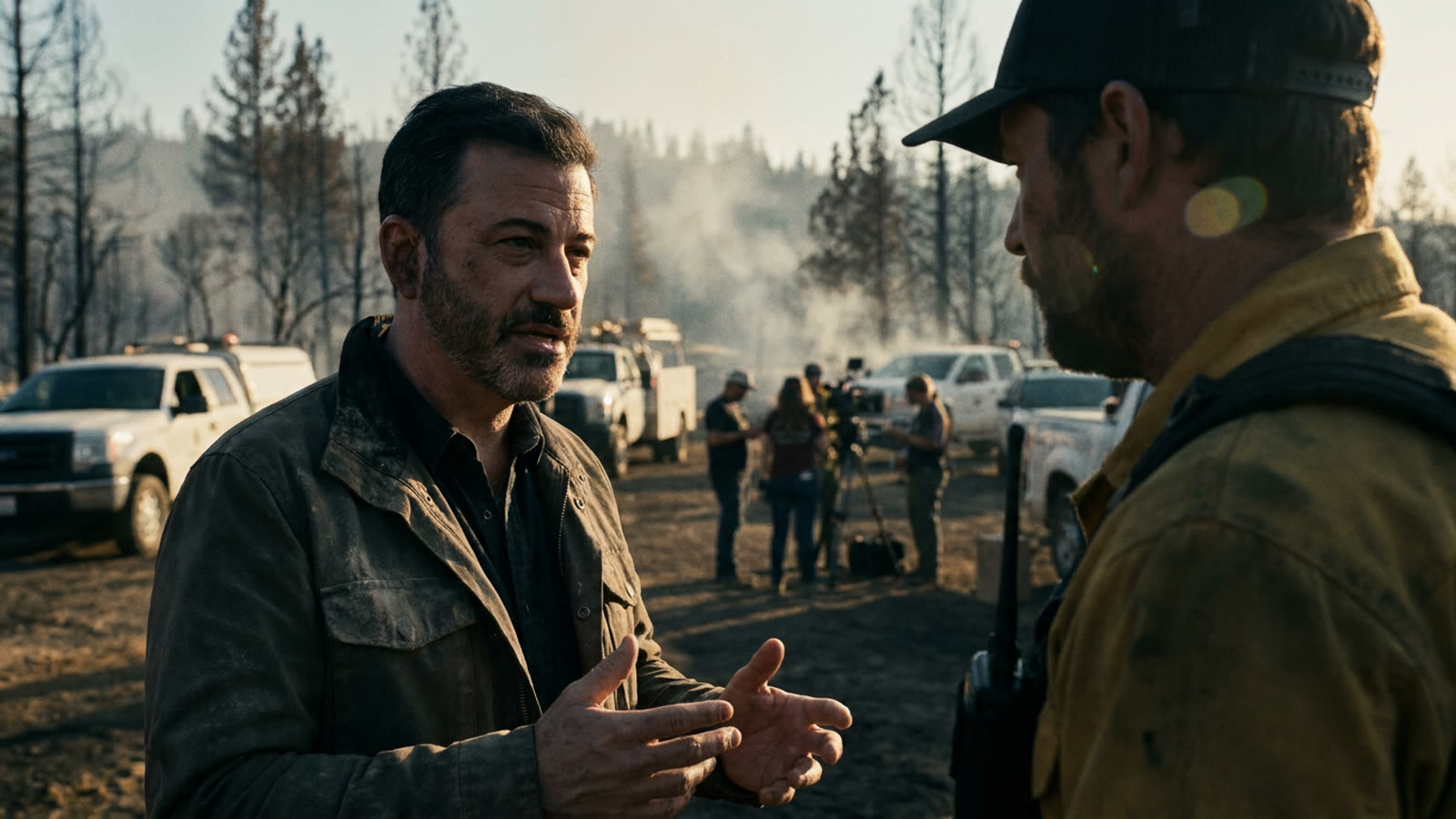
Kimmel, whose show has increasingly leaned into Los Angeles community advocacy, apparently saw an opportunity to do something useful with his Rolodex. The host has been personally calling potential donors and connecting the Pratts with rebuilding resources, according to sources familiar with the arrangement. It is the kind of behind-the-scenes work that celebrities rarely publicize because it lacks the performative clarity of a gala or a telethon.
Why this pairing actually makes sense
The Kimmel-Pratt alliance is less bizarre than it initially appears. Both men are products of the same mid-2000s reality television ecosystem that treated manufactured conflict as content and irony as currency. Kimmel's The Man Show era and Pratt's Hills villainy emerged from the same cultural moment — one that rewarded provocation and punished sincerity. Two decades later, both have children, mortgages, and the creeping awareness that the personas that made them famous were always partly performance.
Disaster has a way of collapsing these distinctions. When your house burns down on camera, the question of whether you were the hero or villain of a 2007 reality show becomes irrelevant. Kimmel seems to understand this instinctively. His advocacy for Pratt is not an apology for years of jokes — the jokes were earned — but an acknowledgment that circumstances change, and so should responses to them.
Our take
The entertainment industry runs on grudges, hierarchies, and the careful maintenance of who deserves sympathy and who deserves scorn. Kimmel's Pratt project quietly subverts all of it. There is no redemption arc here in the traditional sense — Pratt has not apologized for being insufferable, and Kimmel has not apologized for pointing it out. What exists instead is something rarer: two people who occupied opposite poles of the celebrity ecosystem finding common ground in the wreckage of a wildfire. It is not a story about forgiveness. It is a story about how disaster makes the old scorecards look petty, and how sometimes the most radical thing a famous person can do is pick up the phone for someone they used to mock.