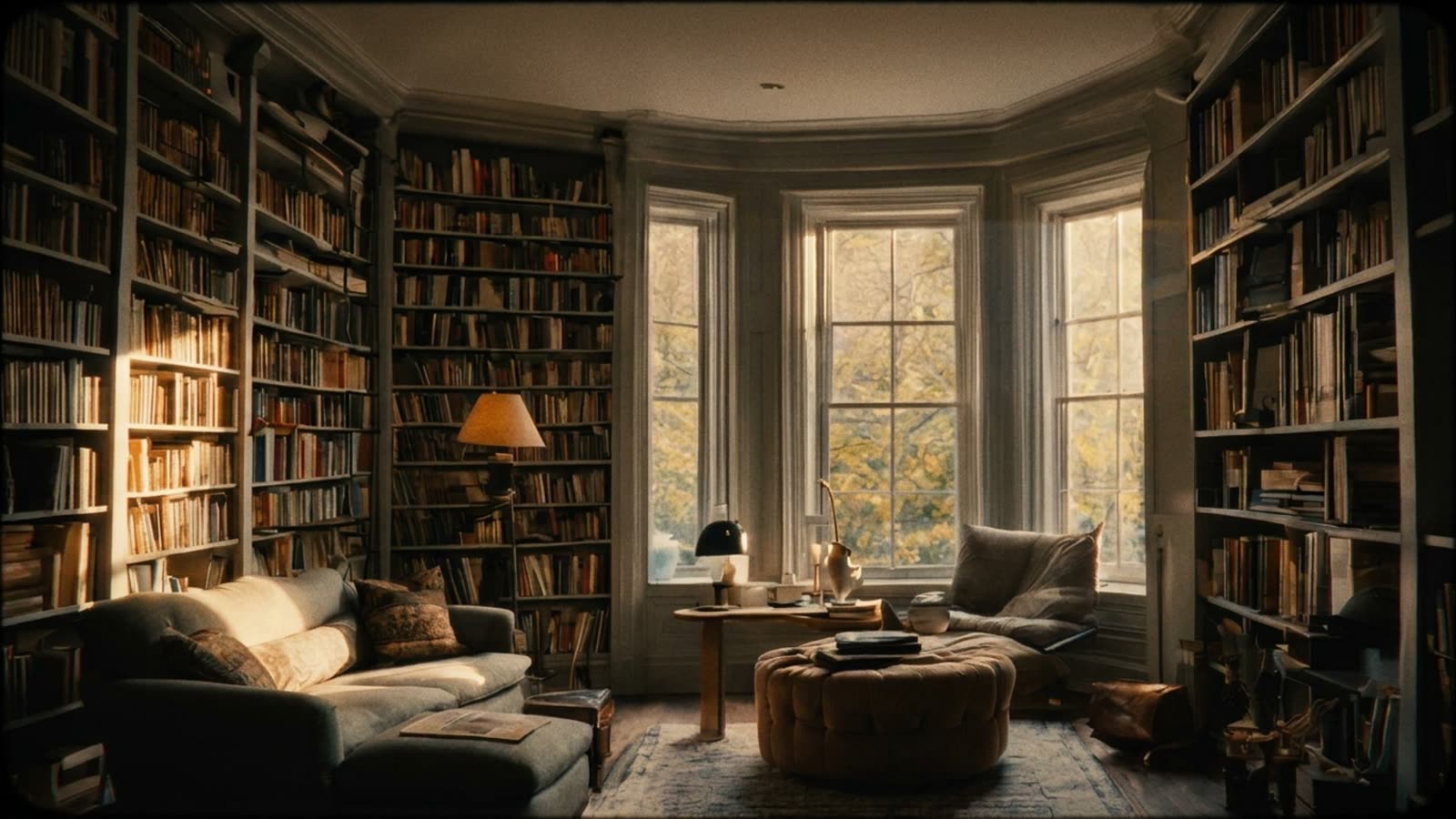
The most revealing room in any home is not the kitchen, with its carefully curated appliances, nor the living room, with its studied casualness. It is the library—or whatever passes for one. A single shelf of paperbacks above a desk. A floor-to-ceiling wall of hardcovers in a brownstone study. A stack of art books on a coffee table, spines cracked or suspiciously pristine. How we arrange our books, and which books we choose to display, remains one of the few honest windows into who we wish to be.
This is not a new phenomenon, but it has taken on fresh urgency. The personal library, once dismissed as an anachronism in the age of e-readers and algorithmic recommendations, has reasserted itself as a marker of intellectual seriousness—and, inevitably, of taste and wealth. Interior designers report that "library walls" are among the most requested features in high-end renovations. Antique book dealers who spent years watching their trade contract now field calls from clients seeking leather-bound volumes by the linear foot.
The economics of the unread
The Japanese have a word for this: tsundoku, the practice of acquiring books and letting them pile up unread. What was once a gentle self-deprecation has become something closer to aspiration. The point of a personal library was never to have read everything on its shelves—that would suggest a finite mind. The point is to have chosen what sits there, to have constructed a physical map of one's intellectual territory and ambitions.
This explains why the market for vintage and rare books has proven remarkably resilient. First editions of twentieth-century literary fiction, once the province of serious collectors, now attract buyers who simply want something real on their shelves. The Folio Society, which produces illustrated editions of classic texts, has expanded its offerings steadily. What these buyers seek is not information—freely available on any screen—but artifact. Weight. Presence.
Against the algorithm
There is a quiet rebellion embedded in the home library. Streaming services and social platforms have trained us to consume what is recommended, to let algorithms surface content calibrated to our established preferences. A physical bookshelf operates on different logic. It is static, stubborn, indifferent to what you clicked on yesterday. The book you bought in a mood you no longer remember sits beside the one you inherited from a grandparent beside the one a friend pressed into your hands at a dinner party years ago. This randomness is the point.
The personal library is also, crucially, finite. It cannot expand infinitely the way a digital collection can. This constraint forces decisions: what stays, what goes, what earns its place. In a culture of abundance, scarcity has become the luxury.
Our take
The home library endures because it answers a need that technology cannot. We want evidence of our inner lives made visible, tangible, arrangeable. We want to be the kind of person who owns that book, even if we have not yet read it—perhaps especially if we have not. The shelf is not a record of what we have consumed but a portrait of who we imagine ourselves becoming. That this portrait is often aspirational, even slightly fraudulent, is beside the point. All the best portraits are.