When a customer pays four thousand dollars for a handbag stamped with a French name, there is a reasonable chance the leather was cut, stitched, and finished somewhere between Florence and Bologna. The great open secret of global luxury is that Italy manufactures an overwhelming share of it—not just for its own houses, but for the Swiss, French, and American conglomerates that sit atop the industry's market-cap rankings. The country's competitive advantage is not mystique or heritage marketing. It is a dense, interlocking network of small factories, artisan workshops, and family suppliers that functions like a single organism spread across the northern half of the peninsula.
The districts that defy economics textbooks
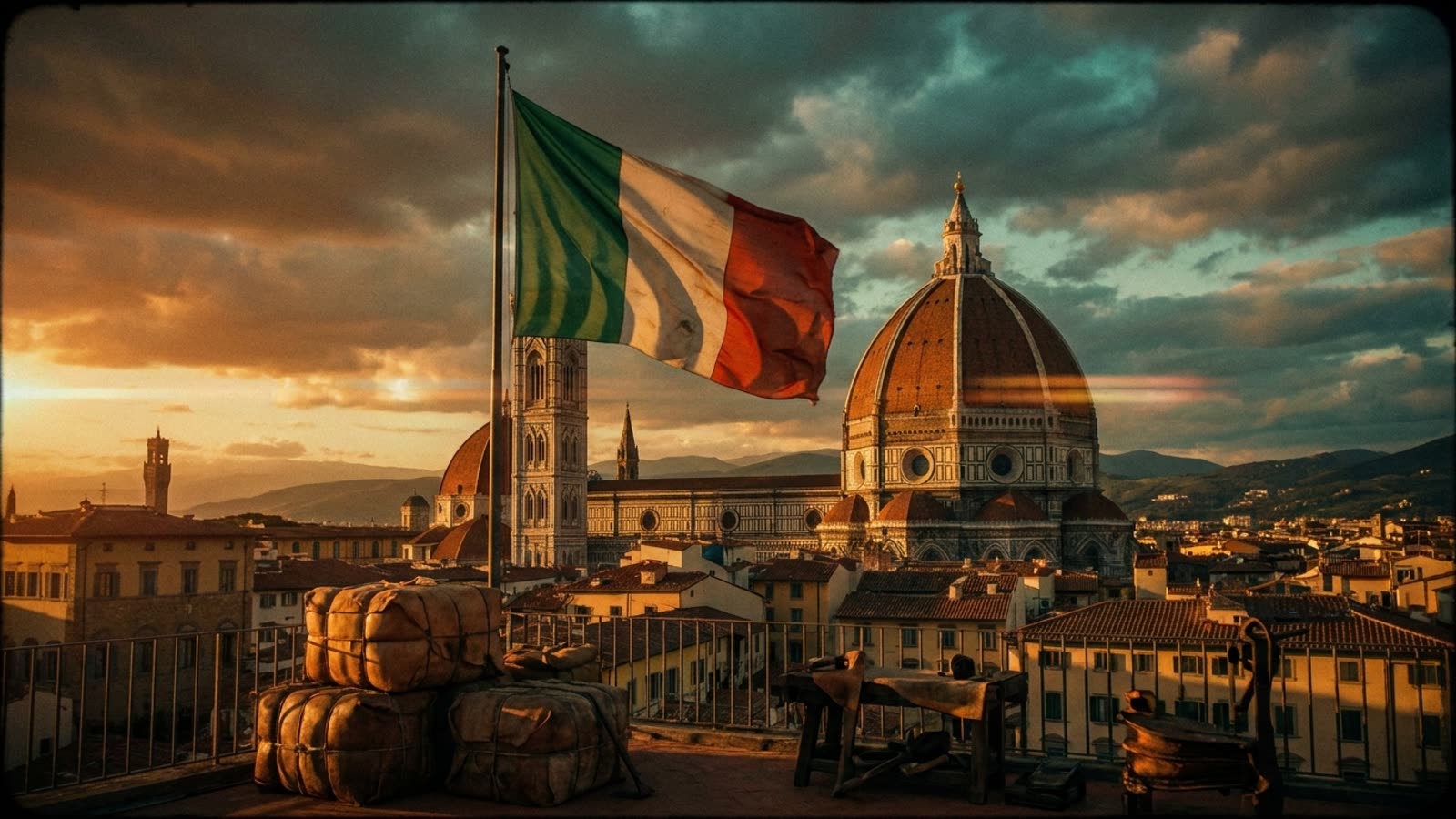
Classical trade theory suggests that manufacturing migrates to wherever labor is cheapest. Luxury leather goods did not get the memo. The area around Florence—particularly the towns of Scandicci and Pontassieve—remains the global center of high-end handbag production decades after wages rose far above those in Eastern Europe or Southeast Asia. The reason is clustering: when tanneries, hardware makers, dyers, and finishers operate within a short drive of one another, iteration happens faster, quality control tightens, and tacit knowledge circulates through an ecosystem rather than leaking to competitors abroad. A similar logic applies to the silk mills of Como, the knitwear factories of Carpi, and the eyewear plants of the Belluno province. Each district hoards expertise that would take a generation to rebuild elsewhere.
Why the conglomerates cannot walk away
LVMH, Kering, and Richemont have poured capital into vertical integration, buying Italian suppliers outright or locking them into exclusive contracts. The strategy is partly defensive—securing capacity in a world where skilled leather workers are aging out and few young Italians want factory jobs—and partly offensive, denying rivals access to the best craftsmen. Yet ownership does not eliminate dependence. Even a captive supplier relies on the surrounding ecosystem: the specialist who re-chromes a zipper pull, the freelance pattern-maker who consults for three competing houses. Relocating a single factory is feasible; relocating the web of relationships that makes it productive is not.
The succession problem no one has solved
The average age of a master artisan in the Florentine leather district is now well into the fifties. Vocational schools exist, but enrollment has struggled to keep pace with retirements. Some houses have launched in-house academies; others recruit from furniture-making or automotive-upholstery backgrounds, hoping the hand skills transfer. The demographic math is unforgiving. If the pipeline of trained workers narrows further, even unlimited capital will not conjure the human infrastructure that makes Italian production irreplaceable. For now, the system holds—but its longevity is no longer a given.
Our take
Italy's luxury-goods supremacy is often narrated as romance: old families, ancient techniques, the poetry of craft. The truer story is economic geography. A cluster of capabilities accumulated over a century, reinforced by proximity and trust, and became nearly impossible to dislodge. That is not romance; it is path dependence dressed in beautiful leather. The question for the next decade is whether the country can renew the human capital that sustains the miracle—or whether the last generation of maestri will take their secrets with them.