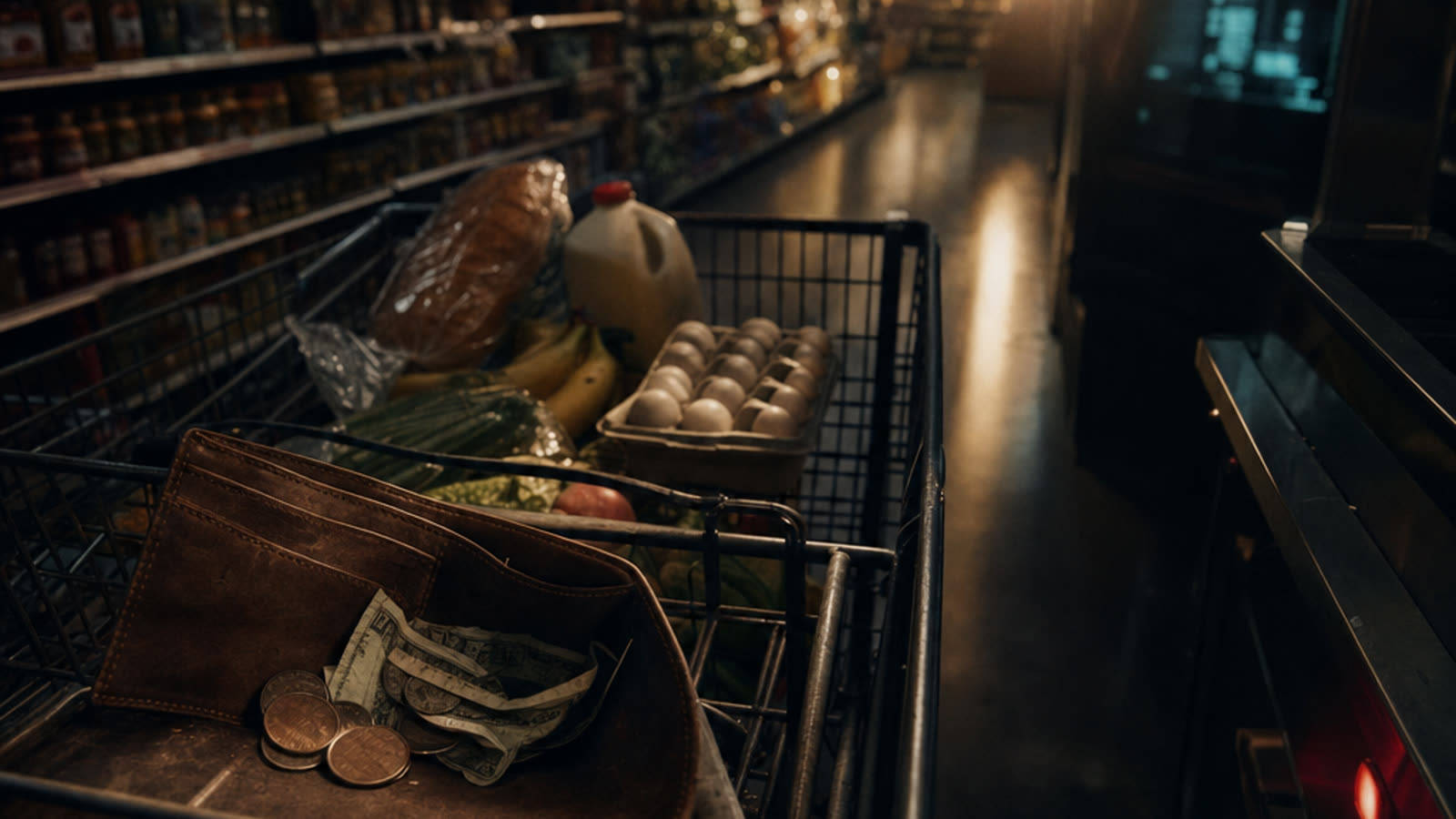
There is a particular kind of madness that descends upon dinner parties when someone mentions inflation. The economist at the table will cite the latest consumer price index, note that it has moderated considerably from recent peaks, and suggest that the worst is behind us. The person who just returned from the grocery store will look at them as though they have lost their mind. Both are correct, which is precisely the problem.
The disconnect between official inflation statistics and the sensation of being slowly bled dry at the checkout counter is not a conspiracy, nor is it incompetence at the Bureau of Labor Statistics. It is the inevitable result of trying to compress millions of individual economic experiences into a single number — and that number being designed to answer a question most people are not actually asking.
What the index actually measures
The Consumer Price Index tracks the cost of a fixed basket of goods and services, weighted by how much the average American household spends on each category. Housing gets the largest weight, followed by transportation, food, and medical care. The methodology is sophisticated, accounting for quality improvements (your television is better than the one you bought a decade ago, so some of its price increase is not really inflation) and substitution effects (when beef gets expensive, people buy chicken).
This approach makes sense for monetary policy. Central bankers need a consistent, comparable measure to track whether the currency is holding its value over time. But it creates a fundamental mismatch with individual experience. You are not the average American household. Your spending patterns are yours. If you rent in a city where housing costs have surged, or have children in daycare, or commute by car, your personal inflation rate may bear little resemblance to the headline number.
The frequency illusion
There is also the matter of psychological salience. Humans are exquisitely attuned to prices they encounter frequently and largely oblivious to those they pay annually or less. You notice that your morning coffee costs more every time you buy it. You do not notice that your refrigerator, purchased once a decade, has gotten relatively cheaper. The items that dominate your perception of inflation — groceries, gasoline, restaurant meals — are precisely the categories that have been most volatile in recent years, even as durable goods and some services have remained more stable.
This is not irrationality. It is a perfectly reasonable response to the information your daily life provides. The problem is that the CPI weights items by expenditure share, not by how often you think about them. Your cognitive inflation rate, if we could measure it, would look very different from the official figure.
The baseline problem
Perhaps the cruelest trick of inflation statistics is their relationship to time. When prices rise sharply and then stabilize, the index shows inflation returning to normal. But prices have not returned to normal — they have merely stopped rising as fast. The new, higher price level becomes the baseline. For anyone whose income did not keep pace during the surge, the damage is permanent. The CPI might read two percent, but your purchasing power remains diminished from three years ago, and no amount of statistical moderation will restore it.
This is why the phrase "inflation is under control" can feel like a taunt. The fire may be out, but the house is still burned.
Our take
None of this means inflation statistics are useless or that economists are out of touch. The CPI does what it was designed to do, and it does it reasonably well. But we should stop expecting a single number to validate or invalidate individual economic experience. The person struggling to afford groceries and the economist citing moderating core inflation are describing different phenomena with the same word. Recognizing this gap — and resisting the urge to dismiss either perspective — is the beginning of economic literacy. The numbers are real. So is the pain. The mature position is to hold both truths simultaneously.