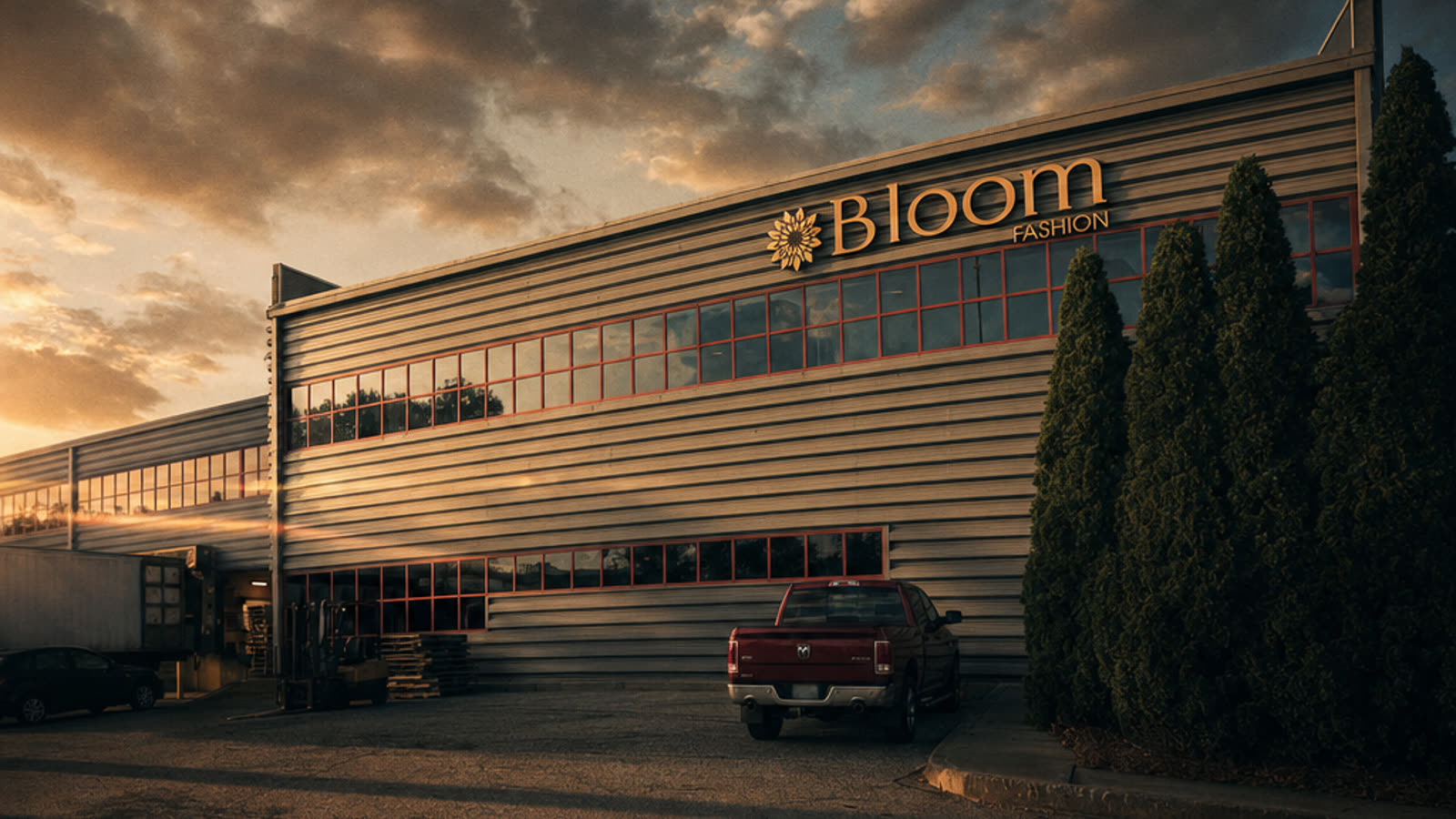
The great reshoring narrative has produced more PowerPoint decks than actual reshored production. For all the political rhetoric about bringing manufacturing home, American brands still struggle with a basic problem: they have no idea which domestic factories can actually make their products, at what price, or on what timeline. Bloom, a Los Angeles startup that just raised $3.6 million, is betting it can solve that information asymmetry by building a marketplace that connects brands directly with vetted U.S. manufacturers—essentially creating the domestic sourcing infrastructure that Alibaba built for Chinese exports two decades ago.
The discovery problem
American manufacturing never disappeared; it just became invisible. Thousands of small and mid-sized factories across the Midwest, South, and rural coasts continue to produce textiles, electronics components, furniture, and consumer goods. But these facilities rarely have sophisticated sales operations or digital presence. Meanwhile, the brands that might hire them have procurement teams trained to navigate Shenzhen, not Scranton. Bloom's pitch is straightforward: aggregate these factories onto a single platform, standardize their capabilities and pricing, and let brands search for domestic production the way they search for overseas suppliers. The company claims to have onboarded several hundred manufacturers across multiple categories since its founding.
Why the money showed up now
The seed round, led by early-stage investors betting on industrial software, reflects a broader shift in venture sentiment. After years of funding consumer apps and AI wrappers, some funds are rediscovering the unsexy infrastructure plays that actually touch physical supply chains. Bloom benefits from macro tailwinds that feel increasingly structural rather than cyclical: tariff uncertainty has made long-term overseas sourcing contracts riskier, shipping costs remain elevated compared to pre-pandemic levels, and brands face growing consumer and regulatory pressure to demonstrate supply-chain transparency. The company is also riding a generational turnover at many family-owned factories, where younger operators are more willing to adopt digital tools and marketplace models.
The Alibaba comparison cuts both ways
Invoking Alibaba is clever marketing, but it also highlights Bloom's challenge. Alibaba succeeded because Chinese manufacturers offered prices that Western factories could not match, and the platform made accessing that arbitrage frictionless. Bloom is selling the opposite proposition: domestic production that costs more but delivers faster, with fewer geopolitical risks and better labor optics. That value proposition resonates with certain brands—particularly those selling premium products or facing tariff exposure—but it is not universal. The startup will need to prove that enough demand exists at domestic price points to sustain a marketplace, not just a matchmaking service.
Our take
Bloom is not going to reverse forty years of globalization, and it knows that. But it does not need to. If even a modest percentage of American brands shift a portion of their sourcing back onshore—whether for risk management, speed, or marketing purposes—the addressable market is substantial. The real question is whether Bloom can build network effects before larger players notice the opportunity. Alibaba itself has been quietly expanding U.S. manufacturing partnerships. Amazon has logistics infrastructure that could pivot toward domestic sourcing. Bloom's window is open, but it will not stay open forever.