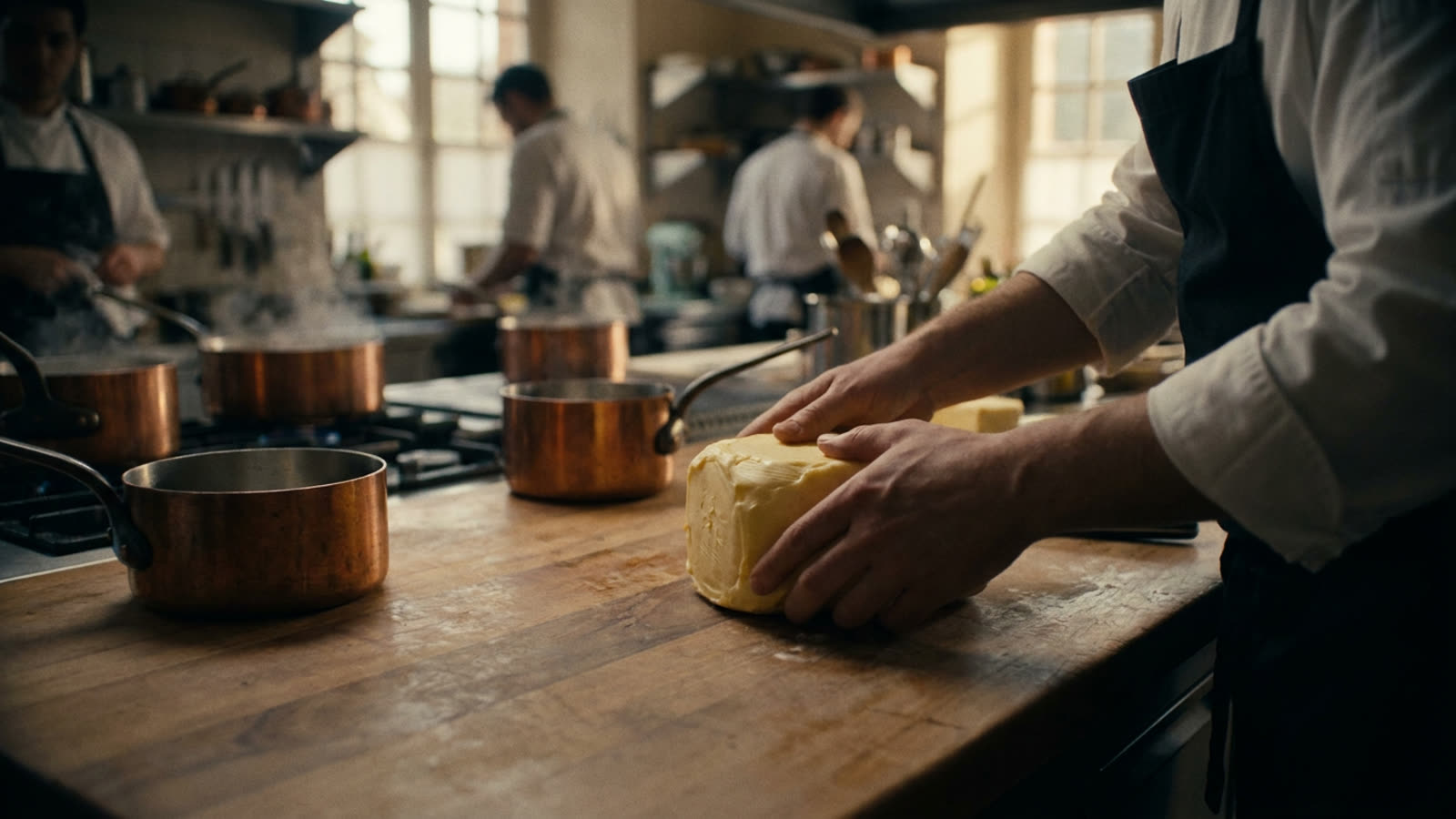
The most subversive ingredient in contemporary fine dining is also the oldest. While wellness culture has spent years vilifying saturated fat and Instagram chefs have drizzled their way through oceans of extra-virgin olive oil, the restaurants that actually win awards—the ones with waiting lists measured in months—have never stopped building their cuisine on butter.
This is not nostalgia. It is pragmatism dressed in white linen.
The science of indulgence
Butter does things to food that no other fat can replicate. Its water content—roughly 15 to 20 percent in European-style varieties—creates steam during cooking, producing the flaky architecture of croissants and the shatter of properly made puff pastry. Its milk solids brown through the Maillard reaction, adding nutty depth that olive oil cannot approach. And its crystalline structure at cool temperatures allows it to be worked into sauces with a silkiness that plant oils, which remain liquid, simply cannot achieve.
French technique understood this centuries ago. The mother sauces—béchamel, velouté, the emulsified glories of hollandaise and béarnaise—are engineering projects built on butter's unique physical properties. Modern kitchens have not abandoned these foundations; they have merely learned to whisper about them.
The quiet counter-revolution
Walk into any serious tasting-menu restaurant and observe what arrives at the table. The amuse-bouche glistening with beurre monté. The fish course finished with a foam that owes its stability to butterfat. The bread service featuring cultured butter so aggressively flavored it could be served as a course unto itself. The pastry program that would collapse without European-style butter's higher fat content.
Japanese cuisine, supposedly the antithesis of French richness, has embraced butter with particular enthusiasm. The country's fascination with Western pastry techniques has produced some of the world's finest croissants, while yoshoku—the Japanese interpretation of Western dishes—treats butter as essential infrastructure. A proper Japanese curry roux begins with butter. So does the nation's beloved corn-butter combination.
Even the plant-based movement has inadvertently testified to butter's supremacy by spending years trying to replicate it. The fact that vegan butter alternatives are judged primarily on how closely they approximate the original tells you everything about which ingredient sets the standard.
The wellness paradox
The rehabilitation of dietary fat has been slow and uneven, but butter has benefited from shifting nutritional consensus. The demonization of saturated fat that began in the latter half of the twentieth century has faced sustained challenge from researchers questioning whether the original studies were as conclusive as once believed. Meanwhile, the ultra-processed vegetable oils that replaced butter in many kitchens have attracted their own scrutiny.
None of this means butter is health food. It means the conversation has grown more nuanced than "butter bad, olive oil good." And in that nuance, professional kitchens have found permission to do what they always wanted: use the ingredient that tastes best.
Our take
The persistence of butter in elite kitchens reveals something true about food culture: trends come and go, but technique endures. Olive oil is magnificent for what olive oil does. Butter is irreplaceable for what butter does. The cooks who understand this—who choose their fats based on function rather than fashion—are the ones producing food worth traveling for. The wellness industrial complex can keep its seed-oil discourse. The rest of us will be at the table, watching the waiter approach with that small dish of salted, cultured, unapologetically animal fat.