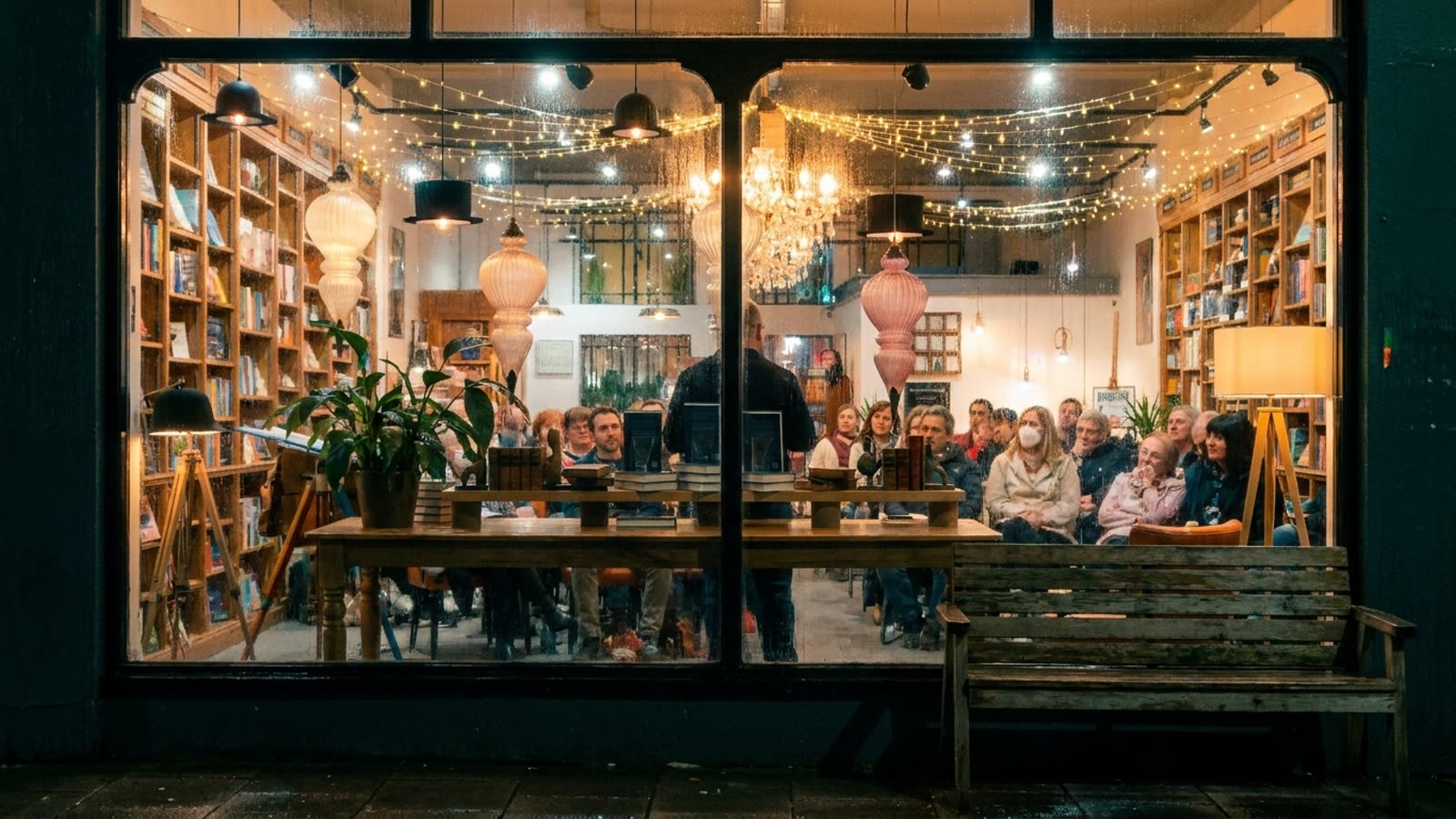
The obituary for the independent bookshop has been written so many times that the genre itself deserves a shelf in the humour section. Borders collapsed, Barnes & Noble contracted, and the algorithm promised to know what you wanted to read before you did. Yet walk through any gentrifying neighbourhood from Brooklyn to Bristol to Berlin and you will find a curious sight: a small shop with creaking floorboards, a staff-picks table, and a queue for the evening reading. The independent bookshop did not merely survive; it shape-shifted into something its twentieth-century ancestors would barely recognise.
The curation economy
What saved these shops was not nostalgia but function. In an era of infinite digital choice, the paradox of abundance became paralysing. A well-edited table of thirty titles, selected by a human who can explain why each matters, began to feel like a public service. The bookshop's value proposition flipped: you no longer visited despite the smaller selection but because of it. Shops that understood this became tastemakers rather than warehouses, charging a modest premium that customers paid willingly, the way one tips a sommelier for steering you away from the obvious bottle.
The economics remain brutal. Margins on new books hover around thirty to forty percent before rent, wages, and the electricity bill. Survival demands ancillary revenue: events with ticket fees, branded tote bags, coffee bars, and the occasional candle that smells vaguely of old paper. The successful independents operate less like retail and more like membership clubs with a merch problem.
Third places in a loneliness epidemic
Sociologists have long lamented the decline of the "third place"—the café, the pub, the barbershop where community forms outside home and work. The bookshop, almost by accident, filled part of that void. Unlike a coffee chain optimised for throughput, a good bookshop tolerates lingering. You can stand in the poetry aisle for twenty minutes without a purchase and no one will ask if you need help finding something. This permission to loiter, combined with regular programming—author talks, book clubs, children's story hours—creates the skeleton of a social calendar for people who might otherwise have none.
The loneliness epidemic, now well-documented across Western democracies, handed bookshops an unexpected tailwind. They became secular churches: spaces of quiet congregation, shared ritual, and the comforting fiction that strangers reading the same novel share something essential.
The limits of revival
Romanticism should not obscure the precarity. Most independents remain one bad lease renewal away from closure. The owners who thrive tend to own their buildings or benefit from landlords who value foot traffic over maximum rent. Gentrification, which initially brings the educated clientele these shops need, eventually prices them out. The bookshop revival is real but geographically uneven, clustering in cities with disposable income and cultural aspiration while vast suburban and rural stretches remain deserts.
Our take
The independent bookshop's resurrection is less a story about books than about what screens cannot provide: texture, serendipity, and the low-stakes social contact that knits a neighbourhood together. That these shops survive on vibes and tote bags rather than robust margins is a vulnerability, not a business model. But for now, they persist as proof that some human needs resist optimisation—and that the best algorithm is still a well-read stranger who asks, "Have you read this one?"