Walk into any Park Hyatt, Edition, or Four Seasons and something happens before you reach the desk. Your shoulders drop slightly. Your breathing slows. You feel, inexplicably, that you belong here. This is not architecture or lighting or the smile of the concierge. This is scent—industrially diffused, precisely calibrated, and worth more to the hospitality industry than the marble in the lobby.
The practice of "scent branding" in hotels began in earnest in the early 2000s, when Westin introduced its now-famous White Tea fragrance. The calculation was simple: smell is the sense most directly wired to memory and emotion, bypassing the rational brain entirely. A guest who cannot articulate why a hotel felt luxurious will nonetheless return to that hotel, and the scent is doing much of the lifting.
The infrastructure of atmosphere
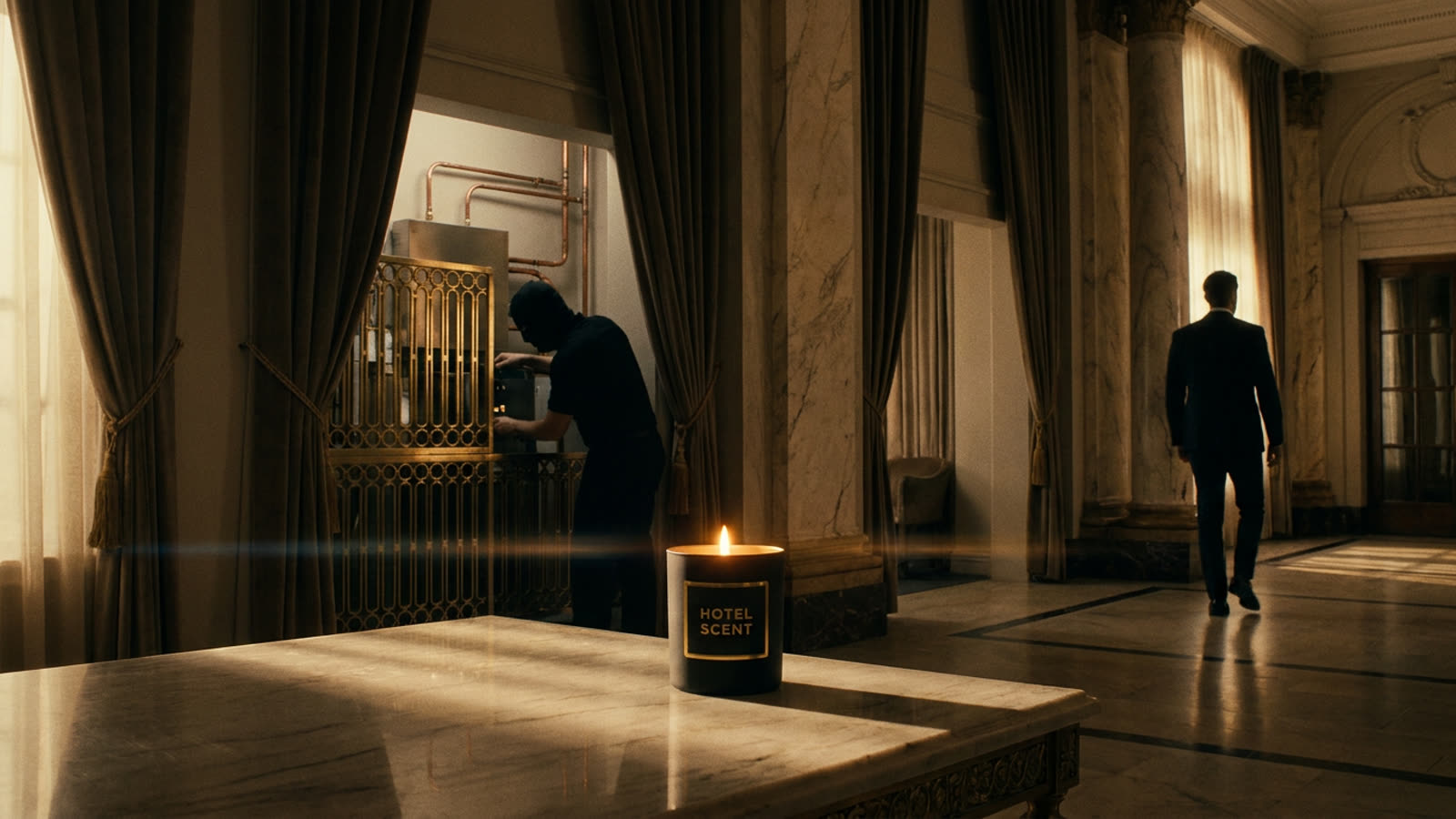
Modern luxury properties don't simply place diffusers in corners. They integrate scent delivery into HVAC systems, calibrating concentration by zone—stronger in lobbies and elevators, subtler in corridors, nearly absent in guest rooms where personal preference takes over. Companies like Air Aroma, Prolitec, and ScentAir have built substantial businesses installing and maintaining these systems, which can cost properties tens of thousands of dollars annually.
The fragrances themselves are developed with the same rigor as fine perfumery. The Ritz-Carlton's signature scent reportedly took eighteen months to develop. Mandarin Oriental's blend is guarded as carefully as any trade secret. These are not air fresheners; they are olfactory logos, designed to be distinctive enough to trigger brand recall but universal enough not to alienate.
The retail extension
Hotels discovered something else: guests wanted to take the feeling home. Properties now sell their signature candles, diffusers, and room sprays at substantial markups—a Le Labo Rose 31 amenity kit at Fairmont can lead to a purchase that exceeds the room rate. This secondary revenue stream has transformed scent from operational expense to profit center.
The phenomenon has trickled down. Airbnb hosts now discuss "scent staging" in hosting forums. Real estate agents have long known that baking cookies before an open house works, but the sophistication has increased—some now use professionally developed "sold home" fragrances designed to evoke security and belonging.
Our take
There is something faintly unsettling about being manipulated at the limbic level, about having your sense of luxury manufactured in a laboratory and pumped through ductwork. But the discomfort fades quickly, because it works. The best hotels have always been in the business of selling a feeling, and scent is simply the most honest acknowledgment that feelings can be engineered. The next time you walk into a lobby and feel inexplicably at ease, know that someone spent eighteen months and considerable money ensuring you would. Whether that's hospitality or manipulation may be a distinction without a difference.