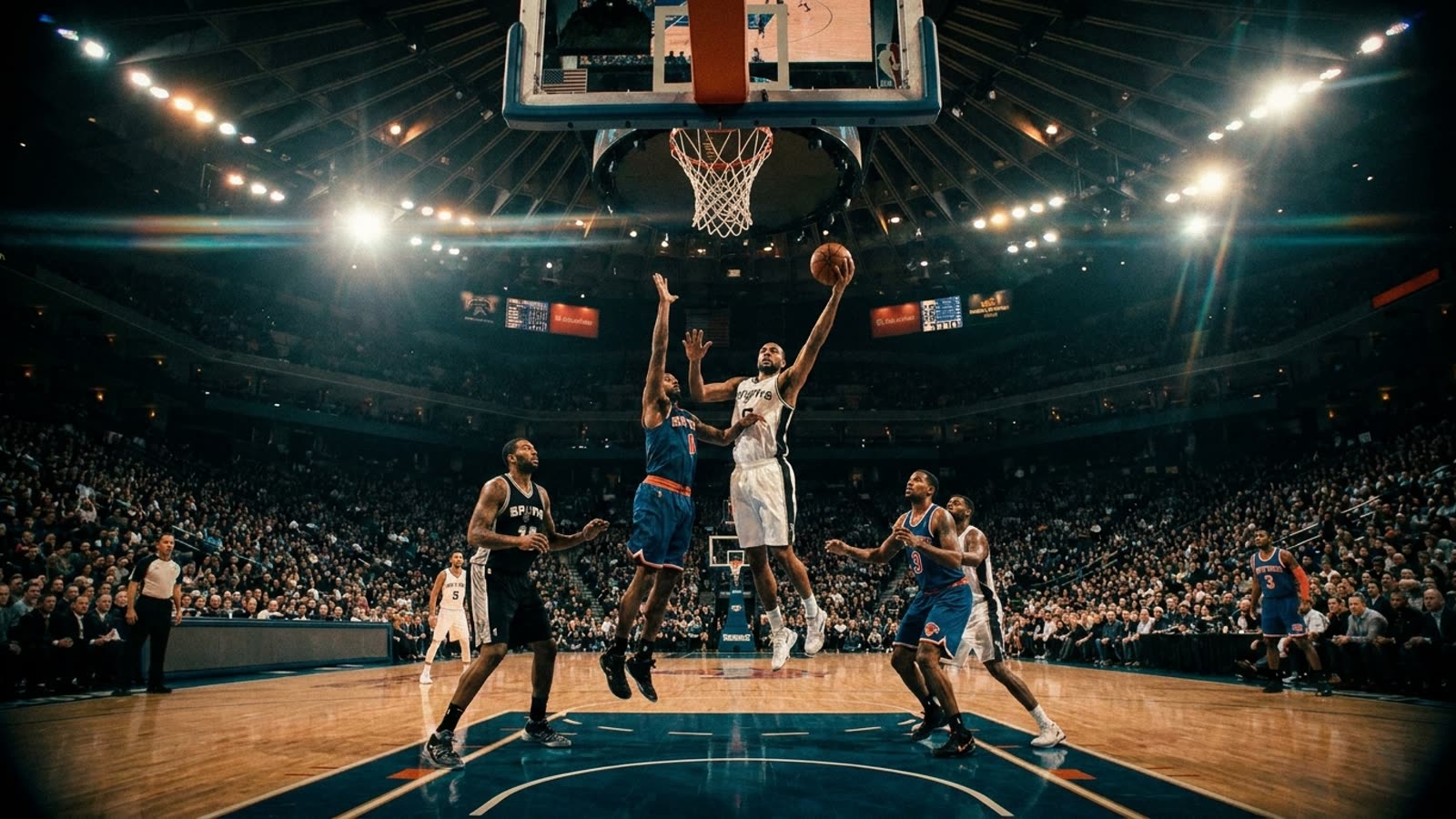
For two decades now, a certain strain of basketball purist has mourned the mid-range game like a deceased relative, eulogizing the pull-up jumper from the elbow and the fadeaway from the baseline as if they were Renaissance art forms destroyed by philistines with spreadsheets. The complaint is familiar: analytics have homogenized basketball into a dreary exercise of three-pointers and layups, stripping the sport of its poetry. This is wrong. The mid-range shot was always a compromise, and the game that emerged from its decline is more intellectually coherent than the one it replaced.
The mathematics are so elementary they border on embarrassing. A league-average mid-range shot converts at roughly 40 percent, yielding 0.80 points per attempt. A league-average three-pointer converts at about 36 percent, yielding 1.08 points per attempt. A shot at the rim converts at around 65 percent, yielding 1.30 points per attempt. These numbers have been stable for generations. What changed is that someone finally did the multiplication.
The aesthetic defense collapses under scrutiny
The nostalgists point to Michael Jordan's fadeaway, Kobe Bryant's contested elbow jumpers, Dirk Nowitzki's one-legged circus shots. These were beautiful, they say, and beauty matters. But this confuses difficulty with value. A half-court heave is more difficult than a layup; we do not therefore consider it superior basketball. The mid-range game was often a failure of execution masquerading as style—a player who couldn't get to the rim and couldn't create space for a three settling for the worst of both worlds. That Jordan and Kobe made these shots at absurd rates speaks to their individual greatness, not to the wisdom of the shot selection itself.
What the modern game actually rewards
The three-point revolution did not make basketball simpler. It made it more demanding. Today's offenses require all five players to space the floor credibly, which means big men must shoot and guards must finish through contact at the rim. Defenses have responded with switching schemes that ask seven-footers to chase guards around screens and ask guards to body up power forwards in the post. The positional categories that organized basketball for a century have dissolved into a fluid system where versatility is the only currency that matters. This is not homogenization. It is evolution toward a more complete version of the sport.
The mid-range survives where it should
The shot hasn't disappeared entirely, and its remaining practitioners illustrate when it retains value. DeMar DeRozan and the generation of mid-range specialists who remain productive do so because they convert at rates far above league average—high enough to make the math competitive. The pull-up mid-range also serves as a pressure valve when defenses take away the rim and the arc simultaneously, which is why playoff basketball still features more of it than the regular season. The shot was never bad in itself. It was bad as a default, and the analytics movement simply exposed how often it had been used by default.
Our take
The mourning for the mid-range game is really mourning for a time when basketball was less understood, when inefficiency could hide behind aesthetics and players could build Hall of Fame careers on habits that a modern high school coach would drill out of a freshman. The sport that replaced it asks more of everyone on the floor and rewards intelligence as much as athleticism. If that's a loss, it's one we should be grateful for.